
Bureaucratic Transformation Key to Escaping Middle Income Trap Amid Trump Tariff Threat
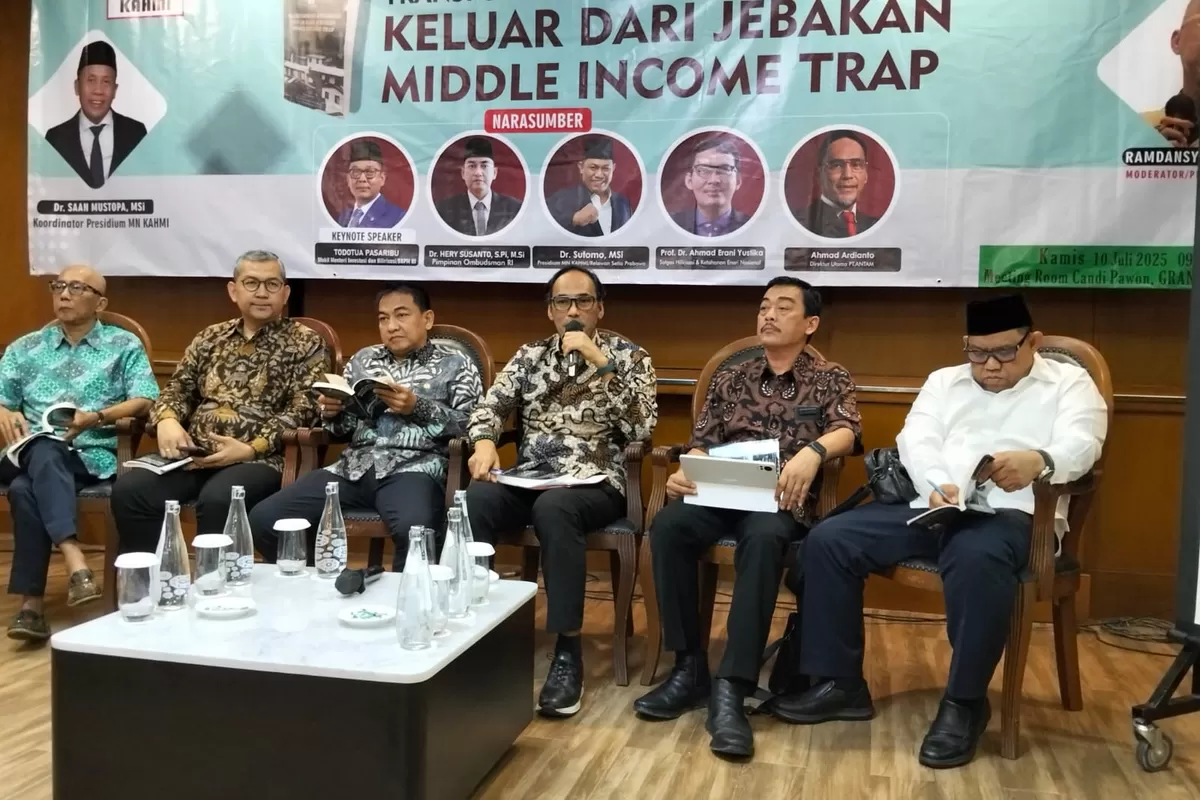
US President Donald Trump’s statement on raising tariffs to 32 per cent on Indonesian imports has the potential to weaken Indonesia’s prospects of becoming a developed nation. Development could stagnate — but not if the bureaucracy embraces innovation. This was the conclusion of the discussion on “Bureaucratic Transformation: Escaping the Middle Income Trap”, as summarised by Ramdansyah, the book’s co-author and discussion moderator.
The book Transformasi Birokrasi Keluar dari Jebakan Middle Income Trap (Bureaucratic Transformation: Escaping the Middle Income Trap), written by Hery Susanto and Ramdansyah, was launched at the Candi Pawon Room of the Grand Sahid Jaya Hotel in Central Jakarta on Thursday (10 July 2025).
The launch event and accompanying discussion featured several speakers including Tirta Mursitama, Deputy for Investment Cooperation at the Ministry of Investment and Downstreaming/BKPM; Achmad Ardianto, President Director of PT Aneka Tambang; Leo Herlambang from the National Downstreaming and Energy Security Task Force; and Sutomo, Presidium member of MN KAHMI.
“This book deserves to be read so that we can avoid becoming a stagnant nation,” said Tirta Nugraha Mursitama, Deputy at the Ministry of Investment.
Both authors hold positions as Division Heads at the National Council of the Islamic Students Association Alumni Corps (MN KAHMI). Hery Susanto serves as Head of the Reform Division at MN KAHMI and is also a leader of the Indonesian Ombudsman. Ramdansyah serves as Head of the Elections Division at MN KAHMI and leads Rumah Demokrasi, an institute for electoral and democratic studies which also published the book.
“This book was born from a national seminar held by the KAHMI National Council. Many ideas, data and analyses were gathered and comprehensively compiled in this book as a contribution of thought to drive bureaucratic transformation so that Indonesia can escape the middle income trap,” said Hery during his session.
Hery further explained that the book introduces the concept of the “epta helix”, a development of the penta helix approach previously known in the public service system.
“In this book, the epta helix method is a development of the penta helix concept. Where previously only five elements were involved, I have now added two important elements, bringing the total to seven. These seven elements are central and regional government, the DPR/DPRD (national and regional parliaments), business groups, academics, the press, and the public, with the Indonesian Ombudsman at the centre as the nexus for public service oversight,” Hery explained.