
Bung Karno, Khamenei, and Iran's Anti-Imperialism
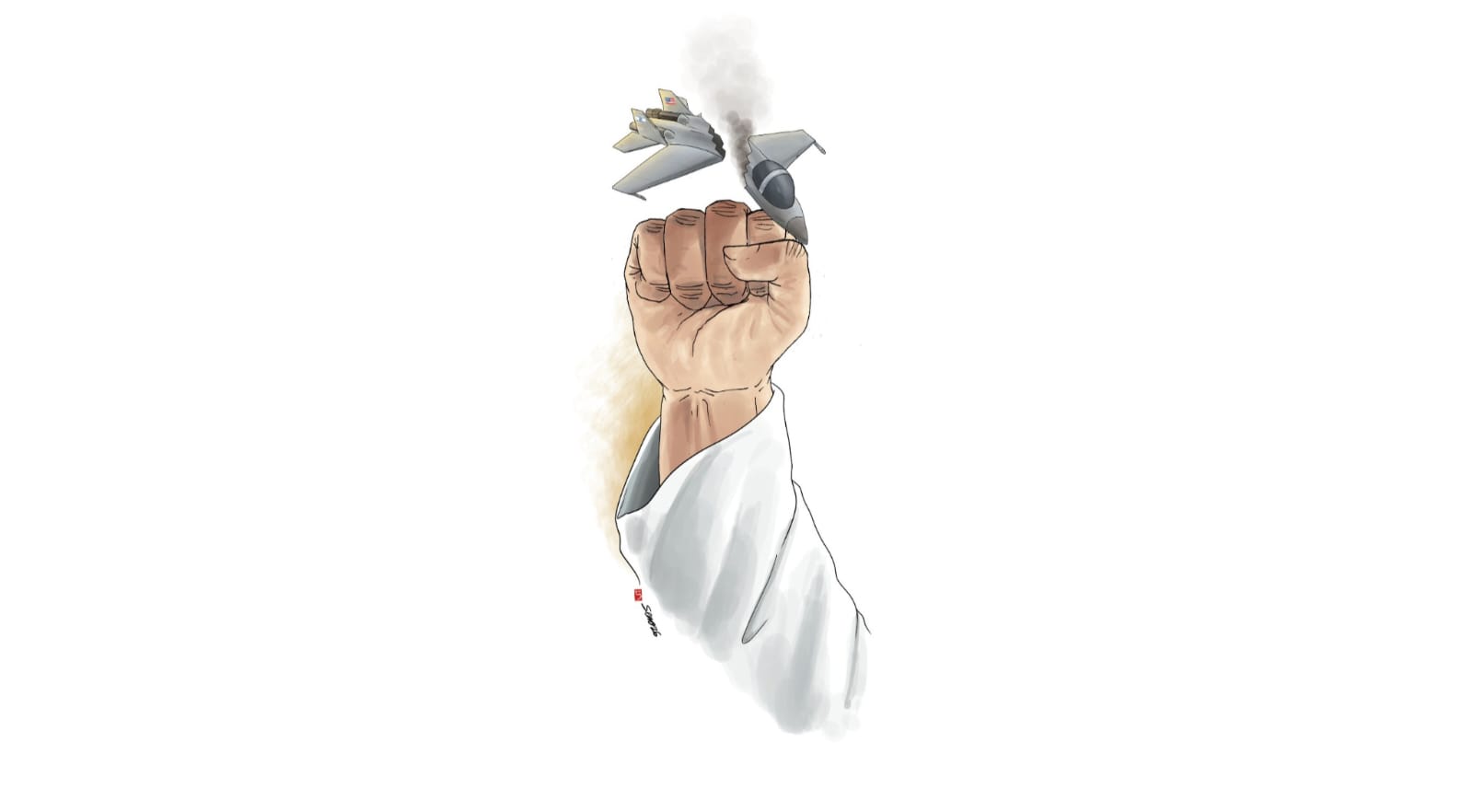
The world has witnessed an unprecedented event in modern history: a sovereign nation’s leader, Iran’s Supreme Leader Ali Khamenei, was executed from the air at dawn on 28 February 2026 amid ongoing diplomatic negotiations. The brutal attack was carried out by the United States and Israel in a military operation known as Operation Epic Fury.
In negotiations mediated by Oman in February 2026, the Iranian delegation had even expressed willingness to refrain from stockpiling enriched uranium and to accept full verification from the IAEA (International Atomic Energy Agency). This marked a diplomatic breakthrough that Oman’s Foreign Minister described as a moment when peace was ‘within reach’.
However, instead of embracing this open door, the United States and Israel chose a fundamental strategic shift: from operations to destroy nuclear infrastructure to a ‘decapitation strike’ against Iran’s top leader—a move that destroyed all diplomatic channels and plunged both sides into an attritional war with no exit.
In the first 22 days of the conflict, attacks spread to at least 12 countries. The Strait of Hormuz—the vital artery for 20% of the world’s oil supply—was effectively closed, and more than 2,300 people were killed. Energy prices surged to their highest levels since September 2023, while Iranian strikes targeted US military installations in Qatar, Bahrain, Kuwait, and Saudi Arabia.
What stunned Western analysts even more was the simple fact: Iran did not collapse. Its government system continued to function. Missiles and drones kept being launched. Behind Iran’s resilience lay the intellectual legacy and traces of thought from Indonesia’s first President, Soekarno. In addition to his famous anti-imperialist ideas and stance, Bung Karno also proposed the Trisakti concept as an antithesis to imperialism’s workings in many countries.
KHAMENEI AND BUNG KARNO’S TEACHINGS
History holds a meeting that few people know about: in the mid-1970s, in cell number 14 of the prison under Shah Mohammad Reza Pahlavi’s regime, a young cleric named Ali Khamenei shared space with a socialist prisoner. That story is recorded in Khamenei’s memoir titled Cell No. 14 (2021), which recounts how he tried to ease ideological tensions with a communist youth who almost refused to speak to him—even almost refused to eat.
Khamenei chose not to debate with theological arguments. Instead, he mentioned a name to get the youth to talk to him. That name was Soekarno. ‘Do you know that Indonesia’s President Soekarno once said at the Bandung Conference that the basis of unity for developing countries is not similarity in religion, history, or culture, but “unity of needs”?’ he said, quoting the 1955 Asian-African Conference speech.
That sentence was not mere prison rhetoric. It reflects the framework of thinking that shaped how Khamenei understood resistance to imperialism—a framework built by Soekarno not just with weapons, but with concepts and strategies.
Several observers see fundamental similarities between Bung Karno’s Trisakti concept and Iran’s strategic policies under Khamenei. Trisakti, explicitly proclaimed by Soekarno in his 17 August 1964 speech titled Tahun Vivere Pericoloso, formulates three sacred elements of true independence: sovereignty in politics, self-reliance in the economy, and personality in culture.
Trisakti is the antithesis of colonialism, imperialism, and feudalism—Bung Karno understood independence not merely as a legal declaration, but as a ‘living state of soul, dynamic in nature, and standing on its own feet’.
The meeting point between Soekarno and Khamenei lies in a shared conviction that nations once colonised can only regain their dignity through structural independence, not by depending on superpower dominance. For the young Khamenei, encountering Bung Karno’s ideas opened horizons that Indonesia’s President was not merely a leader of the Indonesian nation, but an architect of global decolonisation who fused nationalist spirit into internationalism.
Soekarno, along with Jawaharlal Nehru (India), Gamal Abdel Nasser (Egypt), and Josip Broz Tito (Yugoslavia), founded the Non-Aligned Movement in 1961, rejecting the positioning of developing countries as pawns in the Cold War. Khamenei, in his Shia theological version, inherited the same logic: refusing submission and refusing to become a satellite of superpowers.
The Resistance Economy concept, the backbone of Iran’s economic policies under Khamenei—which emphasises national self-reliance through strengthening domestic production, food sovereignty, and technology development—is substantively aligned with the self-reliant spirit in Bung Karno’s Trisakti. Both were born from rejection of economic dependence as an instrument of political subjugation.
SELF-RELIANT WITH MISSILES
For more than four decades, US and Western economic sanctions have been imposed to cripple Iran. The result has been paradoxical: sanctions have driven Tehran to rise and innovate, rather than surrender.
Amid strict embargoes, Iran has built the largest ballistic missile arsenal in the Middle East—a achievement that has forced geopolitical analysts to acknowledge that external pressure has instead strengthened national resilience.
The roots of this self-reliance can be traced back to 1982, when Iran launched what is called the Self-Sufficiency Jihad. The Iran-Iraq War (1980–1988) made it difficult for Iran to obtain spare parts for Western-made military equipment inherited from the Shah era. Strategies of reverse engineering, local innovation, and strengthening domestic industry became the national defence doctrine.
From there emerged the enforced