
Bulog's Warehouse Capacity and Price Stability During the Main Harvest
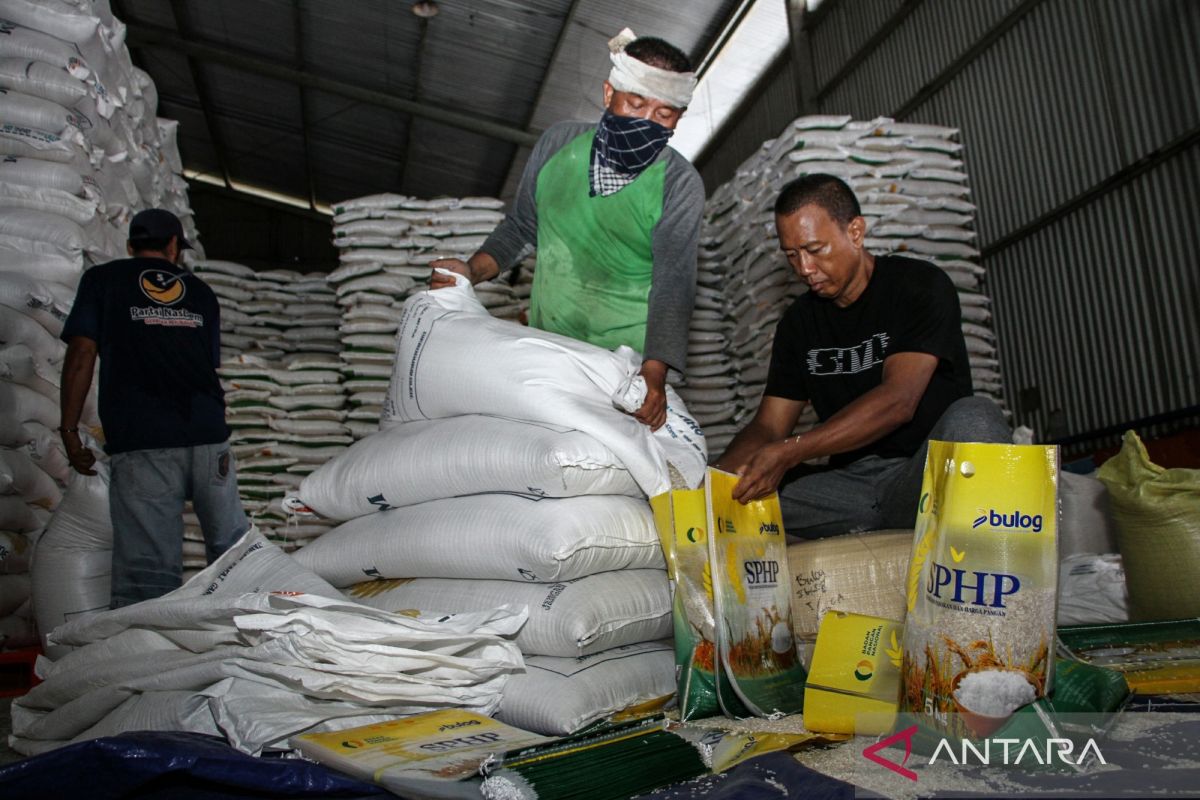
Jakarta (ANTARA) - The main harvest always presents two contrasting faces in national food governance: the hope of availability and sufficiency, alongside concerns over the system’s ability to optimally absorb production results.
The experience in 2025 could serve as an important lesson, when a surge in rice production faced limitations in storage capacity.
This situation is not merely a technical warehousing issue, but a reflection of the food system’s readiness to manage abundance.
Entering the 2026 main harvest, the government is striving to improve the situation through various strategic measures, including increasing warehouse capacity by up to 2 million tonnes and plans to build 100 new warehouses.
The national rice production target of 34.77 million tonnes underscores optimism, while demanding stronger post-harvest infrastructure readiness.
The fundamental question that needs to be answered honestly is whether these steps are sufficient to avoid repeating the same problems.
Limited warehouse capacity remains a classic recurring issue. When production increases, storage space does not proportionally expand.
This imbalance results in harvests not being maximally absorbed by the state, opening the door to price distortions and weakening farmers’ bargaining positions.
Therefore, warehouses are not just storage facilities, but instruments of economic stabilisation that determine whether farmers’ labour yields value or depreciates.
Warehouse Locations
The problems do not stop at capacity. The distribution of warehouse locations also poses a serious challenge. Warehouses not situated at major production points hinder farmers’ access, thereby increasing logistics costs and reducing efficiency.
As a result, farmers tend to sell paddy to middlemen who are closer and quicker to provide transaction certainty, even if at prices not aligned with the government’s purchase price (HPP) of Rp6,500 per kilogramme.
This dependency highlights that food issues are not only about production, but also about access, distribution networks, and economic justice.
On the other hand, the quality of absorbed paddy is an equally important issue. Absorption of low-quality paddy directly impacts rice quality and ultimately affects market selling prices.
This shows that the absorption system must not only be fast and massive, but also selective and based on quality standards. Without that, increased production will not equate to increased economic value.
The government has actually set a quite ambitious absorption target of 7.41 million tonnes of paddy or equivalent to 4 million tonnes of rice in 2026.
This target is reinforced by a proactive approach involving various parties, including local governments, milling partners, as well as elements of the TNI and Police.