
Bulog Director: Routine Food Price Monitoring Maintains Consumer Purchasing Power
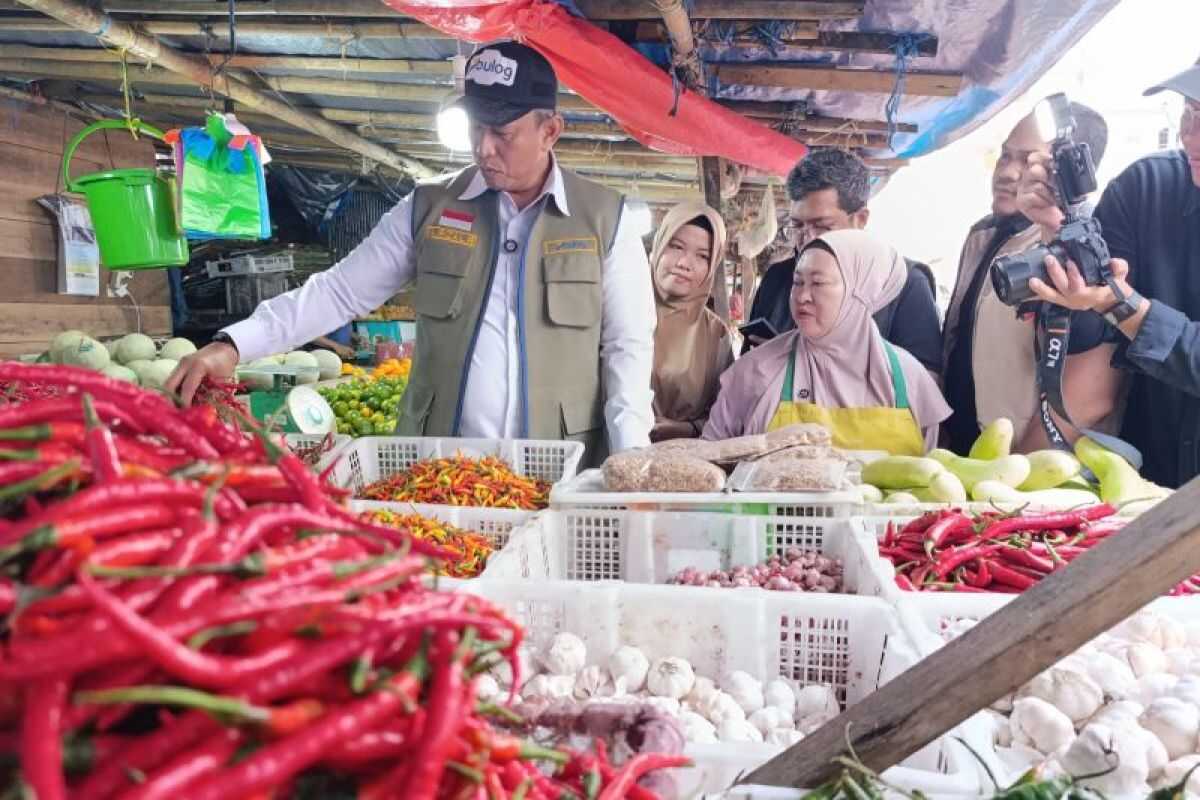
Makassar — The Chief Executive of Perum Bulog Ahmad Rizal Ramdhani has stated that the activity of directly checking food commodity prices at Terong Market in Makassar represents an example of routine monitoring to maintain consumer purchasing power during Ramadan and ahead of Eid.
“This field finding is an important signal that routine monitoring is effective in protecting consumer purchasing power,” he said whilst conducting a price check at Terong Market in Makassar, South Sulawesi, on Sunday.
Based on the results of the inspection at Terong Market in Makassar on Sunday, several basic food prices were monitored to be stable and in line with regulations. Ahmad Rizal noted that the results of the direct field inspection were considered well-controlled, as the prices of SPHP rice, cooking oil, sugar and flour complied with maximum retail price regulations.
“Sugar and flour are stable. Beef prices are even below reference prices at approximately Rp120,000 per kilogramme, down from the Rp140,000 reference point. Chicken prices are in the range of Rp32,000–33,000 per kilogramme. This demonstrates that price stability is being adequately maintained,” he explained.
Horticultural commodities were also relatively controlled. Red curly chillies at Terong Market were in the range of Rp20,000 per kilogramme (lower than Jakarta’s approximately Rp30,000 per kilogramme), whilst bird’s eye chillies were Rp60,000 per kilogramme (Jakarta was close to Rp70,000 per kilogramme).
This difference was deemed to demonstrate that local supply plays a role in containing price volatility.
He urged routine monitoring at least three times weekly by the South Sulawesi Provincial Food Task Force together with market operators and the South Sulawesi Industry and Trade Office to keep prices under control until Eid.
“We want to ensure that retailers do not take advantage of the Ramadan and Eid momentum to raise prices,” he said to market traders in Makassar on Sunday.
Routine monitoring is considered important because it can prevent price speculation such as maximum retail prices and reference selling prices at stalls, which makes it easier for consumers to oversee compliance.
Additionally, maintaining purchasing power through price stability helps households plan their shopping ahead of major holidays. It simultaneously guarantees supply by controlling stock and distribution to close any gaps that could lead to shortages.
With routine monitoring, supply chain transparency will be ensured, and sales by registered retailers make enforcement easier in cases of violations.
“With consistent monitoring and secure supply, price stability in traditional markets is not merely a concept but genuine collaborative work,” Ahmad Rizal concluded.