
Bulog Develops Long-Term Rice Storage Technology
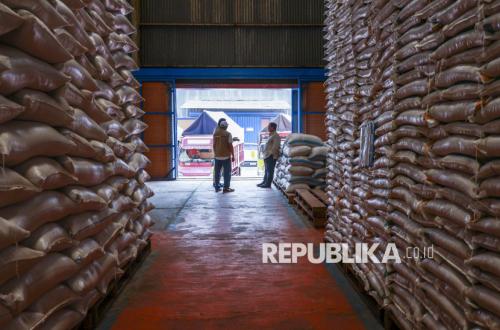
REPUBLIKA.CO.ID, JAKARTA – The President Director of Perum Bulog, Ahmad Rizal Ramdhani, has revealed the development of long-term rice storage technology as a step to strengthen national food security. This technology allows government reserve rice to be stored for longer periods while maintaining its quality.
Rizal stated that the innovation was developed through collaboration with the National Research and Innovation Agency (BRIN) and Bogor Agricultural Institute (IPB). “We have already collaborated with BRIN and our colleagues at IPB. So, we have found technology to store rice in warehouses for more than two years in very good condition,” said the three-star retired general in Jakarta on Wednesday (6/5/2026).
He explained that the technology will be applied to new warehouses currently being prepared by the government, especially in frontier regions. This infrastructure strengthening is expected to maintain the quality of rice reserves while ensuring food availability in remote areas.
Rizal added that the construction of new warehouses has received government budget support and is prioritised in several regions such as Nias and Morotai. These locations are considered strategic for strengthening food distribution in areas vulnerable to logistical disruptions.
“This technology will be applied in the new warehouses, such as in Nias and Morotai,” he said.
In current operations, Bulog manages around 1,555 warehouses with a capacity of about 3.7 million tonnes of rice. Capacity limitations have led Bulog to add leased warehouses approaching 2 million tonnes to accommodate government rice reserves.
The large stock volume drives the implementation of layered maintenance systems to preserve rice quality during storage. Each warehouse conducts routine maintenance and pest control as part of standard operations.
“If there are weevils, we use a fumigation programme. Fumigation, simply put, involves sealing the rice tightly so that the pests die,” Rizal explained.
He further described that rice experiencing quality degradation after a certain storage period undergoes a quality restoration process or reprocessing. This is done using processing technology to make the rice fit for consumption again.
The development of this rice storage technology is part of long-term efforts to maintain food stability. This step also supports the enhancement of logistic capacity in line with the growing government rice reserves.