
Bulog CEO Assures Rice Prices Will Not Rise Despite Shortage of Plastic Pellets
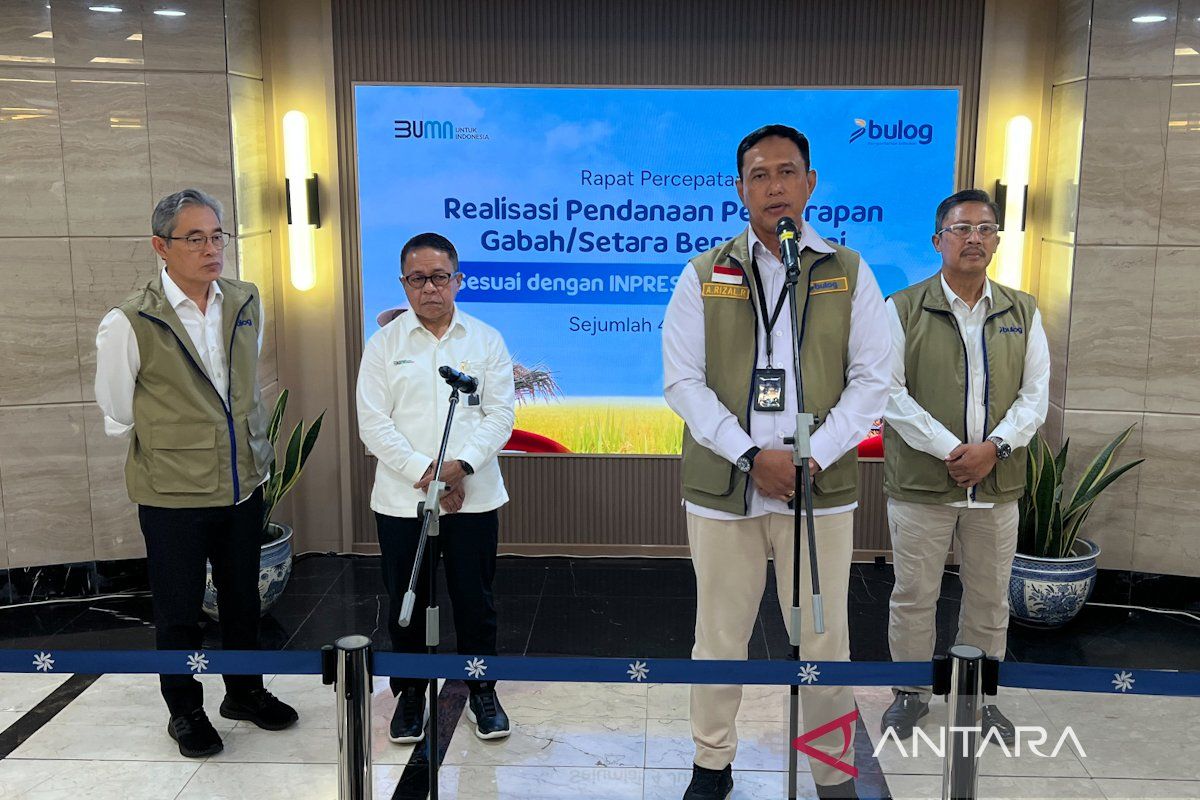
Jakarta (ANTARA) - Bulog’s President Director Ahmad Rizal Ramdhani has assured that there will be no increase in rice prices despite issues surrounding the scarcity of plastic pellets, which are impacting product packaging costs.
Rizal emphasised that this policy aligns with President Prabowo Subianto’s instructions to avoid any rise in food prices, including rice, to maintain the public’s purchasing power.
“So, in accordance with the President’s directive, it was determined during yesterday’s meeting at the (Presidential) Palace that there will be no increase in food prices, including rice prices,” Rizal said after the Meeting to Accelerate the Realisation of Funding for Paddy Absorption Equivalent to Rice at Bulog’s Jakarta office on Monday.
According to him, the current strong national rice stock of 4.72 million tonnes is the main factor ensuring that rice prices remain stable amid various production cost challenges.
Rizal stated that the government’s rice reserves are in a safe and abundant condition, thus there is no significant pressure on consumer-level rice prices.
Nevertheless, Rizal acknowledged that packaging costs pose a particular challenge in maintaining the efficiency of rice distribution to the public.
He explained that the current rise in plastic pellet prices is a shared issue, particularly for food products that use large quantities of plastic packaging for national distribution needs.
According to him, this situation is prompting Bulog to make internal policy adjustments to continue adapting to evolving market price dynamics in various regions.
He noted that Bulog has held a directors’ meeting to formulate strategic steps, including providing room for packaging cost adjustments without disrupting overall operational stability.
Additionally, coordination is being carried out with the Ministry of Industry to obtain support in the form of relief on the prices of packaging raw materials used in the government’s food programmes.
This step is important considering that most of the packaged rice is part of the food assistance programme targeting 33.3 million beneficiary families (KPM) across Indonesia, as well as the Stabilisation of Food Supply and Prices (SPHP) programme rice.
“Thus, hopefully we will be given the best prices at the lowest possible rates, without reducing or lowering the quality of the packaging. That is our hope,” Rizal said.
Even with packaging price adjustments, Bulog continues to strive to keep costs as minimal as possible so as not to significantly impact overall distribution costs and to maintain packaging quality.
He is optimistic that with good coordination and efficient cost management, rice prices will remain stable without sacrificing packaging quality or national food distribution.
It is known that the highest retail price (HET) for medium rice, in accordance with government regulations, is Rp13,500 per kilogram (kg), while the HET for premium rice reaches Rp14,900 per kg.
Meanwhile, SPHP rice is sold in accordance with the HET, namely Rp12,500 per kilogram for zone 1 (Java, Lampung, South Sumatra, Bali, NTB, Sulawesi); Rp13,100 per kilogram for zone 2 (Sumatra excluding Lampung and South Sumatra, NTT, Kalimantan); and Rp13,500 per kilogram for zone 3 (Maluku, Papua).