
Buleleng Regional Council Raises Concerns Over Primary School Student Absent Since October 2024
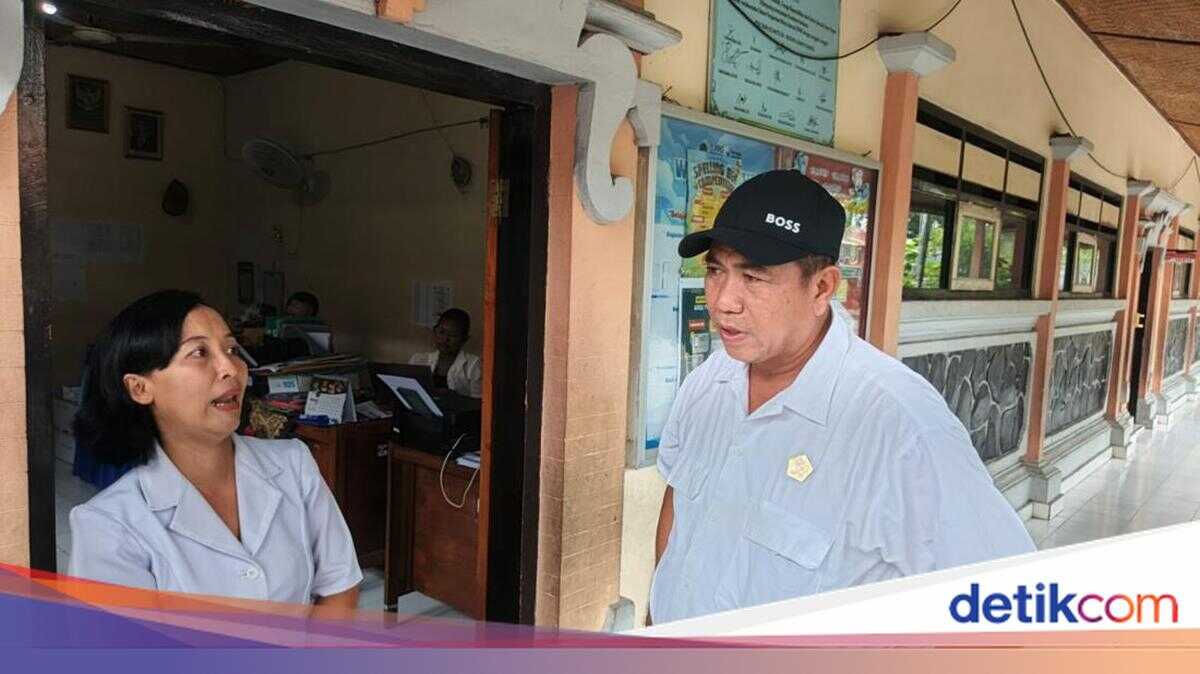
A member of the Buleleng Regional Council (DPRD), Nyoman Dhukajaya, has raised concerns about a pupil at SDN 2 Banyuning who has been absent from school since October 2024. Dhukajaya described the suspected school dropout in the urban Buleleng area as an irony.
“How can there still be children not attending school in an urban area? This should be an alarm bell for all of us. We must not allow this to become like an iceberg phenomenon,” Dhukajaya stated firmly on Wednesday, 25 February 2026.
Dhukajaya visited SDN 2 Banyuning to examine the situation firsthand. He urged the Buleleng Education Office to conduct a comprehensive investigation into the reasons why the pupil stopped attending school. He expressed concern that similar cases might be occurring in other schools without being detected.
“All possibilities must be explored. Whether it is internal factors affecting the child, family conditions, economic circumstances, or perhaps the school environment itself. We must not only look at the surface,” he said.
Dhukajaya emphasised the importance of a comfortable school environment and a humane approach from teachers. He encouraged optimisation of the Primary Education Data System (Dapodik) to identify pupils at risk of dropping out early.
“Teachers must be sensitive and attentive. Children are not merely to be taught, but embraced. Extracurricular activities are also important so that children feel connected to their school,” said the Golkar Party politician.
“Dapodik contains comprehensive information. From that data, patterns and potential problems can be mapped. Policies must be data-driven, not reactive,” he added.
The headmaster of SDN 2 Banyuning, Putu Sri Sadwity, stated that the school began taking action after the pupil was absent for the first month in October 2024. She indicated that teachers at the school had visited the pupil’s home.
“After one month of absence, we immediately took action by visiting the home to find out what was causing the child not to come to school. Together with the former class teacher, but it did not yield results,” Sadwity said.
The pupil began missing school during the second semester of Grade 2 in the 2024/2025 academic year. From July to September 2024, the child attended classes normally. However, as the final semester assessment in October 2024 approached, the pupil never returned to school.
“Later, because the former teacher retired, there was a change of class teacher. At that time we had fresh hope that perhaps with a new teacher, the child might be willing to come to school. But it proved fruitless—the child still refused to attend,” Sadwity added.
The school also coordinated with the Disability Services Unit (ULD), which has psychologists on staff, in late 2025. According to Sadwity, the psychology team visited the pupil’s home.
“Initially, the child was unwilling to leave their room. After persuasion, they eventually agreed, though only to wash their face and speak briefly,” she said.
Sadwity stated that a single meeting was insufficient to determine the exact cause of the child’s school refusal. She believed that continued support involving both parents would be necessary.
The school also coordinated with the Department of Population Control, Family Planning, Women’s Empowerment and Child Protection (DP2KB). A letter summoning the parents was issued for education and to seek solutions collaboratively.
“However, unfortunately the parents were unable to attend due to other commitments, so communication was cut off at that point. We hoped DP2KB would conduct ongoing monitoring that involves the parents to determine the exact reason the pupil is not attending school,” she said.
Although the pupil has not attended classes since the second semester of Grade 2, Sadwity stressed that the pupil has not been formally declared as having discontinued schooling. The child’s records, she stated, remain registered as active in Dapodik.