
Building the Stage for Corruptors
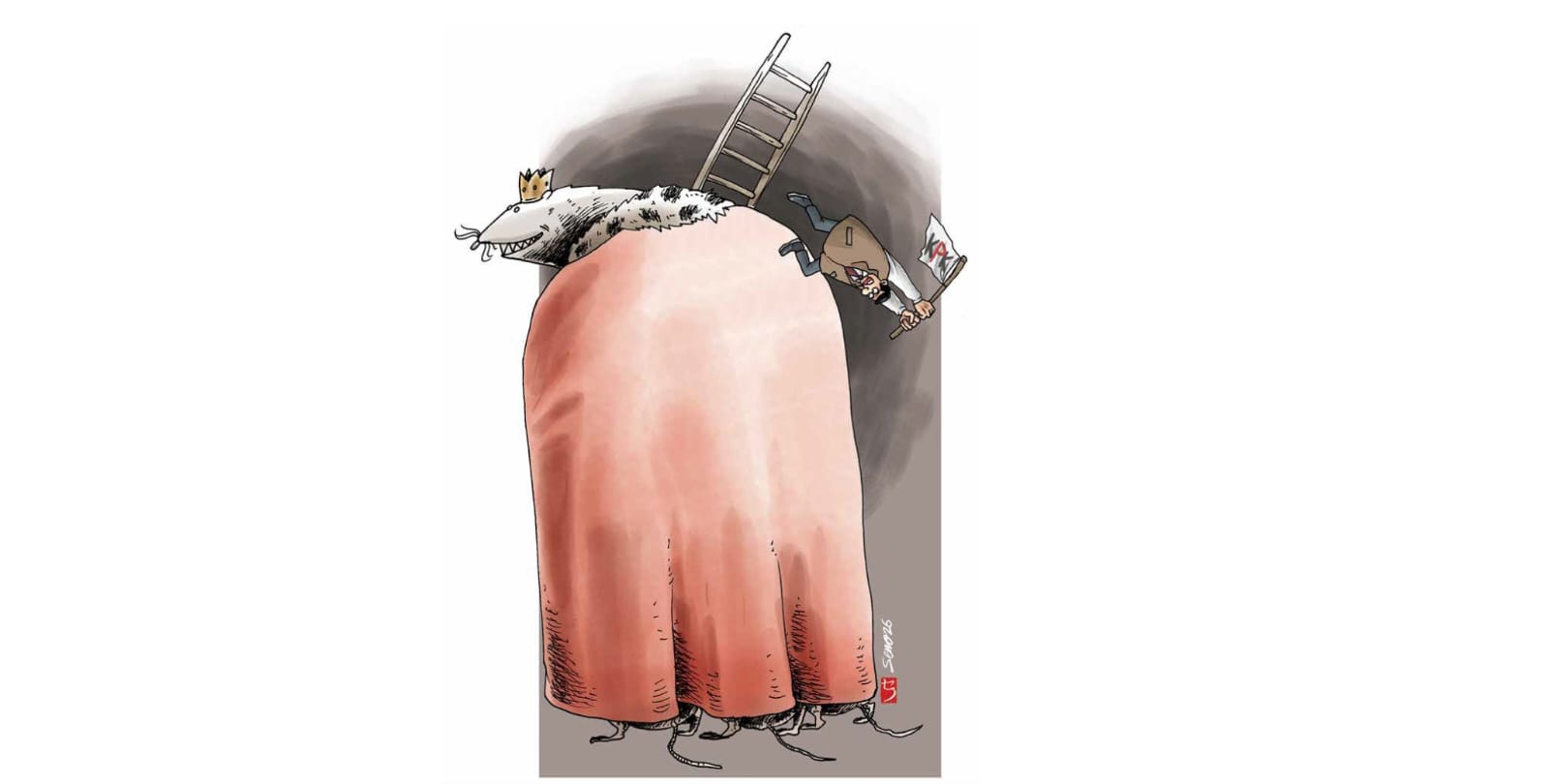
The elimination of corruption in Indonesia is entering its most dangerous phase: not when corruption is rampant, but when it is no longer treated as an extraordinary crime. At this point, the public should be concerned. What is fading is not only the firmness of the law, but also the state’s moral stance in facing the robbers of public funds.
The KPK’s decision, which temporarily granted house arrest status to former Minister of Religious Affairs Yaqut Cholil Qoumas, is not merely a procedural polemic. It has become a symbol that, amid strong speeches about the war against corruption, law enforcement practices can shift towards leniency, compromise, and raise questions.
On Monday, 23 March 2026, the KPK revoked that house arrest status and returned Yaqut to the KPK Detention Centre after undergoing a health assessment at the Indonesian National Police Hospital in Kramat Jati. However, this correction does not immediately erase public anxiety about the standards, consistency, and integrity of law enforcement in corruption cases.
Corruption cannot be viewed as an ordinary criminal act. Under the framework of the United Nations Convention against Corruption (UNCAC) 2003, corruption is seen as a serious threat to law enforcement, democracy, and justice. Susan Rose-Ackerman also points out that corruption breeds inefficiency, inequality, and ineffective governance. Therefore, corruption deserves to be treated as an extraordinary crime due to its systemic destructive power that strikes at the foundations of the state.
However, the fact that a corruption suspect was temporarily given the facility of house arrest, even if later revoked, still sends a problematic message. The impression already formed in the eyes of the public is clear: there is room for negotiation in handling corruption cases.
The KPK’s explanation that the return to detention was to facilitate coordination, further examinations, and progress in handling the Hajj quota case is indeed important to note. However, that explanation simultaneously reinforces a more fundamental question: why were those considerations not the basis from the beginning when the house arrest status was granted?
GREAT POWER
It is difficult to dismiss public suspicion that there is great power influencing the direction of law enforcement. It would be too naive to expect society to believe that a decision as important as transferring detention is purely a matter of investigators’ technicalities. In a case that attracts national attention, it is impossible for its political and symbolic impact not to be considered. Therefore, when the emerging explanations seem inconsistent—from family requests, temporary nature, to investigation strategies—what emerges is not public reassurance, but thickening speculation.
Perhaps there are indeed other hands working behind the scenes. Perhaps there are greater powers of authority than the law. Perhaps the Red and White Building is no longer the last bastion of corruption eradication, but a space for calculating power interests.
In recent years, the public has witnessed how the anti-corruption spirit continues to erode. Revisions to the KPK Law, controversies over independence, declining public trust, to the diminishing fear among officials of law enforcement operations, all show one pattern: the state is increasingly submissive to corrupt elites.
Ironically, all this happens when President Prabowo Subianto repeatedly makes strong statements about corruption. That rhetoric sounds fierce, captivating, and ignites the hopes of a public fed up with robbers of state funds. However, in practice, the public witnesses the opposite. The law only shows its fangs when facing the little people.
The revocation of the house arrest status has indeed eased some criticism. However, that episode remains a mirror of our current legal politics direction: the state is increasingly friendly to elites, increasingly accommodative to power, and increasingly distant from the spirit of justice that should be the foundation of corruption eradication.
The main issue is not merely formal legality, but moral legitimacy. Something that is legal is not necessarily just. Something that is procedural is not necessarily appropriate. When a policy wounds the public’s sense of justice, damages the principle of equality before the law, and opens room for suspicion of intervention, then that policy fails not only in communication but also in ethics.
CORRUPTORS’ STAGE
Yaqut’s return to detention is certainly important to note as a corrective step. It shows that the house arrest status was indeed not permanent. However, its symbolic damage has already occurred. A bad precedent is born not only if that special treatment is maintained, but also when the public witnesses that such leniency was initially given to a corruption suspect whose case attracts national attention.
They appear no longer merely as perpetrators of extraordinary crimes, but as figures who can still negotiate leeway in the midst of legal processes. On that stage, money, influence, and power networks speak louder than the sense of justice. A theatre of justice full of tragedy.
The KPK must not hide behind cold normative reasons. The public does not actually need bureaucratic answers; the public demands honesty, including why the house arrest status was only revoked after sparking widespread polemic. If the reason now is health assessment, the need for further examinations, and significant progress in the Hajj quota case, then the public has the right to ask why all those needs were not carefully calculated from the initial decision. At this point, the KPK must ensure that Yaqut will continue to reside in detention and will not return to house arrest again.
If these questions are not answered transparently, the public will reach a harsh conclusion: that within the KPK there are indeed power forces that can dictate the direction of enforcement and make it bow down.