
Building the "Heart" of Vehicles Domestically, Evidence of the Depth of Indonesia's Automotive Industry
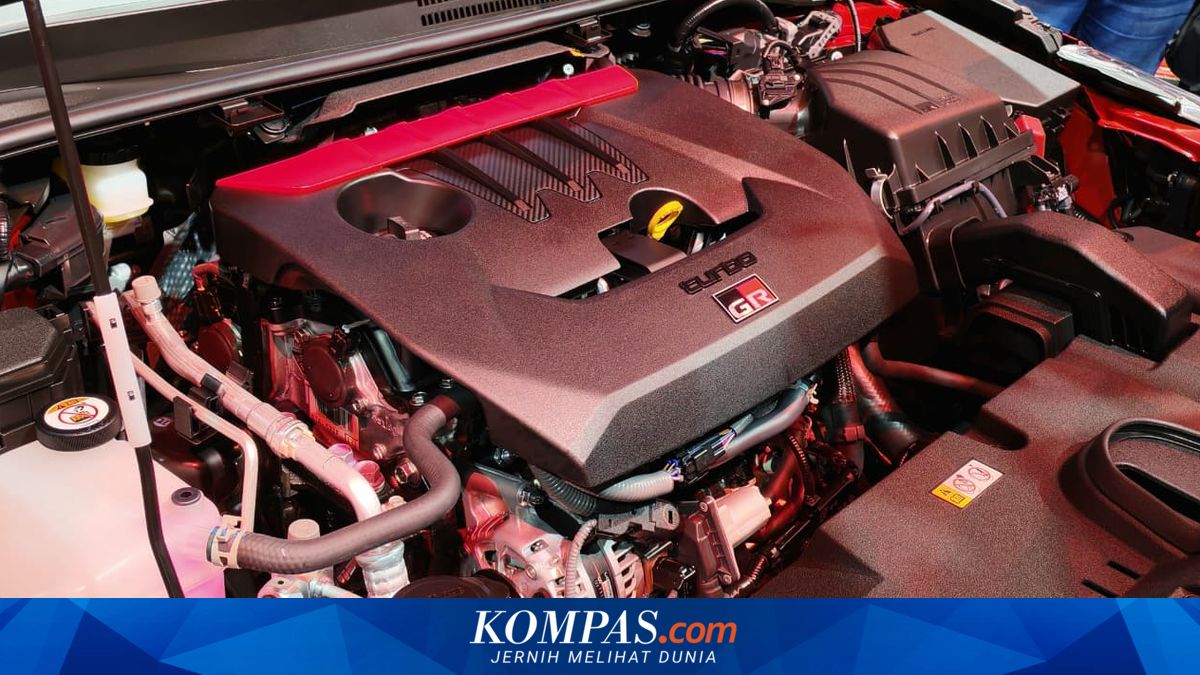
Indonesia’s car industry is often perceived as merely an assembly operation. However, behind the complete vehicle assembly lines, there is a deeper manufacturing process, including domestic engine production, which marks the advancement of an automotive industry.
In terms of scale, Indonesia’s automotive industry is already substantial. Minister of Industry Agus Gumiwang Kartasasmita stated at the Indonesia International Motor Show (IIMS) 2026 that the ecosystem for four-wheeled vehicles in Indonesia comprises 41 manufacturers with a production capacity of 2.59 million units per year in 2025.
Total investment in Indonesia’s automotive industry up to 2025 reaches Rp 194.22 trillion. Of this amount, investment from car producers amounts to Rp 163.75 trillion, with direct employment absorption of 69,000 people.
From the market perspective, the Indonesian Automotive Industry Association (Gaikindo) recorded national car sales throughout 2025 at 803,687 units (wholesales/factory to dealers). Meanwhile, retail sales (dealers to consumers) reached 833,692 units.
In the automotive industry, manufacturing does not stop at vehicle assembly processes. To become a large-scale industry, deepening manufacturing to further stages is essential. One of them is by producing vehicle engines locally.
In the automotive industry, the term “engine production” does not always mean the same thing. There are manufacturers that carry out the process from upstream to downstream, starting from making main components through casting or forging, followed by precision machining, then assembled into a complete engine (assembly). This integrated production level is often referred to as through-line.
There are also facilities that do not handle the entire upstream process in one place but still undertake high-value stages, such as machining and assembly.
At those factories, precision machining and assembly processes are carried out domestically, while certain “upstream” components may come from other facilities or specialised suppliers. Some components are imported from abroad, while others are produced by other local manufacturers.
In Indonesia, traces of engine manufacturing depth can be seen in the existence of PT Toyota Engine Indonesia (TEI). Established on 20 December 1982 in the Sunter area, Jakarta.
Quoted from the book Jejak Langkah 40 Tahun Pertama di Indonesia, TEI began operations on 1 January 1985 and became Indonesia’s first engine factory with engine block casting. In the initial stage, the factory was capable of producing certain engines with a local content of up to 60 percent, which was gradually increased.
In 1991, TEI also built a new factory for engine casting for the Toyota Kijang as an effort towards “full manufacturing” of engine components. This effort was also made to reduce the cost of shipping large and heavy engine blocks.
Currently, TEI has merged into Toyota Motor Manufacturing Indonesia (TMMIN), which produces petrol engines from upstream to downstream, including non-casting components as well as aluminium casting.
This series demonstrates that “engine production” is not merely final assembly. There are upstream processes and precision processes that form the heart of manufacturing depth.
Engine manufacturing depth in Indonesia runs parallel with industrialisation and localisation policies. The aim is not only to maintain production volumes but also to strengthen competitiveness and nurture supporting industries with cascading effects.
Within the framework of motor vehicle industry regulations, the Directorate General of Metal, Machinery, Electronics, and Various Industries (Ditjen ILMATE) emphasises requirements for the use of locally produced components in Indonesia (local purchase) and/or minimum domestic component levels (TKDN) in the motor vehicle assembly industry process.
If these requirements are met, the industry has the opportunity to receive incentives, both fiscal and non-fiscal.
This policy is reinforced through incentive designs that differentiate tax treatments for various import and production schemes. Referring to Minister of Industry Regulation (Permenperin) Number 29 of 2023, imports of completely built-up (CBU) vehicles are subject to a 50 percent import duty, 15 percent luxury goods tax (PPnBM), and 12 percent value-added tax (PPN).
Meanwhile, imports of completely knocked-down (CKD) vehicles are subject to a 10 percent import duty, 15 percent PPnBM, and 12 percent PPN.
Then, referring to Minister of Investment Regulation (Permeninvest) Number 6 of 2023, for market test CBU, the facilities obtained include 0 percent import duty and 0 percent PPnBM (PPN remains 12 percent), accompanied by a bank guarantee and a 1:1 production commitment with minimum equivalent specifications. This regulation applies until the end of 2025.
Similar schemes are also stipulated for CKD under the Domestic Component Level (TKDN) roadmap requirements. Brand holders can obtain 0 percent import duty, 0 percent PPnBM, 12 percent PPN, which also applies until the end of 2025.
Engine production also provides more structural impacts. This is because engine manufacturing demands precision and process consistency, which in turn drives improvements in manufacturing capabilities, including in the supply chain.
First, strengthening the supply chain ecosystem. In the GIAMM presentation titled “Readiness of the Motor Vehicle Parts/Components Industry in Driving Local Content (TKDN)” released in July 2025, it is explained that the automotive supply chain is divided into system suppliers (T1) to basic component suppliers (T2/T3) with needs for raw materials such as steel, rubber, plastic, copper, iron, to aluminium.
Second, technology transfer and skill enhancement. The needs of engine production create demand for more technical human resources (HR) to fill various worker positions, from machining operators, quality control or metrology, to automation maintenance.
Third, supply resilience. The more high-value production carried out domestically, the greater the industry’s capacity to manage lead times, quality, and production continuity.
Fourth,