
Building Synergy to Realise Sustainable and Prosperous Districts
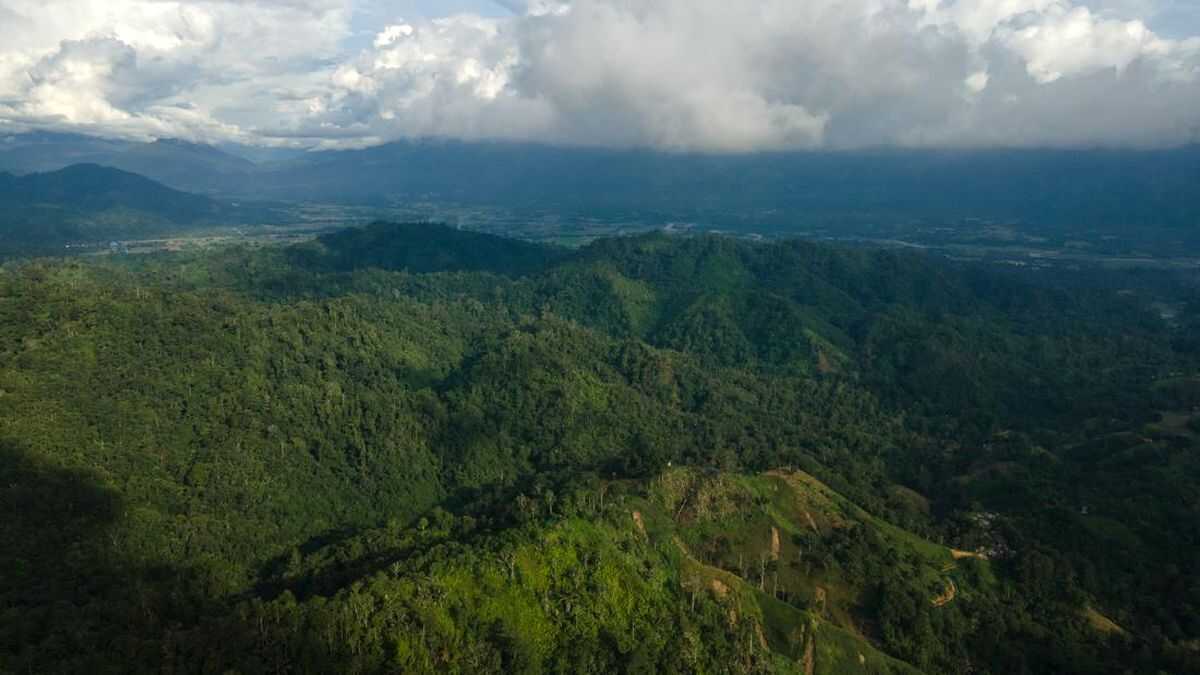
Nine districts united under the Sustainable District Forum (LTKL) have pledged to collaborate in realising sustainable districts that protect the environment and improve community welfare through multi-stakeholder engagement.
The collaboration aims to establish restorative economics—growth that is both economically productive and ecologically restorative—grounded in the principle that natural resources form the foundation of long-term prosperity.
Moh. Rizal Intjenae, LTKL Chairman and Regent of Sigi District in Central Sulawesi, stated that extractive, exploitative, and short-term oriented economics are no longer relevant to current development. He argued that this outdated model increases vulnerability, exacerbates crises, and endangers current and future generations.
“The districts within the Sustainable District Forum recognise this reality and have decided to move and transform. We are shifting from fragmented approaches towards a shared vision that places sustainability at the mainstream of development. This transformation is not merely a policy change, but a shift in mindset and working methods,” Rizal said.
LTKL implements restorative economics through five core principles: establishing ecological thresholds, protecting and restoring ecosystems, generating added value through economic models, ensuring inclusivity and adopting local culture, and employing data-driven and scientific approaches.
Member districts including Sigi, Siak in Riau, and Sintang in West Kalimantan are building nature-based local economies whilst strengthening collaboration between government, communities, businesses, academia, and media.
In Siak, there are innovations in peatland-friendly products and the SKELAS creative business incubator, driven by local youth. Since 2023, SKELAS has incubated 27 local and sustainable businesses. One example is Pinaloka, a pineapple production hub working with local farmers to cultivate pineapples on peatland using sustainable agricultural methods. Pinaloka now produces various derivative products and has received support from Bank Indonesia. Additionally, a peatland-based innovation programme involves 160 residents across three villages, incorporates 34 research initiatives, and impacts 76,744 hectares of peatland. Fish albumin products from sustainable snakehead aquaculture are now sold in 141 pharmacies.
In Sintang, an area that experienced severe flooding years ago, forest restoration enterprises have emerged. Local communities now process tengkawang, honey, and other forest commodities.
In Sigi, residents grow coffee, cocoa, vanilla, and non-timber forest commodities within agroforestry systems whilst maintaining forest cover. Supply chains are fully integrated from plantations through processing mills to national markets, supported by innovative financing schemes.
LTKL also operates across other member districts including Aceh Tamiang, Musi Banyuasin, Sanggau, Kapuas Hulu, Gorontalo, and Bone Bolango, promoting restorative economics through entry points tailored to each district’s potential.
Year 2030 has been designated as the transformation deadline for LTKL members to become sustainable districts capable of managing natural resources and land governance sustainably, and self-sufficient districts with fiscal independence and strong human resource capacity.
LTKL targets producing the Indonesia Sustainable District Blueprint by 2030 as guidance for sustainable development adaptable by other districts across Indonesia. LTKL Secretariat Head Ristika Putri Istanti stated that the blueprint will be designed to be studied, adapted, and developed according to each region’s characteristics rather than replicated wholesale.
“Given the accelerating loss of forests and critical ecosystems and the occurrence of major disasters causing significant losses, it is time we think about appropriate solutions. LTKL is building concrete evidence that when we protect our natural foundation and restore soil fertility through innovation, multi-stakeholder collaboration, and human resource development, change is possible,” Ristika said.
LTKL demonstrates that major change does not always come from capital cities or large institutions. With a vision towards 2030, this movement transcends a mere forum; it is a realised vision that development can be humane with nature as the source of prosperity, and Indonesia’s future built from the ground up sustainably.
LTKL’s efforts have gained international recognition, including through The Rockefeller Foundation’s Big Bets Fellowship, which recognised LTKL as an initiative with potential to become a proven solution with significant impact if scaled.
“This is an economy that restores ecosystems, restores community dignity, respects natural boundaries, and ensures human prosperity,” Ristika concluded.