
Building Indonesia's Carbon Market Ecosystem, OJK Strengthens its Economic Instruments
Building Indonesia’s Carbon Market Ecosystem, OJK Strengthens its Economic Instruments
- [Special]
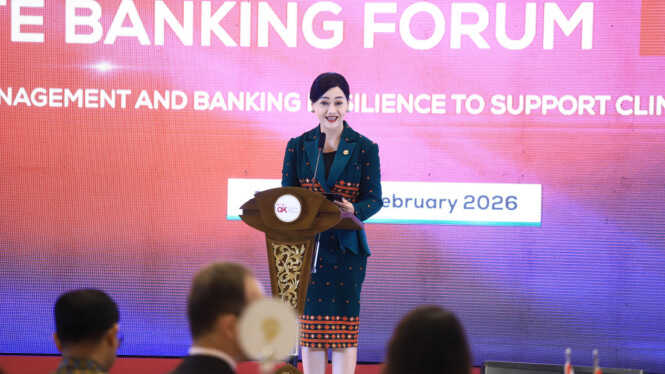
Jakarta, VIVA – The acting Chairman and Vice Chairman of the Financial Services Authority (OJK), Friderica Widyasari Dewi, also known as Kiki, affirmed that to build a credible, transparent, and accountable domestic carbon market ecosystem, efforts are needed to strengthen the national carbon economic value framework.
At ‘The 2nd Indonesia Climate Banking Forum’ (ICBF), Kiki assessed that this is one of the important elements in building a national domestic carbon market ecosystem in accordance with that goal.
“By reaffirming various carbon economic instruments, the government encourages the formation of a credible, transparent, and accountable domestic carbon market ecosystem,” said Kiki in the Sudirman area, Jakarta, Thursday, February 26, 2026.
She hopes that this framework can provide a clear carbon price signal for business actors, while also strengthening the integrity of national climate policy. This is also in line with Indonesia’s vision of achieving net-zero emissions by 2060.
OJK also appreciates the commitment of the banking industry in strengthening sustainable finance practices, including through the development of green financing instruments and the implementation of climate risk management.
Kiki emphasized that the authority is also continuing to build a healthier policy ecosystem, including through the improvement of the Indonesian Sustainable Finance Taxonomy (TKBI), the establishment of the Indonesian Carbon Exchange, and the implementation of a climate risk management framework and scenario analysis for the banking sector.
“In order to develop a more comprehensive policy ecosystem,” said Kiki.
She added that the TKBI provides a clear classification for green and transition activities. Meanwhile, the carbon exchange supports a transparent price discovery mechanism, as well as the provision of market-based instruments in managing carbon economic value and reducing greenhouse gas emissions.
Kiki believes that all of these instruments will become an integrated policy foundation to support Indonesia’s transition agenda while maintaining financial system stability.