
Building Cities Without Evictions: Lessons from Kampung Akuarium
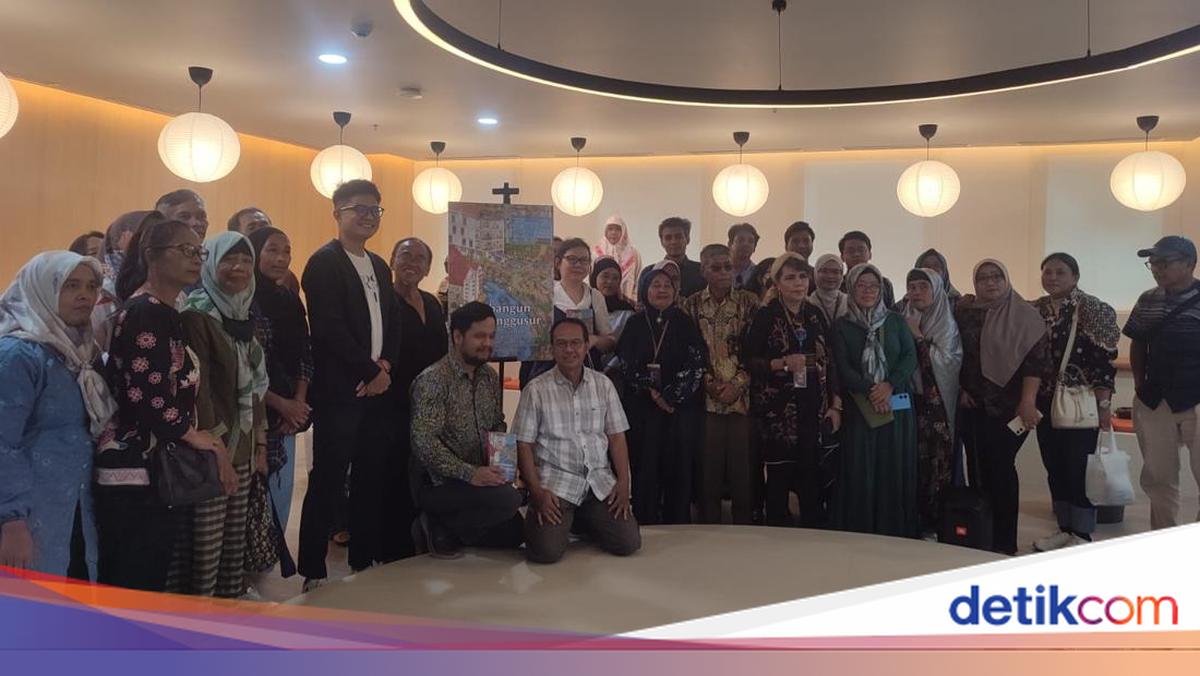
The message emerged prominently during the launch and discussion of the book “Membangun Tanpa Menggusur” at the Urban Knowledge Hub Jakarta, Nyi Ageng Serang Building, on Friday (08/05/2026). The book, authored by M. Azka Gulsyan and Untung Widyanto, records the long journey of residents from Kampung Akuarium and several other neighbourhoods in Jakarta in fighting for their right to live on their own land.
For some Jakarta residents, evictions were once part of the city’s daily life. During the 2012 Jakarta Gubernatorial Election campaign, the pair Joko Widodo and Basuki Tjahaja Purnama introduced the idea of building without evictions. However, after Jokowi left the governor’s seat upon being elected president, the policy direction changed.
Data from LBH Jakarta records that in 2015, there were 113 eviction cases affecting 8,145 families and 6,283 business units. The following year, the number of cases rose to 193 evictions impacting 5,726 families and 5,379 business units.
Kampung Pulo, Bukit Duri, Kalijodo, Kampung Luar Batang, Pasar Ikan, and Kampung Akuarium became part of the harsh face of city development at that time.
However, not all residents chose to give up.
Residents of Kampung Akuarium, Kampung Kunir, and Bukit Duri persevered. They rejected disappearing from the city map and began advocating for a simple idea: development should not disrupt the lives of long-term residents.
That struggle then found new space in the 2017 Jakarta Regional Election. The pair Anies Baswedan and Sandiaga Uno accommodated the residents’ demands. Several civil society organisations, communities, and social architects supported the rebuilding process through a participatory approach.
Names such as UPC, JRMK, Rujak Center for Urban Studies, Komunitas Ciliwung Merdeka, LBH Jakarta, and social architects like Yu Sing and Kamil Muhammad were involved in the process. Residents were no longer merely objects of development but participants in shaping their own living spaces.
Untung Widyanto, a senior journalist and one of the book’s authors, said the residents’ struggle story is an important part of the book’s writing.
“This book was written by looking at political actors and also NGO actors who played a role. The sad stories of residents and their diligent efforts to demand justice are an important part of this book,” said the former Metropolitan Editor of Koran Tempo.
Before the discussion session began, the committee played a video recording of greetings from Anies Baswedan and Noer Fauzi Rachman, an academic from the University of California, Berkeley, who also served as a resource for the book. Testimonies from Kampung Akuarium resident Dharma Diyani and former Assistant for Development and Environment of DKI Jakarta, Yusmada Faizal, were also present.
In his remarks, Anies stated that a city truly speaks through its policies and actions towards its residents. “When a city evicts, the city says: ‘You are not seen.’ When a city builds without asking, the city says: ‘Your voice is not important,’” Anies said.
Conversely, when a city sits with its residents, listens, and plans together, the city acknowledges their existence as part of the city itself.
For Yusmada Faizal, the Kampung Akuarium experience can serve as a lesson for other regions facing dense settlement issues. Meanwhile, architect Kamil Muhammad views the involvement of facilitators and architects as crucial to ensure development not only introduces new buildings but also preserves residents’ social lives.
Executive Director of Rujak Center for Urban Studies, Elisa Sutanudjaja, expressed delight at seeing Kampung Susun Akuarium finally standing after long receiving a bad stigma.
“However, not all cities need to be built vertically like this, except in very dense cities with limited land,” she said.
Now, Kampung Susun Akuarium is no longer just a symbol of residents’ resistance against evictions. The area has also received international recognition through the World Habitat Awards 2024.