
Building Business and Community: SCG Indonesia's Social Strategy
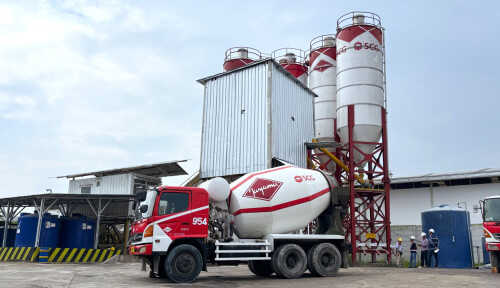
For heavy industries such as cement, sustainability is not measured solely by energy efficiency or carbon emission reductions. The social dimension serves as an equally important foundation for maintaining long-term operational stability.
Around its production facilities, SCG Indonesia positions social programmes as part of its business strategy, rather than mere philanthropic activity.
SCG Indonesia President Director Pattaraphon Charttongkum (Palm) affirmed that the company’s sustainability approach is designed to be inclusive.
“Our business objective is inclusive green growth. Inclusive means we do it together with the community, the government, and other partners,” said Palm during a Meet the Leader discussion with Warta Ekonomi, quoted on Tuesday (24/2/2026).
This approach is translated through social investment in education, local economic strengthening, and community involvement in environmental programmes. In operational areas such as Sukabumi, social programmes are directed towards creating measurable long-term impact.
Education as Strategic Investment
One of the main pillars is educational support through scholarship and learning subsidy programmes. The company views access to education as the foundation for improving the quality of human resources around its factories.
“We support several schools around our operational areas through learning subsidies,” said Palm.
This commitment is realised through the SCG Sharing the Dream programme, which has been running since 2012 in Indonesia. The programme forms part of the company’s ESG 4 Plus commitment, particularly in reducing social inequality and expanding access to education.
Carrying the theme “From Gen Z to Green Z — SCG’s Mission to Shape Future Change,” the company considers the younger generation to have a strategic role in driving transformation towards a more sustainable future. Character education and learning access are deemed key to shaping that generation.
Since its launch, the programme has reached approximately 4,600 scholarship recipients across nine operational areas, with a total fund allocation of approximately Rp20 billion. In 2025, the company distributed scholarships to 415 senior secondary school students, as well as 12 undergraduate and diploma students.
From a business perspective, this type of social investment is considered to help strengthen the social licence to operate — an important prerequisite for industries operating within communities.
Driving Greater Local Economic Resilience
Beyond education, SCG Indonesia also focuses its programmes on empowering micro, small, and medium enterprises (MSMEs) around its operational areas. The company provides support and mentoring so that local business operators have broader opportunities for growth.
“We focus on communities adjacent to our factories, and support them to have more opportunities to grow in the MSME sector. That way, company growth can proceed in tandem with local economic growth,” said Palm.
This approach aims to create an economic multiplier effect at the local level. The presence of large industries can drive economic activity when integrated with surrounding business operators, whether through training, partnerships, or business capacity support.
Amid national economic dynamics, strengthening MSMEs is considered to play a role in enhancing community economic resilience, whilst simultaneously strengthening the relationship between companies and communities.
Community Participation in the Environmental Agenda
The social dimension is also integrated into waste management programmes supporting the production of refuse-derived fuel (RDF). Under this scheme, communities are involved in collecting household waste, which is then processed into alternative fuel for factory needs.
The company applies an incentive system for participating residents. “They will receive something in return, for example eggs or cooking oil,” explained Palm.
This scheme encourages behavioural change based on economic incentives, whilst strengthening environmental awareness at the household level. The approach demonstrates integration between environmental and social aspects within a single sustainability framework.
ESG as a Long-term Foundation
Palm considers that in an increasingly transparent industrial landscape integrated with global standards, companies can no longer rely on financial performance alone. The social dimension has become part of the measure of long-term success.
“If we want to grow sustainably, we must grow together with the community,” he stressed.
For SCG Indonesia, social sustainability is not merely a response to external pressure, but a strategic necessity for maintaining operational stability and corporate reputation. Education programmes, MSME empowerment, and community involvement in the environmental agenda are positioned as the foundation of long-term relationships.
The presence of factories no longer stands as an entity separate from society, but as part of an economic and social ecosystem that mutually supports one another.