
Building a 'Golden Bridge' to Gaza
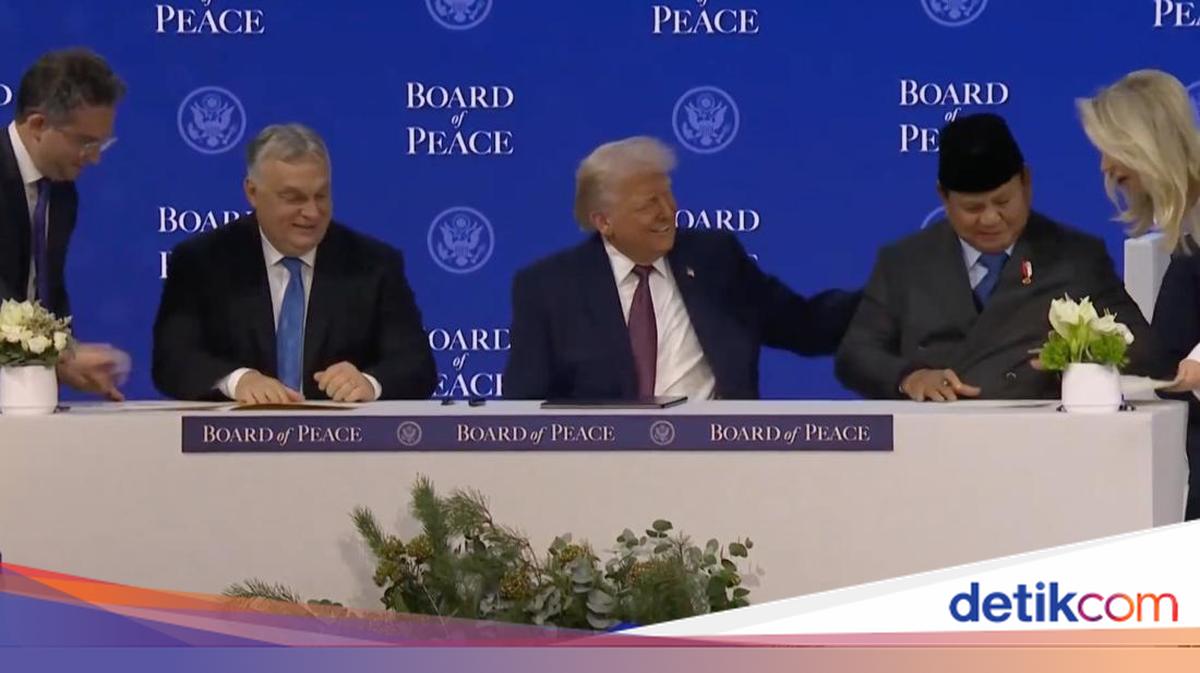
Jakarta — President Prabowo Subianto’s decision to prepare eight thousand Indonesian National Armed Forces (TNI) personnel under the auspices of the Board of Peace (BoP) is not merely an act of ordinary solidarity. Upon careful analysis, it represents a masterclass in diplomacy combining military pragmatism with high-level political strategy. The question is: what grand agenda lies behind this move?
Prabowo fully understands Indonesia’s position as a political entity whose strength depends on its network within the global community. Beyond the United Nations (UN), Indonesia has also joined the BoP. The political “goal” is clear: to build a counterbalancing bloc amid an uncertain global geopolitical landscape.
In politics, if an entity wishes to change the policies of a greater power, shouting from outside the great wall is often ineffective. Indonesia’s entry into the BoP represents a political strategy of “entering the room” so that Indonesia can exert direct diplomatic pressure on the United States (US). Indonesia wants to ensure that the voice of Palestinian independence and peace is heard directly by US policymakers — who have long been regarded as supporters of Israel — without intermediaries.
This cooperation does not mean Indonesia endorses the US’s controversial policies towards Palestine. Rather, it is an effort to use the West to achieve peace in the Middle East. Through the US, Indonesia wants to ensure that aid for the Palestinian people actually arrives and that Israeli military aggression ceases — while remaining consistent in supporting Palestinian independence.
There are several strategic reasons behind Indonesia’s political move. First, the planned presence of professional and “neutral” TNI forces offers the world the perspective that Indonesia is a nation providing a different approach to responding to the humanitarian crisis in Palestine. It sends a strong message that maintaining peace need not require open confrontation with the aggressor. This means Indonesia is mobilising global support through an international stability mission, rather than through a “war on terror” narrative. With this position, Indonesia becomes the only nation consistently committed to both humanitarian crisis issues and world peace.
Second, by leveraging US influence, Indonesia is effectively building a “golden bridge” to reach the heart of the crisis. Previously, Indonesia operated without directly involving the US, which meant that property and humanitarian aid entering Palestine was frequently blockaded at the border. By joining the BoP, Indonesia effectively compels the US to secure safe passage for medical aid and reconstruction forces.
Third, in the current geopolitical climate, Indonesia fully understands that if it aligns with anti-US nations, this noble mission would be labelled as an enemy alliance of the West, potentially triggering sanctions or political-economic pressure against Indonesia. By playing this strategy, Indonesia is creating a special channel that leaves the West with no reason to obstruct the mission or impose economic sanctions.
An Influential Non-Aligned Nation
Prabowo has frequently stated that Indonesia’s position is that of a modern Non-Aligned nation. He therefore wants peace to be more than mere theory stored in the cabinets of world peace organisations. Indonesia wants to be a Muslim nation that can speak with Palestine-Hamas whilst also sitting at the table with the Western Bloc.
If Indonesia were simultaneously to defend Palestine at all costs without a proper strategy whilst totally antagonising the US and its allies, it would have failed and lost its ability to be an effective and formidable mediator. It is precisely this unique position that makes nations — both Palestine’s supporters and US allies — recalculate Indonesia’s diplomatic strategy.
Like a football team, Indonesia has an interest in scoring “goals.” First, scoring tactical goals — short-term objectives that must be achieved to demonstrate the mission’s credibility: creating security stability and infrastructure rehabilitation. With peacekeeping forces under the BoP, aid can enter without significant obstacles. Meanwhile, through the TNI Army Engineering Corps — the military’s engineer forces — Indonesia can safely rebuild infrastructure ranging from hospitals, schools, and places of worship to clean water systems destroyed during the Israeli aggression. Finally, saving Palestinian lives by providing large-scale medical services to those who have been isolated — in the largest prison — with adequate healthcare access.
Second, scoring strategic goals. This is Prabowo’s high-level political game. Indonesia does not want merely to be a donor or a spectator waiting for the ball to enter the goal on its own. By sending eight thousand troops, it automatically gains a voice in determining how Palestine’s future will be managed post-conflict. On another front, Indonesia wants to break the dominance of Arab nations — who have been half-hearted — on the issue of Palestinian peace. The goal is for Indonesia to demonstrate that it is the nation with the world’s largest Muslim population, possessing the strength of moderate, stable democracy, and capable of acting as a mediator accepted by all parties — including the Western Bloc.
Simultaneously, the success of this mission would make Indonesia a respected nation and a new global player that is neutral and reliable. And naturally, Indonesia would create a stronger bargaining position when negotiating with superpowers — the US, Russia, and China — on other issues such as economics, politics, investment, and downstream processing.
What “Final Score” Do We Hope For?
The target goals outlined above represent one of the objectives of Indonesia’s Constitution — namely, to fulfil the mandate of the 1945 Constitution, which we have collectively agreed upon, to participate in establishing a world order based on independence, lasting peace, and social justice.
Joining the BoP is the path that must be taken towards full Palestinian independence and peaceful coexistence with other nations of the world. The final score: Indonesia is not a nation that merely arrives and helps, but one that steps forward to create stability and ensure full Palestinian independence through influence built collectively within the Board of Peace.
Tajussarofi is a postgraduate student in Communication Studies at Paramadina University, Jakarta, with a special interest in Middle Eastern studies.