
Budget Efficiency and Geopolitics Pressure South Kalimantan's Economic Growth
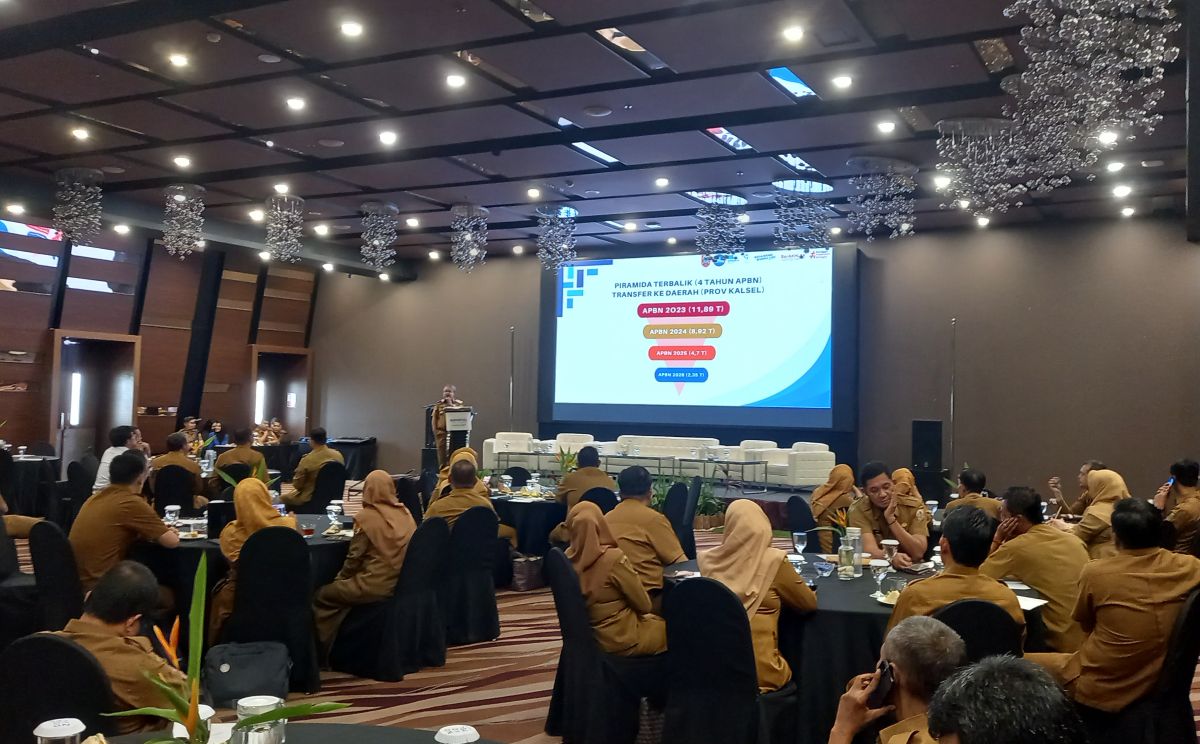
Budget efficiency policies and global geopolitical developments are feared to further pressure the economic growth of South Kalimantan Province. The 8.1% economic growth target for South Kalimantan is considered unrealistic.
This was stated by the Assistant II for Economic Affairs of the South Kalimantan Provincial Government, Ariadi Noor, on the sidelines of the 2026 Regional Device Forum Coordination Meeting for South Kalimantan in Banjarbaru on Monday (30/3). “Given the current conditions, including budget efficiency policies and the development of Middle East geopolitical conflicts, these will pressure the regional economy. The 8.1% economic growth target for South Kalimantan becomes unrealistic,” he explained.
According to Ariadi, with such an ambitious economic growth target, the South Kalimantan Provincial Government must work hard to encourage investment inflows as the main pillar to achieve the economic growth target. “Amid our increasingly pressured fiscal conditions, efforts and strategies are needed to attract inclusive investments. That is, investments that can drive economic growth, reduce poverty rates, and curb unemployment,” Ariadi said.
Furthermore, local governments, particularly the Investment Agencies in regencies/cities, must prepare investment projects to present to prospective investors. Investment projects showcase potential sectors to be offered to investors with accurate and quality data. South Kalimantan’s economic growth is stalled at 5.2%, far below the 8.1% target.
Ariadi explained that the portion of the state budget allocated to South Kalimantan continues to decline from Rp11.88 trillion in 2023 to Rp2.35 trillion in 2026. Meanwhile, South Kalimantan’s regional budget also decreases from Rp11.8 trillion in 2024 to Rp9.9 trillion in 2026. “Ideally, South Kalimantan’s economy currently stands at 5.7% to 6%, so that by 2029 the 8.1% target can be achieved. Moreover, with the current Middle East conflict, although it does not directly impact, the rise in fuel prices will trigger increases in various commodities and services, sparking inflation and reducing people’s purchasing power,” he said.
The Head of the Investment and One-Stop Integrated Services Agency of South Kalimantan, Endri, stated that based on a Bank Indonesia study, achieving 8.1% economic growth requires investments of Rp257 trillion. “This is a heavy challenge for South Kalimantan, but we will try to attract investments through various strategies, including investment projects from each regency/city,” he said.
Investments in South Kalimantan have been recorded to grow continuously from Rp15 trillion in 2022, rising significantly to Rp32 trillion in 2025. The South Kalimantan Provincial Government targets an increase in investments to Rp37 trillion in 2026.