
Budget Efficiency Again: Business Owners Anxious About Investment and Employment Under Pressure
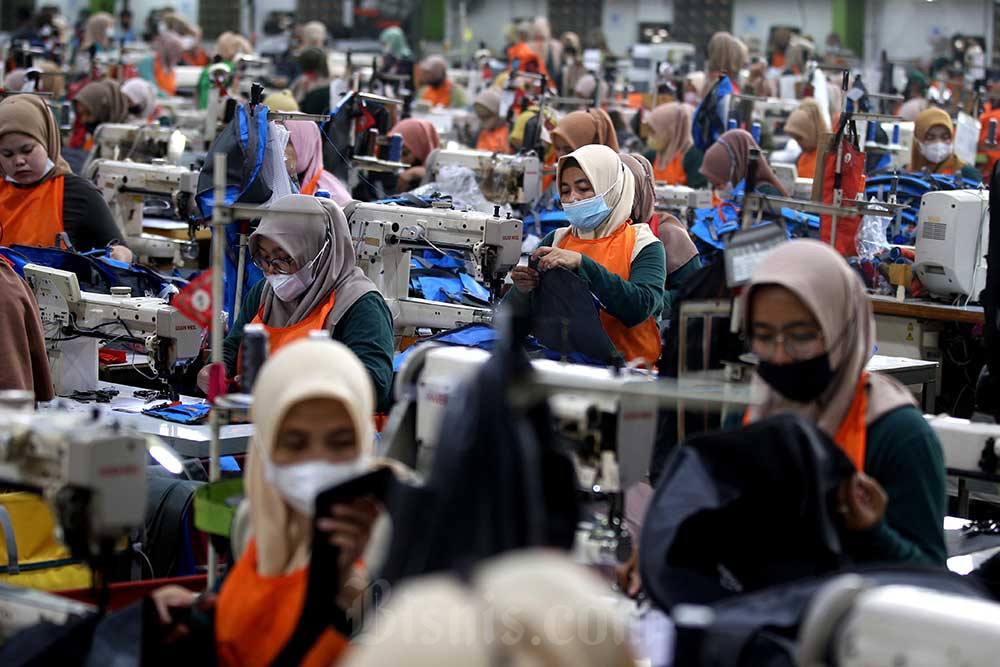
Business circles are warning of potential pressure on investment and employment absorption following the government’s renewed discourse on budget efficiency amid rising oil prices due to the escalation of the US-Israel-Iran conflict.
The sustained increase in global oil prices could inflate the fuel subsidy budget, thereby widening the state revenue and expenditure budget (APBN) deficit.
Nevertheless, Finance Minister Purbaya Yudhi Sadewa has emphasised that no final decision has been made regarding government spending cuts in response to the global oil price volatility.
Apindo General Chairman Shinta Widjaja Kamdani stated that the business world fundamentally understands efficiency measures as a response to maintaining fiscal discipline amid external pressures, particularly the surge in global oil prices due to geopolitical escalation.
According to her, rising energy prices exert direct pressure on the APBN, particularly through increased subsidies and energy compensation. Indeed, every US$1 per barrel increase in oil prices could add a fiscal burden of around Rp6.8 trillion.
“This shows that Indonesia’s fiscal sensitivity to energy prices is indeed quite high, so fiscal space could erode quickly if the conflict and oil price upward trend continue,” Shinta told Bisnis on Wednesday (25/3/2026).
Shinta explained that in such conditions, the APBN serves as a buffer (shock absorber) to maintain price stability and public purchasing power. However, the consequence is limited fiscal space, making spending adjustments inevitable.
She added that although the government’s spending as a portion of gross domestic product (GDP) is only around 15%-16%, its impact remains strategic due to its strong multiplier effect. Therefore, efficiency targeting productive spending risks triggering follow-on effects on investment and consumption activities.
Furthermore, Shinta views efficiency policies as presenting dual pressures from the business perspective. On one hand, business actors face rising costs due to energy prices and global logistics disruptions.
“On the other hand, government spending efficiency, especially if it affects goods/services spending, projects, or regional transfers, could hold back economic activity,” she said.
According to her, this combination of cost pressures and weakening demand could influence business decisions on expansion, investment, and employment absorption.
Apindo assesses that sectors related to government spending, such as construction and infrastructure, building materials industry, and project-based manufacturing and supporting services, are likely to be significantly impacted.
“Project-based manufacturing and supporting services sectors could also be affected through adjustments in work volumes,” she added.
Shinta further noted that SMEs in the government supply chain are also vulnerable sectors, particularly in terms of cash flow and business sustainability. She assessed that if efficiency impacts weakening purchasing power, then the trade and consumption sectors could also be affected.
Nevertheless, she believes budget efficiency is still necessary to maintain APBN credibility. Provided it is done selectively while preserving spending with high multiplier effects.
In agreement, Kadin Indonesia Vice General Chairman Erwin Aksa stated that the business world understands the government’s steps to keep the deficit under control below 3% of GDP, especially amid pressures from rising global energy prices.
However, Erwin cautioned that efficiency must also be carried out selectively and measured to avoid triggering economic slowdown.
“If [spending efficiency] is not on target, there is potential for economic activity slowdown, particularly in sectors closely linked to government spending,” Erwin told Bisnis.
However, Kadin does not deny that the impact of spending efficiency could lead to business actors experiencing declining demand, delays in infrastructure projects and procurement, and cash flow pressures, especially for contractors and SMEs dependent on government spending.
“The sectors relatively most impacted [by budget efficiency] include construction and infrastructure, building materials industry, government goods and services procurement services, as well as transportation and logistics related to government projects,” he explained.
For this reason, Kadin views that efficiency should be focused on non-priority spending. Meanwhile, productive spending such as infrastructure, social protection, and support for the business world should be maintained.
In addition, he continued, accelerating budget reallocation to productive sectors is also key to ensuring economic growth momentum is not disrupted.
“The business world also hopes for policy certainty and consistency so that business actors can make more measured strategic adjustments amid the current global dynamics,” he concluded.