
Budget Cuts to Transport Safety Threaten Public Safety
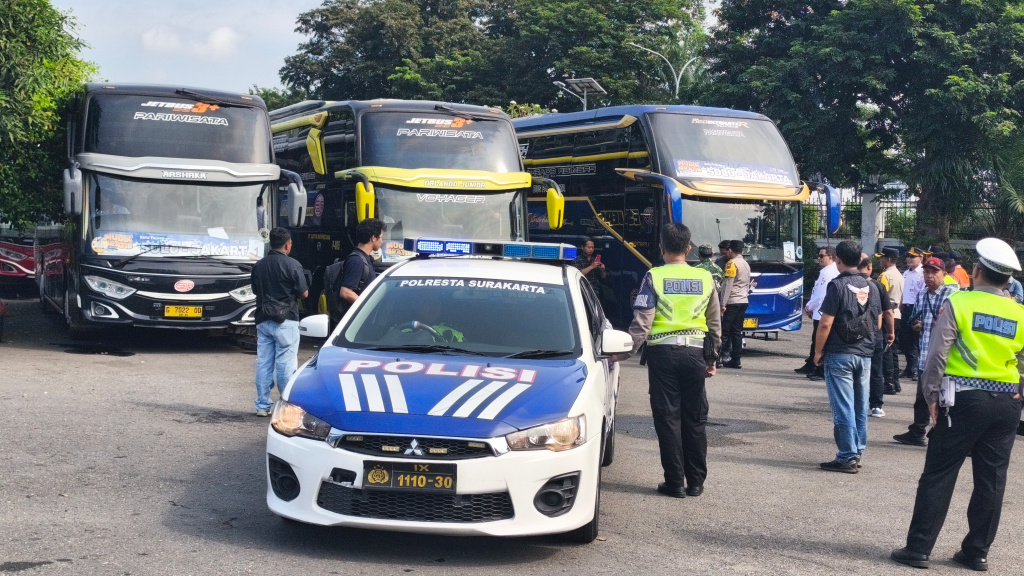
Budget cuts for transport safety positions are feared to erode public safety. Without safety guarantees, even the most outstanding human investments will end up in vain on the asphalt roads.
This assertion was made by Djoko Setijowarno, a member of the Indonesian Transport Community Advisory Council, to Media Indonesia on Thursday (26/3), in response to the government’s policy of slashing budgets across various ministries, as a result of disrupted global oil supplies due to escalating conflicts in the Middle East region.
“This becomes the government’s dream of producing superior generations, hindered by fiscal and geopolitical challenges, coinciding with global oil supply volatility due to the Middle East conflict, which forces the government to cut budgets in various ministries, including transport safety positions,” explained Djoko.
Geopolitical tensions due to US-Israel aggression towards Iran, he acknowledged, directly impact the stability of global oil supplies and the state’s budget posture. The Indonesian government is compelled to take drastic budget adjustment measures in ministries and agencies (K/L).
Furthermore, the civil engineering academic from Unika Soegojopranoto stated that budget cuts for safety in the Ministry of Transportation have already been implemented and are planned to continue. Efficiency measures have a significant impact on the ground. “The reduction in funds is no longer just numbers on paper, but a real threat that is starting to erode our public transport safety standards,” he criticised.
Often, behind the row of slashed budget figures for the sake of efficiency, human lives are at stake. Efforts to cut transport safety budgets are like gambling with public safety that can turn into a time bomb on the highways and have fatal impacts.
“When safety is considered a cost burden, not an investment, then every kilometre travelled by the public becomes an immeasurable risk. This becomes a gamble with lives and the future,” emphasised this national transport observer.
SURGE IN ACCIDENT FIGURES
According to him, budget cuts will trigger a surge in accident numbers and fatalities due to declining field supervision standards. Without adequate funding support, ramp check activities or fitness inspections for buses and trucks cannot be carried out routinely.
As a result, said Djoko, unfit vehicles continue to operate freely, increasing risks from brake failures to broken axles. Other impacts include cuts to safety facilities, such as the installation of signs and reflective markings up to the provision of guardrails and street lighting, becoming minimal. Dark roads without signs can become deadly blind spots for every driver.
So far, the safety budget that usually supports the operation of weighbridges and technical supervision is also continuously decreasing. The consequence is that enforcement against overloaded and oversized trucks (ODOL) is not optimal.
“The leniency towards ODOL trucks is not just a load issue, but a threat to road infrastructure resilience. Roads become more quickly potholed and uneven, which ultimately becomes a major factor in fatal accidents for motorcyclists,” he added.
Clearly, transport safety budget cuts will also trigger a human resources (HR) crisis and a decline in driver competency. Transport safety heavily depends on the human factor.
When education and training programmes as well as certification for public and goods transport drivers are eliminated, the frontline guards of road safety will be lost. Drivers not equipped with understanding of accident mitigation or defensive driving techniques will tend to drive based on instinct.
“This is a dangerous gamble, especially when facing difficult road conditions, particularly for motorcyclists. So behind this savings or efficiency, it actually triggers swelling costs on the other side, such as post-accident financing becoming much larger,” Djoko stated frankly.
FAR MORE EXPENSIVE
MTI observes that cuts in the transport safety sector are far more expensive than investments in prevention. Moreover, accidents so far are dominated by productive-age citizens (17–45 years) at 58%.
Loss of lives in that age range, according to National Police Traffic Corps data, from 1 January to 31 December 2025, are as follows: traffic accident victims under 17 years old reached 15%. Ages 17–25 years (25%), ages 26–45 years (33%), and ages 46–65 years (22%).
Accidents are highest caused by motorcycles, namely 76.6%. From the presented data, it increasingly raises concerns that consecutive accidents will create a sense of insecurity for the public in using public transport.
“If public transport is considered unsafe and eventually stops operating due to minimal safety guarantees from the government, people in remote areas will become increasingly economically and educationally isolated,” he stated frankly.
Therefore, once again MTI assesses that public safety programmes need serious attention, because they are an investment and not a burden. All state efforts to produce superior humans through the Free Nutritious Meals (MBG) programme as well as strengthening education in People’s Schools and Garuda Schools will feel in vain if the lifeline of mobility to ensure transport safety is eroded.