
BSKDN synchronises central-regional efforts to oversee President's priority programmes
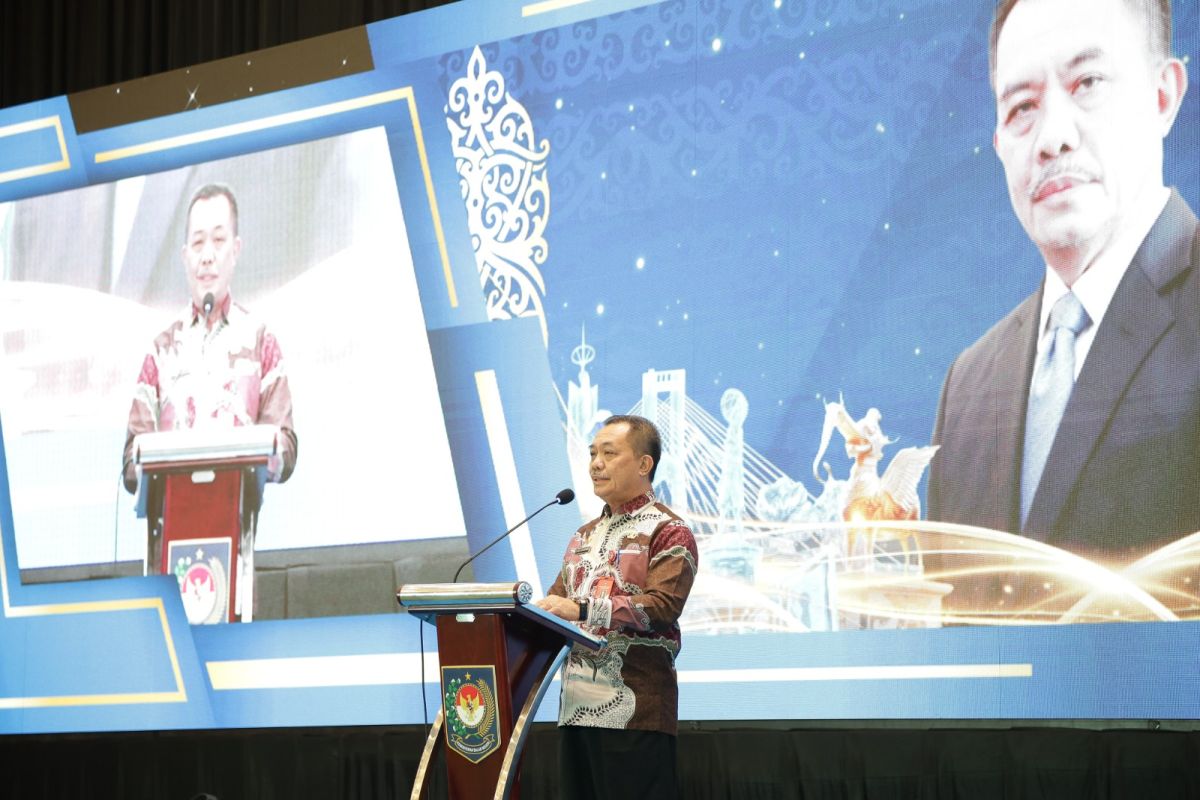
The Agency for Domestic Policy Strategy (BSKDN) of the Ministry of Home Affairs is continuously strengthening coordination and synchronisation between the central and regional governments to oversee the implementation of various priority programmes of the President.
One such effort is the convening of the Regional Coordination Meeting for Monitoring and Evaluation of the Implementation of Presidential Directive Programmes (Batch III) in Banjarbaru, South Kalimantan.
“This activity is organised to produce a comprehensive overview regarding achievements, obstacles, and the need for policy strengthening as a basis for formulating policy strategy recommendations that are more operational and responsive to regional conditions,” said the Head of BSKDN, Yusharto Huntoyungo, in a statement in Jakarta on Friday.
According to him, the success of implementing national priority programmes is determined not only by the quality of policies formulated by the central government but also by the ability of all stakeholders to translate and implement them effectively down to the regional level.
Therefore, cross-sector coordination and consolidation are key to ensuring that the 10 Presidential Directive Programmes—ranging from economic growth, inflation control, Free Nutritious Meals, the construction of 3 million houses, the Red and White Cooperative, People’s Schools, food self-sufficiency, Free Health Checks, Garuda Schools, to the eradication of extreme poverty—can run optimally and provide real benefits to the community.
Furthermore, Yusharto emphasised that data is a vital instrument in ensuring these various programmes are precisely targeted. Consequently, regional governments must possess data capable of accurately depicting targets, locations, and the progress of programme implementation.
“The key is not the quantity of data, but the accuracy of data for decision-making. For the 10 priority programmes, data must be able to answer three questions: who, where, and what the progress is, down to the regency, city, and even sub-district or village level if possible,” he stated.
These efforts are considered essential to ensure that national development targets, particularly in the fields of economy, community welfare, and human resource development, can be realised through effective policies in the regions.
Furthermore, Yusharto expressed hope that the Regional Coordination Meeting (Batch III) would not only serve as an evaluation forum but also produce various innovative and implementable policy recommendations to strengthen the synergy between the centre and the regions in executing national priority programmes.
“I hope this regional coordination meeting produces rational, out-of-the-box recommendations that will serve as provisions for us at the central level to formulate policies capable of synergising the centre and the regions,” he concluded.