
BSKDN Chief Urges Regional Governments to Strengthen Innovation for Sustainable Smart Governance
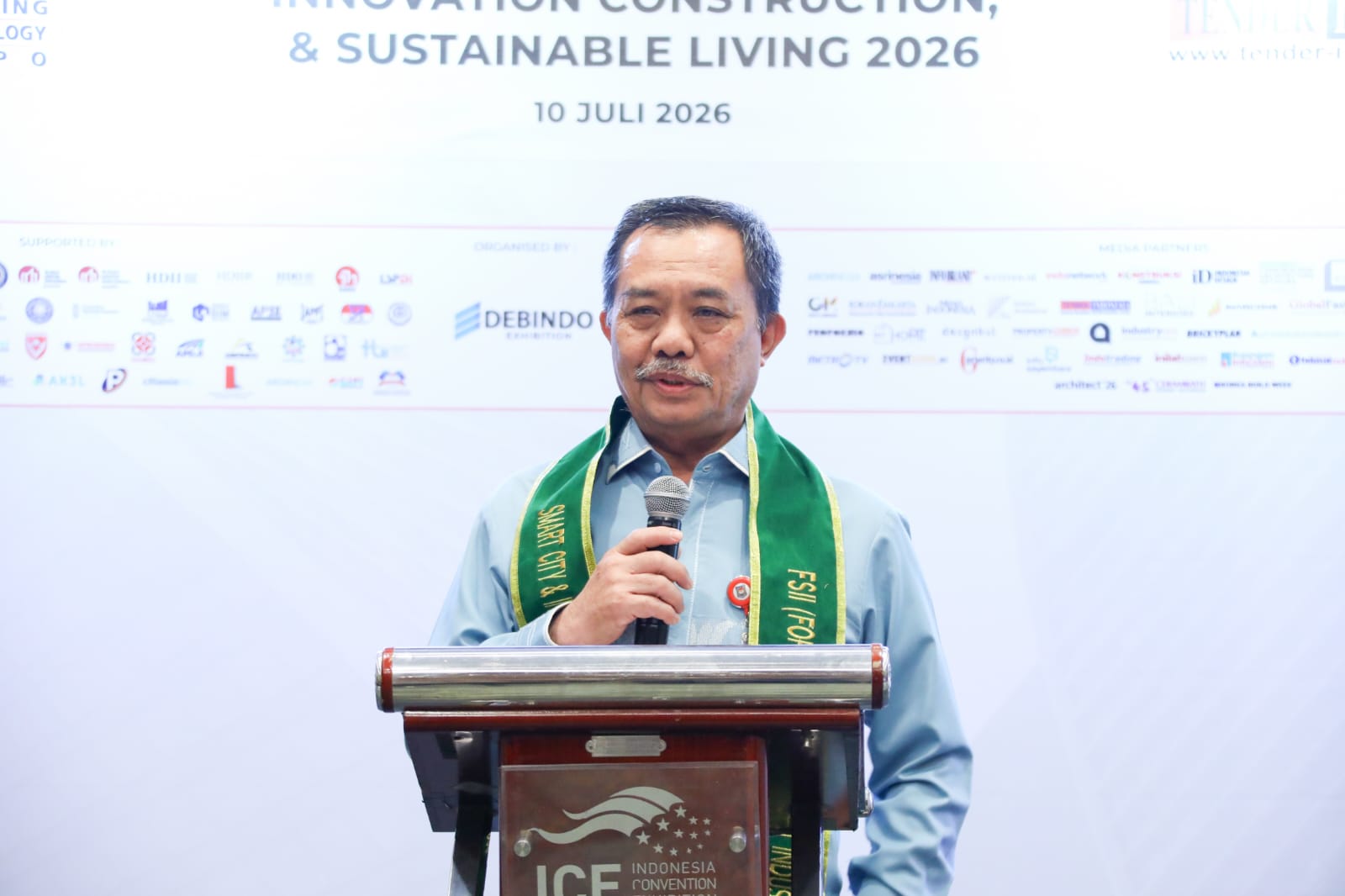
The Head of the Domestic Policy Strategy Agency (BSKDN) at the Ministry of Home Affairs, Yusharto Huntoyungo, has invited regional governments to continue strengthening innovation as a foundation for realising sustainable smart governance. He stated that intelligent governance does not solely depend on the use of digital technology, but also on the ability to deliver policies that are adaptive, collaborative, and evidence-based. Yusharto made these remarks while receiving the Excellence Leadership in Smart Governance for Urban Sustainability award at the 2026 Smart City, Innovation Construction & Sustainable Living Awards at the Indonesia Convention Exhibition (ICE) BSD City, Tangerang, on Friday, 10 July 2026. He further stated that the award represents appreciation for BSKDN’s commitment to driving governance transformation. However, he noted that the award is also a mandate to continue strengthening BSKDN’s role as a catalyst for innovative public policies that have an impact on society. “This award is not the finish line of a journey, but rather a mandate to continue strengthening innovative, adaptive, collaborative, and evidence-based governance transformation. This award also belongs to all regional governments that every day present various solutions for the community through innovation,” Yusharto said. He explained that the challenges of urban development are increasingly complex due to rising urbanisation. Issues such as traffic congestion, housing needs, waste management, environmental pollution, climate change, and the demand for faster and more transparent public services require the government to deliver more innovative policies. According to Yusharto, these conditions cannot be addressed through conventional bureaucratic approaches. The government needs data-based policies, supported by digital technology, and built through collaboration between the government, academia, the business sector, communities, and the public. In this context, Yusharto emphasised that regional innovation is a crucial foundation for national development. For this reason, the Ministry of Home Affairs continues to build an innovation ecosystem through guidance, measurement, mentoring, and the dissemination of best practices developed by regional governments. These efforts have yielded significant results. The number of regional innovations reported by local governments has continued to increase, from 3,718 innovations in 2018 to 36,742 innovations in 2025. This nearly tenfold increase demonstrates that innovation has evolved into a working culture in various regions. “Behind these tens of thousands of innovations lie experiences, lessons, and solutions that have proven to address community problems. Our task is to ensure that all these good practices are processed into policy knowledge, analysed scientifically, and then translated into policy recommendations that can be replicated nationally,” he explained. He added that BSKDN will continue to strengthen its function as a government think tank within the Ministry of Home Affairs. By utilising policy foresight, artificial intelligence, data analytics, and evidence-based policy evaluation, BSKDN seeks to produce policy recommendations capable of addressing current and future development challenges. He also stressed that the concept of smart governance should not be understood merely as the digitalisation of public services or the use of government applications. “Smart governance is the government’s ability to make data-based decisions, integrate across sectors, strengthen public participation, utilise artificial intelligence and data analytics, and build intergovernmental and multi-stakeholder collaboration,” he asserted. Yusharto also believes that Indonesia’s development success is not solely determined by the size of the budget or physical infrastructure development. Far more important is the government’s ability to transform knowledge into policy, innovation into a working culture, and collaboration into tangible benefits for the community.