
Broadcasting Law and Press Freedom
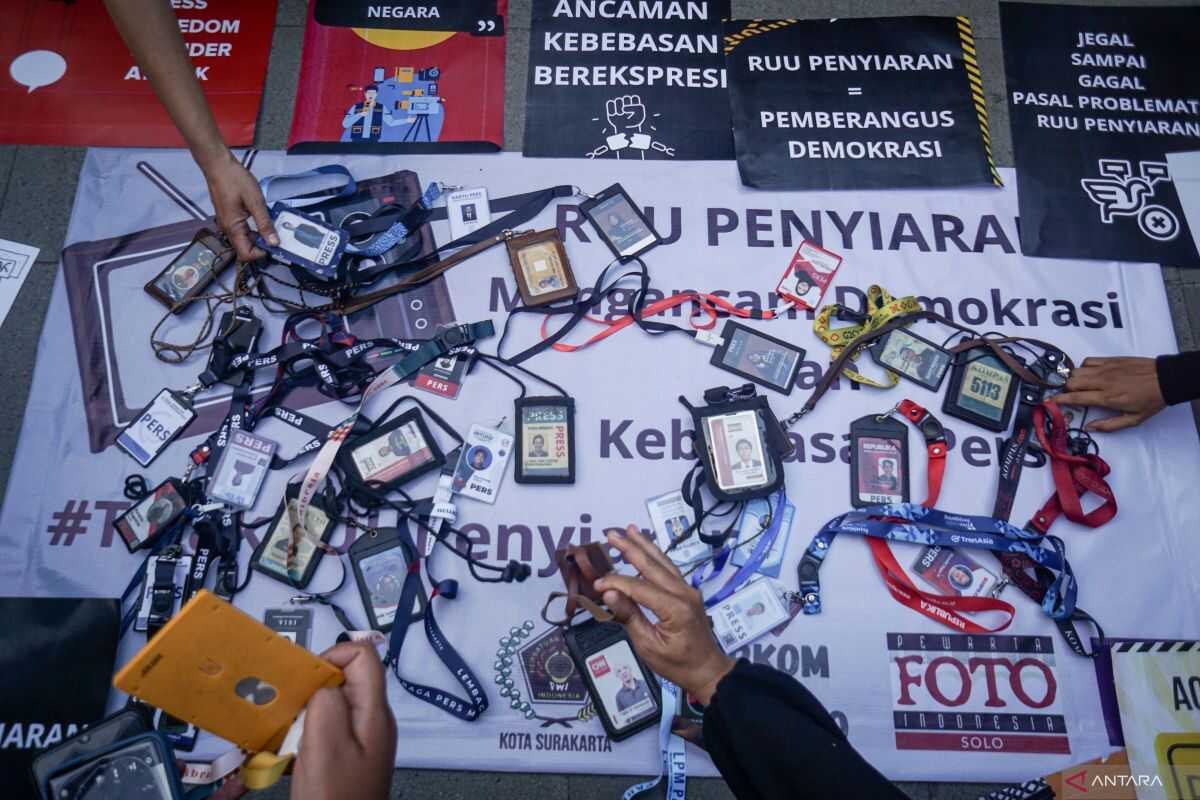
Without guarantees for press freedom, democracy will merely become an empty slogan.
Jakarta – Law No. 32 of 2022 concerning Broadcasting (Broadcasting Law) establishes the principles governing broadcasting operations in Indonesia.
The legislation encompasses the foundational principles, objectives, functions, and direction of national broadcasting. It also contains provisions concerning the Indonesian Broadcasting Commission, broadcasting services, public broadcasting institutions, private broadcasting institutions, subscription broadcasting institutions, community broadcasting institutions, foreign broadcasting institutions, broadcasting stations and transmission coverage, networked broadcasting systems (both television and radio), as well as licensing and broadcasting operations.
Discussion of Broadcasting Law revisions has been underway since 2006 and continues to be debated in the Indonesian Parliament, reigniting public controversy. On one hand, regulatory reform is considered essential to accommodate the rapid evolution of broadcasting technology in the digital era. On the other hand, several provisions in the draft revision are viewed as potentially threatening press freedom, expanding state control over public space, and risking jurisdictional overlap between institutions.
Amid rapid digital transformation from analogue to digital broadcasting, the public now enjoys faster, broader, and more diverse access to information.
Broadcasting is no longer confined to television and radio but has expanded to digital platforms such as YouTube, TikTok, and various user-generated content (UGC) based media. This situation demands adaptive regulation; however, such regulation should strengthen democracy rather than restricting freedom of expression.
Broadcasting and democracy