
Bringing Alcoholic Beverages from Abroad? Here Are the Limits!
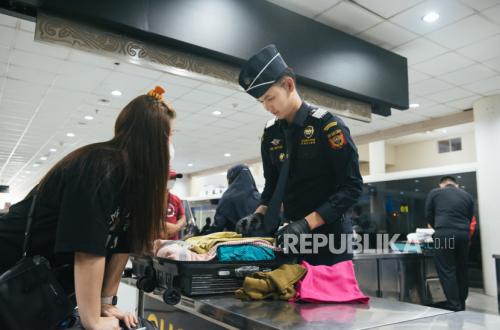
In early March 2026, customs officers at Teluk Bayur discovered a passenger on an international flight carrying three bottles of beverages containing ethyl alcohol (MMEA) from abroad. In fact, this amount exceeded the applicable exemption limit, which is a maximum of 1 litre per person.
This case, which briefly went viral on social media, should serve as a reminder of the importance for international travellers to understand the rules on bringing in excisable goods to avoid problems upon arrival in Indonesia.
These provisions are regulated under Minister of Finance Regulation (PMK) No. 203 of 2017, as amended by PMK No. 34 of 2025.
The Head of the Customs Public Relations and Outreach Subdirectorate, Budi Prasetiyo, explained that these rules aim to provide legal certainty while protecting the public.
“This regulation is implemented to ensure that the consumption and distribution of excisable goods remain controlled and do not cause negative impacts,” he stated in a press release on Thursday (2/4/2026).
Excisable goods (BKC) are specific items with particular characteristics, such as the need for controlled consumption and supervised distribution. Examples of BKC include tobacco products like cigarettes and cigars, ethyl alcohol or ethanol, and beverages containing ethyl alcohol such as beer, wine, and spirits.
For MMEA, the government provides excise exemptions for passengers up to a maximum of 1 litre per adult aged 21 and above. For crew members of transport vehicles, the exemption limit is much smaller, at a maximum of 350 millilitres.
“This limitation is not intended to complicate matters but to ensure that imported goods remain within reasonable personal consumption bounds,” Budi clarified. In addition to MMEA, there are provisions for other BKC, particularly tobacco products.
Adult passengers are allowed to bring up to 200 cigarettes, 25 cigars, or 100 grams of cut tobacco. For electronic cigarettes, limits have also been set, both in solid and liquid forms.
Meanwhile, crew members of transport vehicles have smaller limits, such as 40 cigarettes or 10 cigars. If more than one type of tobacco product is carried, the excise exemption is granted proportionally.
Budi emphasised that excesses beyond the permitted amounts cannot be resolved by paying import duties or other levies.
“Such excesses will be immediately destroyed by customs officers, so the public must truly pay attention to the existing limits,” he revealed.
Therefore, the public is advised to understand the applicable provisions before travelling abroad.
Complete information on excisable goods import regulations can be accessed via https://jdih.kemenkeu.go.id/dok/pmk-34-tahun-2025 or through the FAQ provided on the official Customs website at https://www.beacukai.go.id/barang-penumpang.
“We encourage the public to be more proactive in seeking information to avoid issues upon returning to Indonesia,” Budi added.
By understanding these rules, it is hoped that every passenger and crew member can contribute to creating an orderly, safe, and compliant flow of goods.