
BRIN Warns of Incoming Godzilla El Niño to Indonesia, Prepare for Drought and Floods
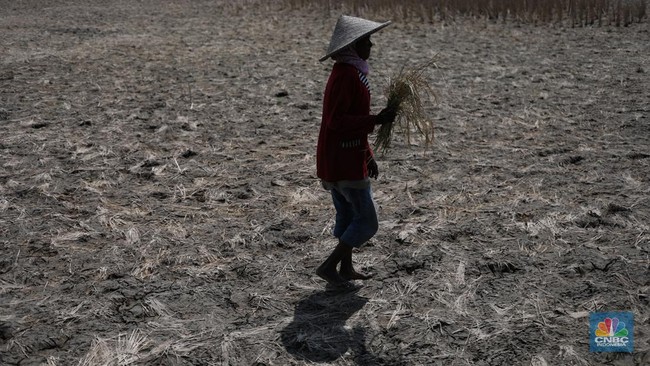
Jakarta, CNBC Indonesia - The National Research and Innovation Agency (BRIN) predicts that Indonesia will face a strong intensity El Niño phenomenon, often dubbed “Godzilla,” this year. This condition has the potential to make the dry season longer and drier, particularly in western and southern Indonesia.
El Niño itself is a phenomenon of warming sea surface temperatures in the equatorial Pacific Ocean that impacts reduced rainfall in Indonesia. In its strong phase, this phenomenon is called “Godzilla” because it can trigger significant climate anomalies.
“El Niño is a phenomenon of warming sea surface temperatures in the equatorial Pacific Ocean. The El Niño phenomenon, including the potential strong variation ‘Godzilla’, causes the dry season in Indonesia to become longer and drier,” wrote Researcher from the BRIN Centre for Climate and Atmospheric Research, Erma Yulihastin, quoted from the official Instagram post @/brin_indonesia, Saturday (21/3/2026).
Several global models indicate that El Niño will begin developing from April 2026. At the same time, a positive Indian Ocean Dipole (IOD) phenomenon is also expected to occur and strengthen the drought impact in Indonesia.
The impact of these two phenomena can be seen from the shift in cloud formation patterns. Rain activity is expected to occur more in the Pacific Ocean, while Indonesian regions will experience a lack of clouds and rain.
“Cloud and rain formation is concentrated over the Pacific Ocean. Conversely, Indonesian regions experience minimal clouds and rain,” she wrote.
In addition, the positive IOD, marked by cooling sea surface temperatures around Sumatra and Java, will further exacerbate the decline in rainfall, especially in western Indonesia.
Alert Level 1 for Drought and Flood Threats
BRIN estimates that the combination of El Niño and positive IOD will last throughout the dry season, from April to October 2026.
However, BRIN emphasises that this condition is predicted not to be uniform across all Indonesian regions.
“The impact of super El Niño and positive IOD is not uniform in Indonesian regions. This has happened before during the 2023 El Niño and positive IOD,” BRIN wrote.
In terms of regions, BRIN’s prediction models show that most of Java Island to East Nusa Tenggara (NTT) will experience dry conditions earlier. This has the potential to disrupt the agricultural sector, especially in national rice granary areas.
Conversely, eastern Indonesian regions such as Sulawesi, Maluku, and Halmahera are expected to still experience high rainfall even during the dry season period.
Therefore, the government is urged to prepare specific mitigation measures for each region.
Risks that need to be anticipated include drought in southern Indonesia that could threaten food production, potential flooding in eastern regions due to high rainfall, and increased risk of forest and land fires (karhutla) in Sumatra and Kalimantan.
On the other hand, the dry conditions also open opportunities to increase national salt production, particularly in southern Indonesia. BRIN is even optimistic that this condition will drive Indonesia to achieve salt self-sufficiency in 2026-2027.
Erma reminded of the importance of government preparedness in facing the complex and varying impacts across regions.
“Therefore, the government needs to be wary of drought impacts that could threaten the national rice granary in the northern coastal areas of Java. In addition, the impacts of karhutla in Kalimantan and Sumatra must also be mitigated,” she said.
“However, at the same time, the government should also prepare strategies to handle excess rainfall in the Sulawesi-Halmahera-Maluku regions and its impacts on flooding and landslides,” she concluded.