
BRIN Technology Transforms Food Stock Storage Methods
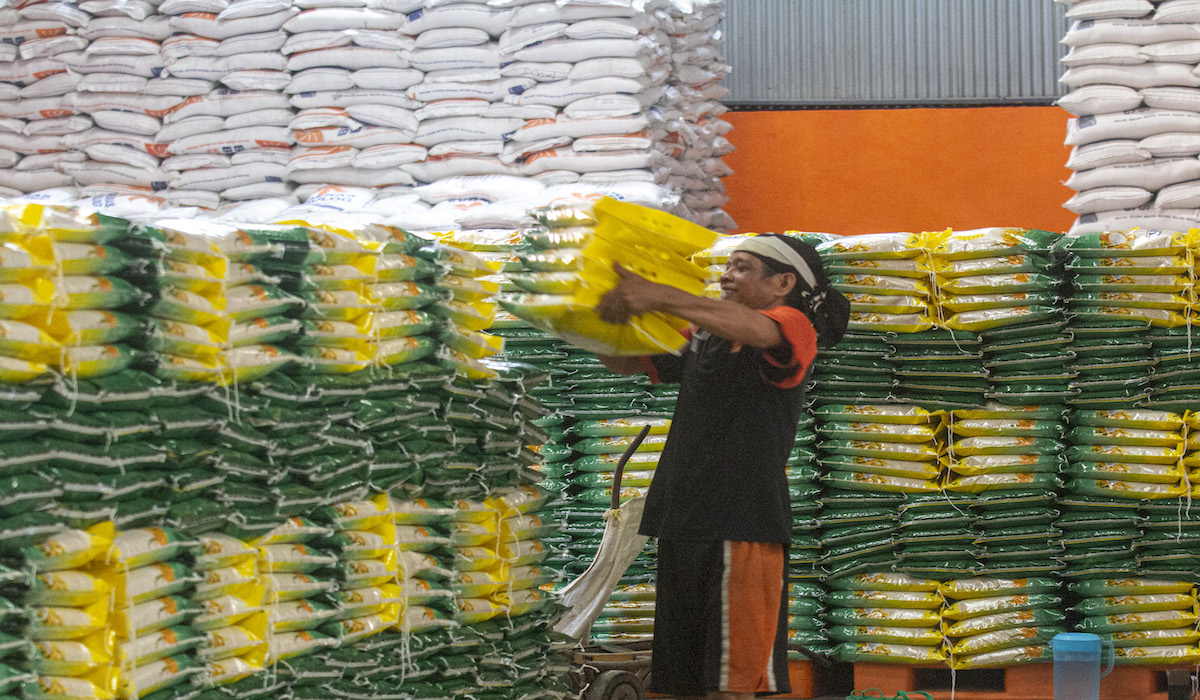
Efforts to strengthen Indonesia’s food resilience have entered a new phase. It is no longer just about stock and distribution, but also how technology can preserve food quality for longer in a more efficient manner.
This is the focus of the collaboration between the National Research and Innovation Agency (BRIN) and Perum Bulog.
Instead of relying on energy-intensive cooling systems, BRIN is introducing a different approach. This storage technology is considered capable of significantly extending the shelf life of food.
BRIN Chief, Arif Satria, revealed that this innovation has proven able to keep eggs for up to two months and rice for up to two years, without refrigeration.
According to him, the technology is not merely a laboratory concept, but has undergone various trials on several commodities with consistent results.
“This opens up great opportunities for energy efficiency while maintaining food quality in the long term,” he stated.
Nevertheless, the implementation of this technology still needs to be adapted to Bulog’s operational needs, especially for large-scale storage. Adaptation is key to ensuring the innovation operates optimally in the field.
Not stopping at storage, BRIN also brings solutions on the food safety side. Through irradiation facilities at the GA Siwabessy Science and Technology Area, Pasar Jumat, BRIN offers a security method that ensures products are pest-free while meeting export standards.
This technology is deemed important, especially in facing global challenges related to increasingly stringent food safety standards. In addition to improving quality, this process also accelerates the fulfilment of export requirements.
On the other hand, Bulog views this collaboration as a strategic step in transforming its role.
Bulog President Director, Ahmad Rizal Ramdhani, emphasised that food management can no longer be done with conventional approaches.
“Food resilience today demands efficiency and innovation. We need technology that can maintain quality while extending shelf life,” he said.
Moreover, the government is pushing for post-harvest infrastructure development, including plans to build 100 new facilities in the near future. Bulog hopes that BRIN’s technology can become part of that system.
Bulog’s own transformation is now directed towards managing various strategic commodities, not limited to rice. This makes the need for modern storage technology increasingly urgent.
This collaboration shows that the future of Indonesia’s food resilience is not only determined by production, but also by the ability to manage, store, and secure food through an innovation-based approach.