
BRIN Researcher Reveals Strategy for Controlling Janitor Fish Population
Jakarta (ANTARA) - The National Research and Innovation Agency (BRIN) has revealed an appropriate strategy for controlling the population of janitor fish in Indonesia’s freshwater river and lake ecosystems.
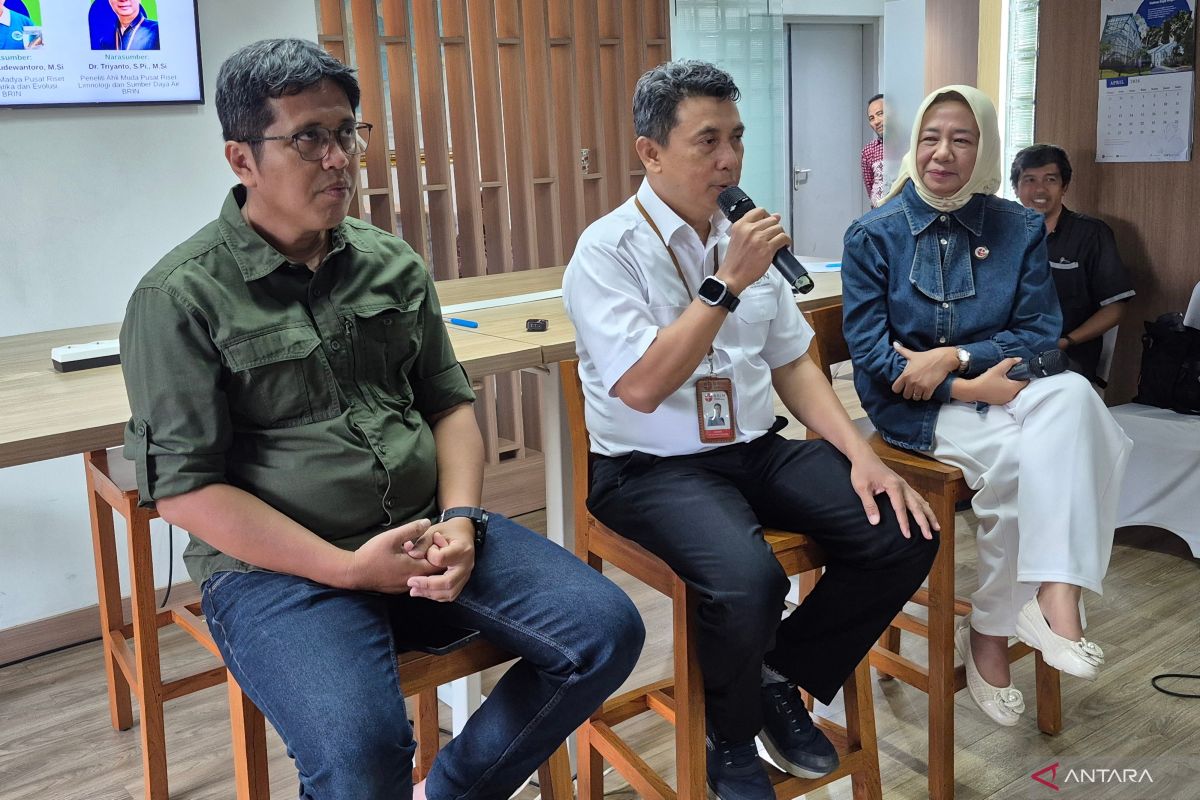
During a discussion event in Jakarta on Thursday, Researcher from BRIN’s Centre for Limnology and Water Resources Research, Triyanto, emphasised the importance of an integrated management approach encompassing prevention, control, and utilisation.
“Prevention efforts are carried out through strict monitoring of the introduction of new species and public education to prevent the release of non-local fish into public waters,” he said.
Triyanto stated that population control can be achieved through intensive capture or local eradication in specific areas. On the other hand, utilising the invasive species as raw materials for feed, fertiliser, or industrial products is considered an additional solution to suppress their numbers.
Strategically, controlling invasive species needs to be implemented over two time horizons. In the short term (1–2 years), steps that can be taken include routine monitoring, habitat identification, mass capture, community education, and exploration of alternative utilisations. Meanwhile, in the long term (3–10 years), more systematic efforts are required, such as habitat restoration, water quality improvement, reintroduction of local fish, strengthened regulations, further research, and multi-stakeholder collaboration.
He assessed that without planned and sustainable intervention, the invasion of foreign species could threaten the sustainability of Indonesia’s inland water resources.
“This is not just an issue of biodiversity, but also concerns ecosystem resilience and the livelihoods of communities dependent on water bodies,” he stated.
“Therefore, the precautionary principle must be applied in every species introduction effort. Before importation, a comprehensive study is needed regarding reproductive capacity, environmental tolerance, and interactions with local species,” he explained.
Gema also provided several strategies for controlling the janitor fish population, which is now beginning to disrupt the balance of aquatic ecosystems.
“First, direct periodic capture. So it is scheduled, routine, and sustainable. Find its natural enemies, for example, the betutu fish or Oxyeleotris marmorata,” he said.
Gema also highlighted the importance of fish health aspects to prevent the entry of new pathogens or parasites into Indonesia’s aquatic ecosystems. In addition, a controlled maintenance system needs to be prepared to prevent releases into the natural environment that could cause ecological impacts.
According to him, several foreign species such as carp, tilapia, Nile tilapia, and African catfish (Clarias gariepinus) do have high economic value and have been widely utilised in Indonesia, even though they are not native species. This shows that proper management can maximise benefits without ignoring ecological risks.
Therefore, Gema urged the importance of restoring damaged aquatic environments due to janitor fish activities, as well as public education to avoid indiscriminately releasing ornamental fish, and concrete implementation by the government regarding supervision.