
BRIN: MBG boosts GDP by Rp14.5–26 trillion
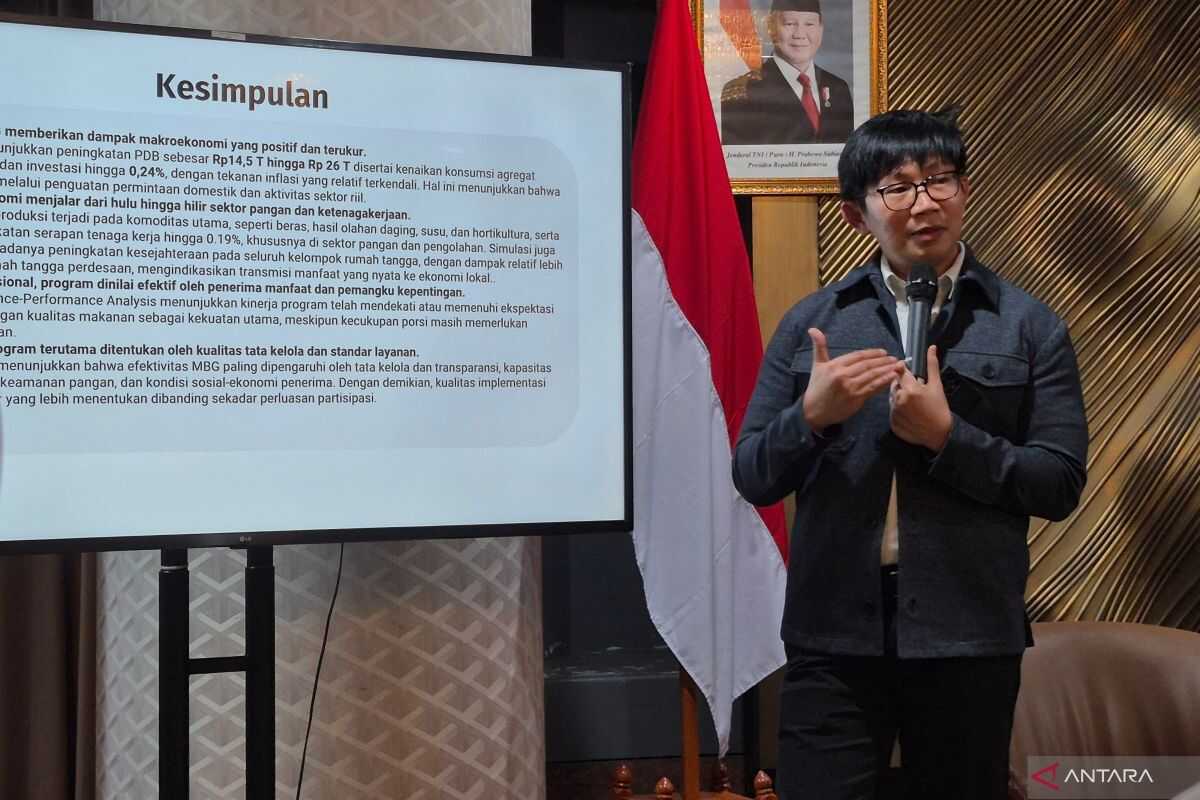
The MBG programme has a positive and measurable macroeconomic impact, according to research by the MBG Programme Research Team at the National Research and Innovation Agency (BRIN). The study found that the MBG programme increases Gross Domestic Product (GDP) by Rp14.5 trillion to Rp26 trillion. The research was conducted throughout 2025 using Computable General Equilibrium (CGE), Structural Equation Modelling (SEM), Institutional Analysis and Development (IAD) approaches, and Importance-Performance Analysis (IPA) in Bangka Belitung and West Java, with a sample of 855 people.
‘The MBG programme provides a positive and measurable macroeconomic impact. The simulations show an additional GDP increase of Rp14.5–26 trillion,’ said Iwan Hermawan, Head of the MBG BRIN Research Team, at the MBG Research Results Seminar in Jakarta on Wednesday.
Iwan explained that the figures were accompanied by an increase in aggregate consumption of up to 0.19 per cent and investment of up to 0.24 per cent, with relatively contained inflationary pressure.
The figures, he continued, indicate that MBG works by strengthening domestic demand and activity in the real sector.
‘The reason for focusing on consumption and investment? Because in the GDP composition those two have the largest share, so if they rise and their values are large they will push GDP. Moreover, by 2029 (growth target) at 8 per cent, this should align with that, with inflation relatively contained,’ said Iwan.
‘Production increases mainly in rice, processed meat products, milk, horticulture, followed by employment absorption up to 0.19 per cent in the food and processing sector,’ he added.
Iwan also revealed that MBG is regarded as effective by beneficiaries and stakeholders. ‘Overall programme performance has come close to their expectations, although there may be notes related to the quantity of meals,’ he said.
Based on the study results, BRIN recommends that MBG be strengthened by directing the programme toward developing a national dashboard based on output–outcome that integrates nutrition standards, food security, distribution, and governance performance in real-time and transparently.
Iwan also emphasised that the quality assurance system should be strengthened through risk-based supervision and independent quality assurance functions to maintain consistency of national service standards. ‘The sustainability of the programme will depend on human resources capacity and effective public communication, through regular training, community involvement, and a clear communications strategy that opens space for public feedback,’ said Iwan Hermawan.