
BRIN Harvests Superior Rice from Nuclear Irradiation Mutation Technology
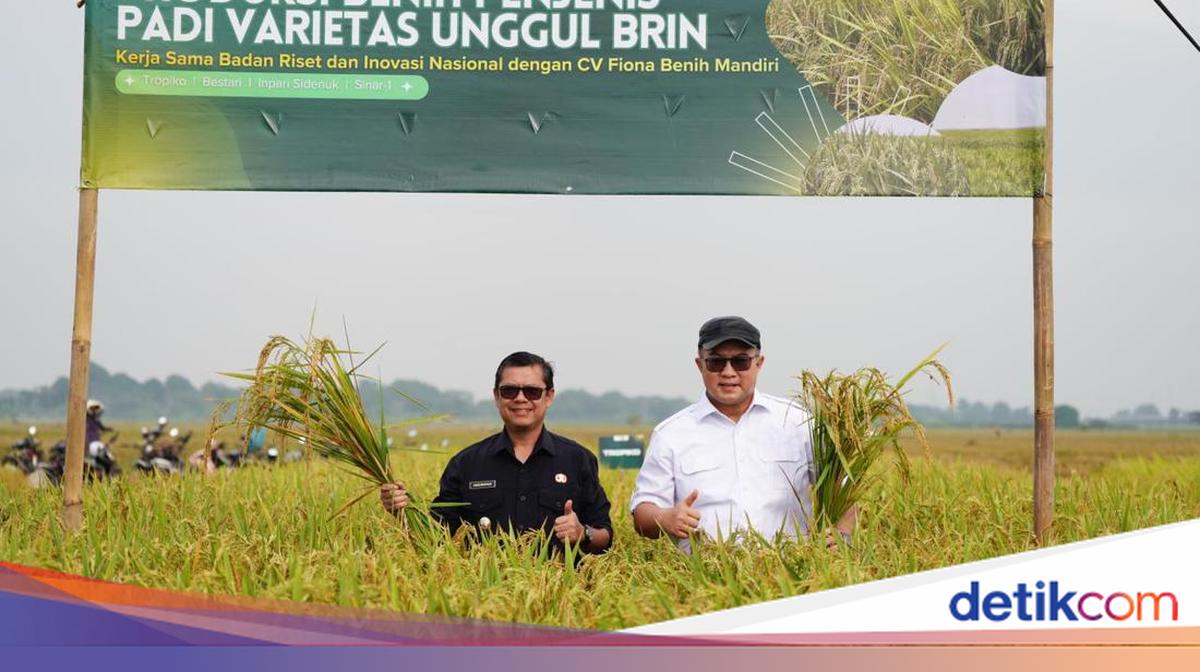
This strategic initiative leverages nuclear technology to accelerate national food self-sufficiency, a priority programme of President Prabowo Subianto.
BRIN Head, Prof. Arif Satria, stated that the use of nuclear technology through gamma ray radiation is no longer limited to theoretical research but represents a tangible contribution to addressing the global food crisis.
“What we harvest today is a key instrument in realising President Prabowo’s food self-sufficiency target. With superior varieties from irradiation, we can significantly increase the cropping index and yield per hectare,” said Prof. Arif Satria in a written statement on Thursday (30/4/2026).
According to Prof. Arif, nuclear technology enables researchers to broadly and safely enhance the genetic diversity of crops. This is to improve plant traits that have weaknesses, such as stems that are too tall or long harvesting periods.
“The mutation breeding technique using gamma ray irradiation (Co-60) works by administering a specific dose of radiation energy to rice seeds to trigger changes in DNA structure, which are then rigorously selected by breeders. Unlike Genetic Engineering (GMO), irradiation mutation results do not introduce foreign genes, making them completely safe for consumption and environmentally friendly,” he explained.
Meanwhile, Director of Research and Innovation Utilisation in Industry at BRIN, Mulyadi Sinung Harjono, explained that the activities in Subang focused on multiplying parental seeds (yellow label) with genetic purity approaching 100%.
“Parental seeds are pure seeds under direct breeder supervision. From the core seeds we plant, they will produce seeds that can stepwise meet the needs of thousands of hectares of farmers’ paddy fields in the future,” he stated.
He explained that this process involves a research team from the Food Crop Research Centre that intensively monitors growth. According to him, one crucial stage is rogueing—clearing deviant plants—to ensure seed purity is maintained before distribution to the seed industry.
Mulyadi Sinung Harjono said there are superior characteristics in BRIN’s mutant varieties. The following are some harvested varieties with specific characteristics:
Sidenuk (Sintanur Dedikasi Nuklir): Very short duration (±103 days), sturdy stem structure (lodging resistant), with potential yield reaching 9.1 tonnes/ha.
Tropiko: New Type Rice (PTB) with high potential yield reaching 10.53 tonnes/ha, pulen rice quality, and resistant to brown planthopper pests.
Bestari: Superior in high number of productive tillers and high tolerance to Bacterial Leaf Blight (HDB).
“The downstreaming of these nuclear seeds is carried out through strategic partnerships with the private sector such as CV Fiona Benih Mandiri and PT Sipetapa. Through the Plant Variety Protection (PVT) licensing scheme, BRIN ensures that the national seed industry has access to this high technology,” he clarified.
Mulyadi Sinung Harjono added that this collaboration is vital to ensure research outcomes do not stop in the laboratory.
“We appreciate the support from industry partners. Through a healthy seed ecosystem, these superior seeds will soon reach farmers’ hands to ensure robust and sustainable national food sovereignty,” he concluded.