
BRIN Explains Why Vehicles Can Stall on Railway Tracks
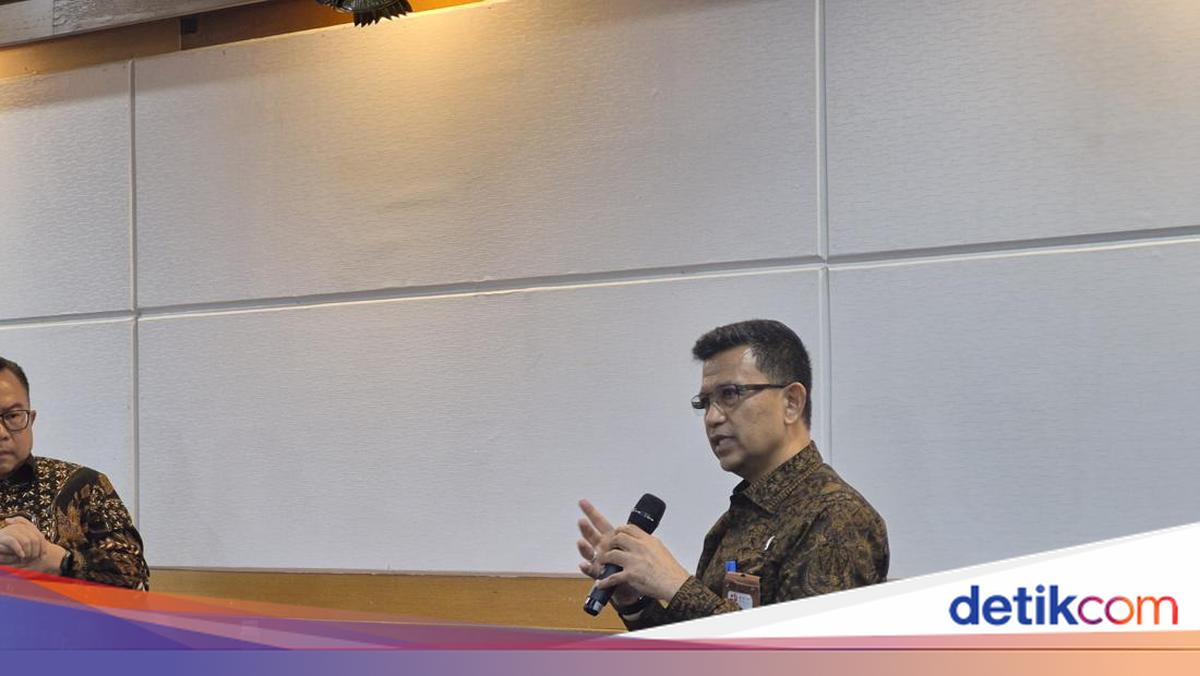
The National Research and Innovation Agency (BRIN) has explained the reason why vehicles can stall in the middle of railway tracks. This is influenced by the presence of a magnetic field on the rails, which causes the vehicle to stop moving. According to detikEdu on Tuesday (28/4/2026), this was stated by BRIN Deputy Head Amarulla Octavian in response to the accident involving the KA Argo Bromo Anggrek train colliding with a KRL Commuter Line in East Bekasi. The incident began with a Green SM taxi being hit by the KRL. Amarulla explained that BRIN has conducted research on why vehicles suddenly stall on tracks. The research findings indicate a factor involving a large magnetic field. “From previous technical data (it was found that) not only electric vehicles, but also fuel-based vehicles are often not resilient enough to the influence of large magnetic fields when a train is about to pass,” Amarulla stated during the BRIN 5.0: Innovation for the Nation event, held in the Jirap Room, BJ Habibie Building, BRIN Thamrin, Central Jakarta today. It was mentioned that when a train is about to pass, it triggers the emergence of a magnetic field sourced from its locomotive. As a result, electromagnetic energy is transmitted to the railway tracks. When a vehicle crosses the tracks while the train is nearby, the electricity in the magnetic field can strike the vehicle’s engine. Consequently, the engine can be disrupted or even shut down suddenly. “So, the large magnetic field is produced by the approaching train. Because the source in the locomotive is very strong, the electricity and magnetism are transmitted to the tracks ahead,” he elaborated. Amarulla believes further studies are needed to determine ways to neutralise magnetic fields around railway tracks. These studies are expected to help ensure vehicles can pass without disruption at rail crossings in the future. Additionally, BRIN will continue research on safety net systems for railway crossing usage. All these steps are BRIN’s efforts to reduce train accident rates in the future. “We will continue research related to implementing safety net systems for railway crossing usage. How far can the detection system be automatically known by the train driver in the locomotive,” he explained. 15 Fatalities As information, the fatal accident of KA Argo Bromo Anggrek colliding with the stopped KRL at Bekasi Timur Station occurred on Monday (27/4) night. The incident started when a Green SM taxi was hit by the KRL at a crossing not far from Bekasi Timur Station. The KRL involved in the accident with the taxi then stopped in the middle of the tracks. Local residents came to help evacuate the taxi. On the other hand, a Cikarang-bound KRL was stopped at Bekasi Timur Station due to the incident between the Jakarta-bound KRL and the Green SM taxi. It was this stopped KRL at Bekasi Timur Station that was then hit by the KA Argo Bromo Anggrek speeding from Jakarta. As of 08:45 WIB earlier, there were 14 fatalities. Then it was learned there were 84 injured victims. “Update 08:45 WIB: 14 deceased, 84 injured victims, handling process still ongoing,” said VP Corporate Communication KAI Anne Purba in a written statement on Tuesday (28/4). Later that afternoon, the number of fatalities increased to 15 people. However, victim details have not yet been specified. “Yes, 15 deceased,” said Head of Medical Division of Metro Jaya Police Kombes Martinus Ginting at Bhayangkara Hospital Tk.I Pusdokkes Polri (RS Polri), Jakarta, as reported by detikNews on Tuesday (28/4). KAI has prepared an Emergency Response Post and Information Post at Bekasi Timur Station to help families obtain information regarding victims and passengers. Families can contact KAI’s Contact Center at 121.