
BRIN examines composite rubber-based rail pads for train safety
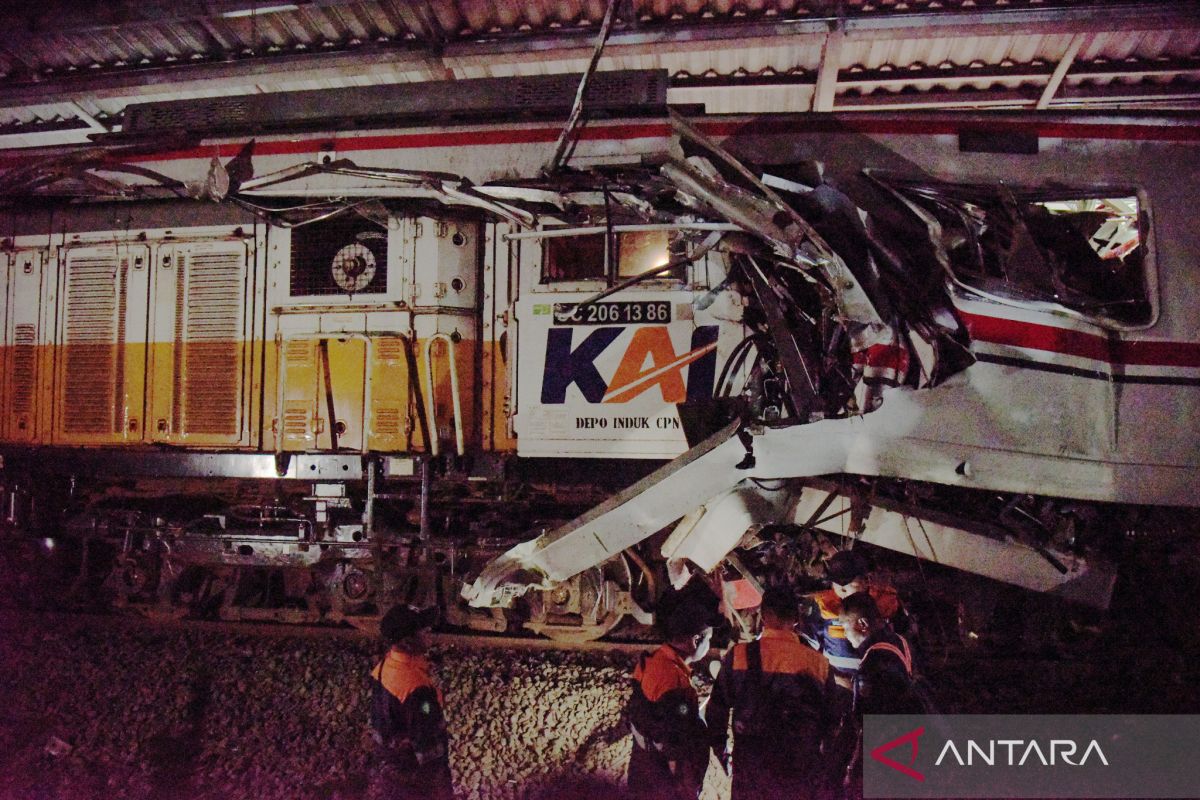
Jakarta (ANTARA) - The National Research and Innovation Agency (BRIN) is examining composite rubber-based rail pad technology to improve safety and security in public rail transport.
BRIN Deputy Head Amarulla Octavian stated this during a press conference in Jakarta on Tuesday, in response to the Argo Bromo Anggrek train collision with an electric rail train (KRL) at Bekasi Timur on Monday (27/4).
“BRIN has contributed to the design and research of rail systems, including the LRT train and the train on the Makassar–Parepare route in South Sulawesi. In addition, research is also being conducted on materials such as composite rubber-based rail pads to enhance the safety and service life of rail infrastructure,” he said.
Amarulla added that BRIN is also developing rail crossing safety systems, including how protection systems can be automatically integrated with train drivers.
Furthermore, BRIN is studying the impact of magnetic fields from locomotives on vehicles near the tracks. The large magnetic fields originate from the locomotive’s electrical systems, so methods for neutralisation need to be examined to avoid disrupting other vehicles.
“Then, it is not only related to rail technology or systems, but whether electric vehicles, for example, are affected by the large magnetic fields from trains; this is also one of BRIN’s studies because the large magnetic field influence occurs when the train is passing,” said Amarulla.
“So, the large magnetic field is generated by the approaching train. Because the power source in the locomotive is very large, the magnetism is transmitted to the train ahead; this may need to be studied or researched on how to neutralise the magnetic field around the rail tracks so as not to disrupt passing vehicle traffic,” he explained.
Based on the latest data up to 08.45 WIB, the electric train and rail accident in the Bekasi Timur station area resulted in 14 deaths and 84 injuries.
PT Kereta Api Indonesia (Persero) has assured that all medical costs for the injured victims and funeral costs for the deceased will be fully covered by insurance and KAI.
Currently, the injured victims have been evacuated to several health facilities, including Bekasi City Hospital, Kramat Jati Police Hospital for identification processes, and several private hospitals in the Bekasi area.