
BRIN Documents Ten New Orchid Species Records in Indonesia
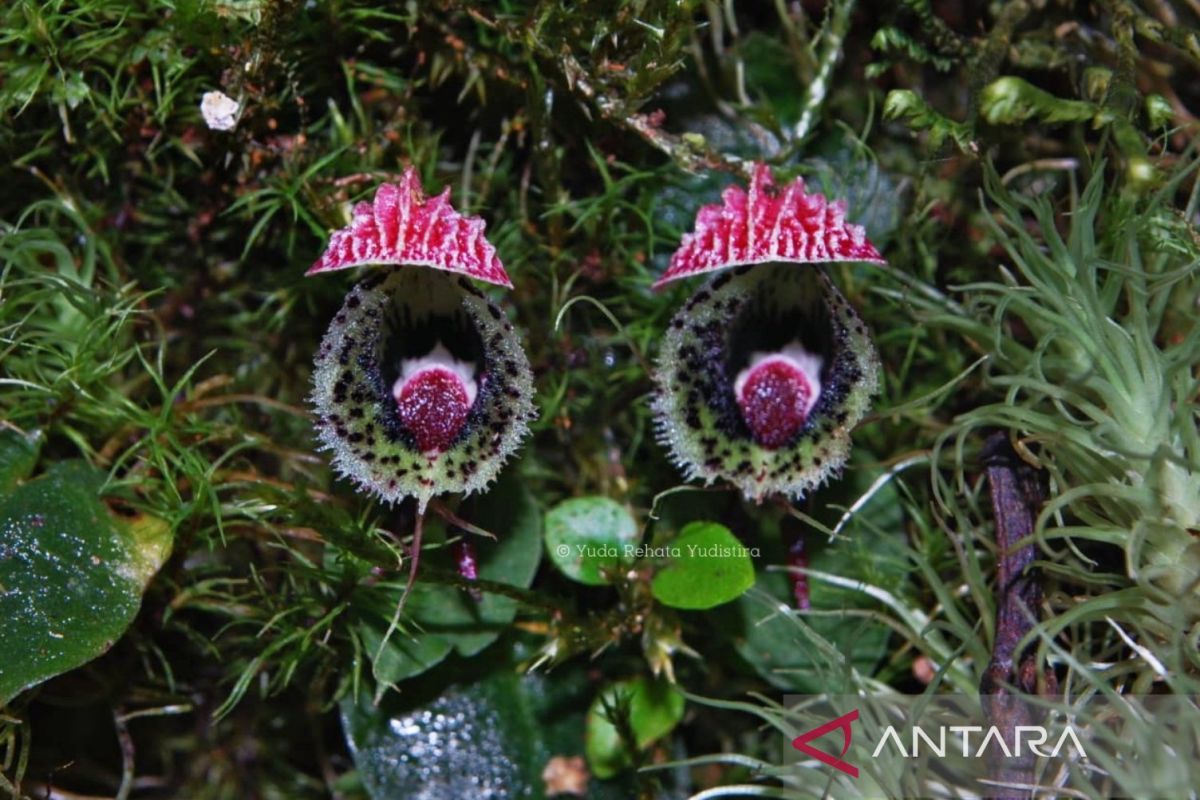
Jakarta (ANTARA) - The National Research and Innovation Agency (BRIN), in collaboration with research partners, has successfully documented ten new records of orchid species in Indonesia, expanding data and affirming the importance of biodiversity exploration and herbarium studies in supporting the conservation of Indonesia’s flora.
“This demonstrates that Indonesia, particularly the Wallacea region and eastern Indonesia, still holds significant untapped potential for orchid diversity that remains undocumented. Field explorations and herbarium collection studies must be continuously strengthened to enrich national biodiversity data,” said Researcher from the BRIN Centre for Research on Biosystematics and Evolution (PRBE), Aninda Retno Utami Wibowo, in an official statement in Jakarta on Monday.
Aninda explained that the research involved several research teams, including the Native Plants of the Archipelago Foundation, Wetland Biota Conservation Foundation, Samudra University, and Bromo Tengger Semeru National Park.
She noted that the team documented ten orchid species newly recorded in Indonesia: Bulbophyllum nematocaulon, Bulbophyllum sanguineomaculatum, Cleisomeria lanatum, Corybas calopeplos, and Corybas holttumii from Sumatra; Acanthophippium bicolor and Anoectochilus papuanus from Java; Dendrobium teretifolium from the Nusa Tenggara Islands; Bulbophyllum thiurum from Kalimantan; and Aerides augustiana from Sulawesi.
The research was conducted through fieldwork by Yuda Rehata Yudistira from the Native Plants of the Archipelago Foundation and Wetland Biota Conservation Foundation, as well as Wendy A. Mustaqim from the Department of Biology at Samudra University, during the period from 2020 to 2024 in various regions of Indonesia, including Sumatra, Java, Kalimantan, Sulawesi, and Nusa Tenggara.
Aninda explained that some of the discovered species also exhibit interesting biogeographical distribution patterns.
Anoectochilus papuanus, previously distributed in Papua and the Solomon Islands, has now been found in East Java. Meanwhile, Dendrobium teretifolium, originally from Australia, has now been discovered in East Nusa Tenggara.
She hopes that the results of this research will serve as an important foundation for conservation efforts of Indonesia’s flora, especially in areas that remain underexplored.
“Accurate species documentation is necessary to support habitat protection and the strengthening of science-based conservation policies,” said Aninda.