
BRIN Discovers Two New Endemic Moth Species from Papua and Sulawesi
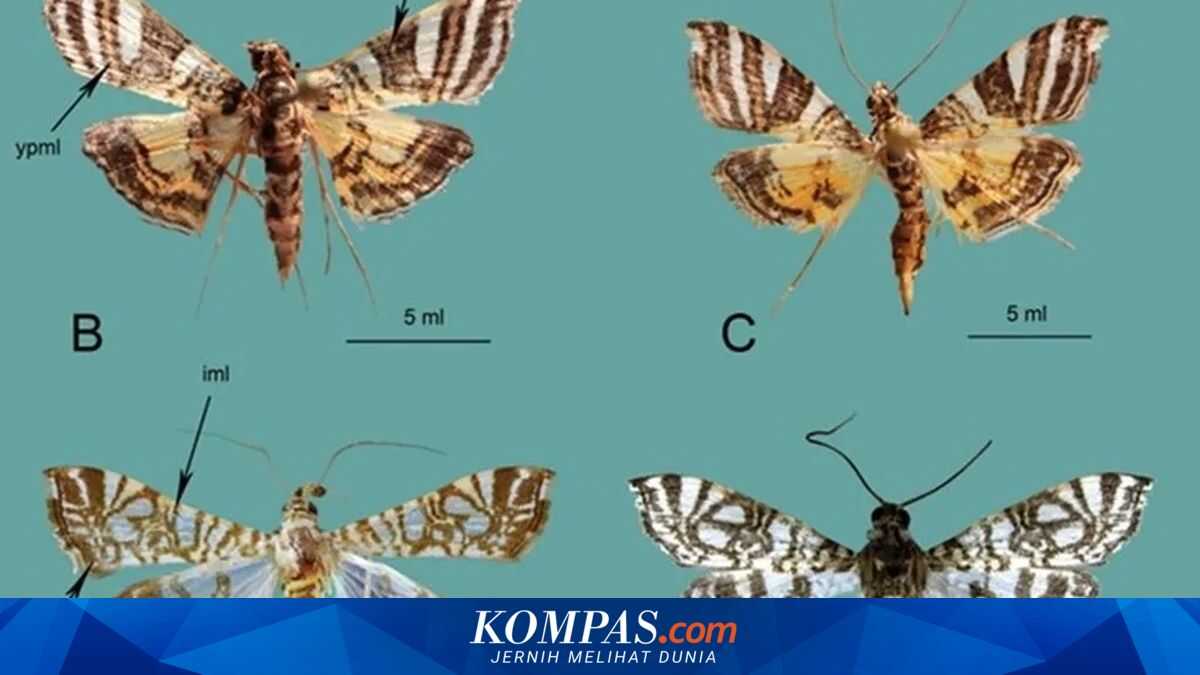
KOMPAS.com reports that Indonesia reaffirms its position as one of the world’s centres of biodiversity. A team of researchers from the National Research and Innovation Agency (BRIN) has successfully identified two new moth species endemic to Papua and Sulawesi. The discovery adds to the long list of Indonesia’s rich insect biodiversity, particularly from the Crambidae family. The two species are Glyphodella fojaensis and Chabulina celebesensis. The research results were published in the international journal Raffles Bulletin of Zoology in the February 2026 issue (Volume 74, pages 87–94) in an article titled Description of two new endemic species of the closely related genera Glyphodella and Chabulina from Indonesia. The study was conducted by Hari Sutrisno and Rosichon Ubaidillah from the BRIN Centre for Biosystematics and Evolution Research. The process was not short. Field surveys were conducted from 2002 to 2017 across various regions of Papua and Sulawesi. In addition to field exploration, the team examined specimen collections stored at the Museum Zoologicum Bogoriense (MZB) in Bogor. The combination of field research and museum collection studies ultimately strengthened the identification of both species as new discoveries for science. According to the study, Glyphodella fojaensis is the only species of the genus Glyphodella recorded in Indonesia. The species is endemic to Papua, specifically in the Foja Mountains region. Meanwhile, Chabulina celebesensis is a newly described species endemic to Sulawesi. The moth was found in Central Sulawesi, Southeast Sulawesi, and North Sulawesi. Both inhabit different habitats. Glyphodella fojaensis lives in primary tropical forest in the Foja Mountains, whereas Chabulina celebesensis is found in tropical secondary forests in Sulawesi. Both are nocturnal insects active at night. According to Rosichon Ubaidillah, the main differences are visible in the wing patterns and genital structures, which are important taxonomic markers for moths. “Glyphodella fojaensis features a circular yellow spot on the forewing, and a male genital structure distinct from its closely related species. Conversely, Chabulina celebesensis can be recognised by the striped pattern on the wings and the distinctive shape of the genitalia,” he said. He stressed that these morphological characters provide the scientific basis for classifying both as new species. “These morphological characters demonstrate unique evolutionary adaptations to their respective habitats, in both Papua and Sulawesi,” he said. During specimen collection, the researchers used light traps to attract moths at night. The collected specimens were then examined in detail under a microscope before being documented and stored as a national collection at the Museum Zoologicum Bogoriense.