
BRIN Discovers New Plant Species with Leaves Resembling a Cat's Tongue
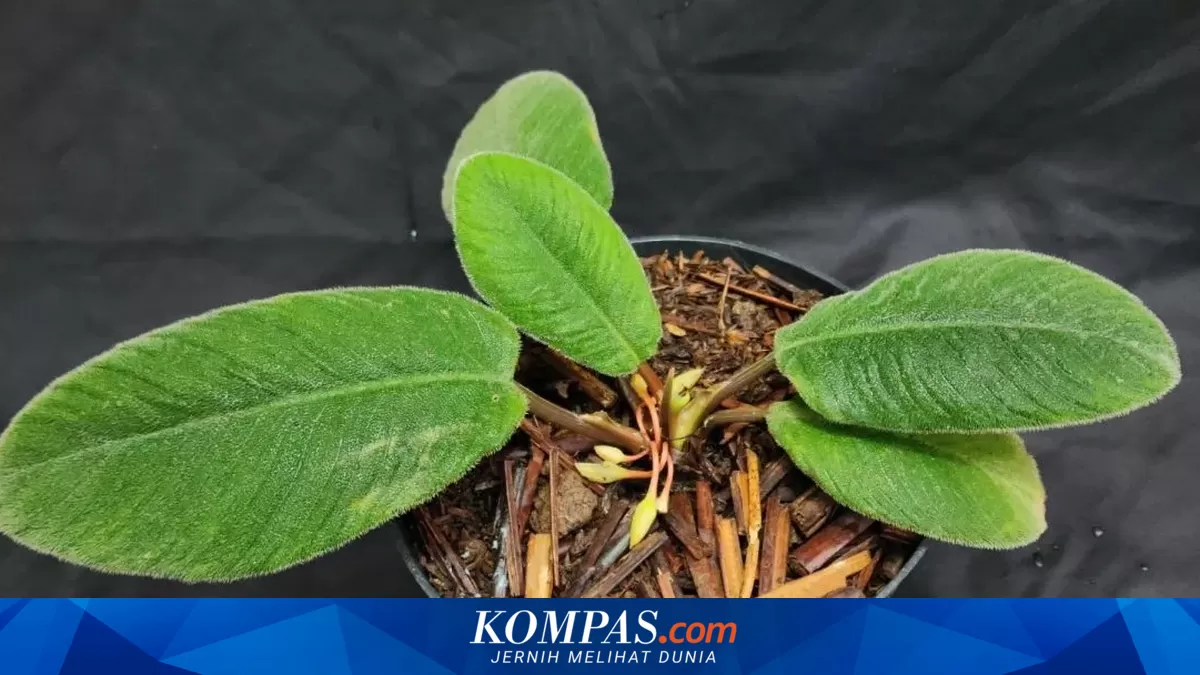
Indonesia has expanded its global flora inventory once again. A research team from the National Research and Innovation Agency (BRIN), in collaboration with several academic institutions, has successfully discovered a new plant species from the aroid family (Araceae), named Homalomena lingua-felis. This species is endemic to North Sumatra and possesses a unique characteristic: leaf texture resembling a cat’s tongue.
The discovery has been published in the international scientific journal PhytoKeys, 2026 edition, Volume 271, under the title “A new densely-haired aroid species of Homalomena (Araceae) from North Sumatra, Indonesia.”
The research was led by Muhammad Rifqi Hariri, a researcher from BRIN’s Centre for Biosystematics and Evolution Research, alongside teams from the Herbarium Bandungense at the Bandung Institute of Technology (ITB), Sebelas Maret University, IPB University, Lampung University, the Indonesian Tropical Botany Foundation, and Jungle Farm Nursery.
The new species was discovered during a field expedition in January 2024 in the Batang Toru region of Tapanuli, North Sumatra. After collecting samples from their natural habitat, researchers proceeded with morphological analysis and molecular studies in the laboratory and herbarium.
During this investigation, the team found that the plant bears similarities to another species, Homalomena pexa, but displays clear differences in both physical form and genetic structure.
The species also possesses a very limited distribution, classifying it as endemic flora of North Sumatra.
The primary distinction of Homalomena lingua-felis lies in its leaf surface. The upper side of the leaf is covered with fine, dense hairs, creating a texture resembling a cat’s tongue.
Rifqi explained that the species name derives from Latin. “The name lingua-felis comes from the Latin words lingua and feles, meaning tongue and cat, referring to the unique texture of the leaf surface,” said Rifqi.
Beyond leaf texture, several other morphological characteristics differentiate this species from its close relatives. These include shorter leaf stems, the presence of nodules on the lower leaf surface and stems, and a cone-shaped male flower structure.
“These morphological characteristics form the primary basis for establishing this as a new species to science,” Rifqi stated.
During the expedition, researchers found the plant growing in a quite specific habitat, attached to rocky walls near waterfalls at low elevation.
The collected samples were subsequently studied in detail and compared with other plant specimens stored in the herbarium. This method is essential to confirm that the plant indeed represents a species never previously described.
In addition to morphological observations, the research team also conducted DNA analysis using ITS (Internal Transcribed Spacer) sequencing. This molecular analysis helped confirm the species’ phylogenetic position within the Homalomena group.
The combined approach of morphology and genetics has now become the standard method in modern taxonomy, ensuring more accurate identification of new species.