
BRIN discovers new cat's tongue plant species endemic to North Sumatra
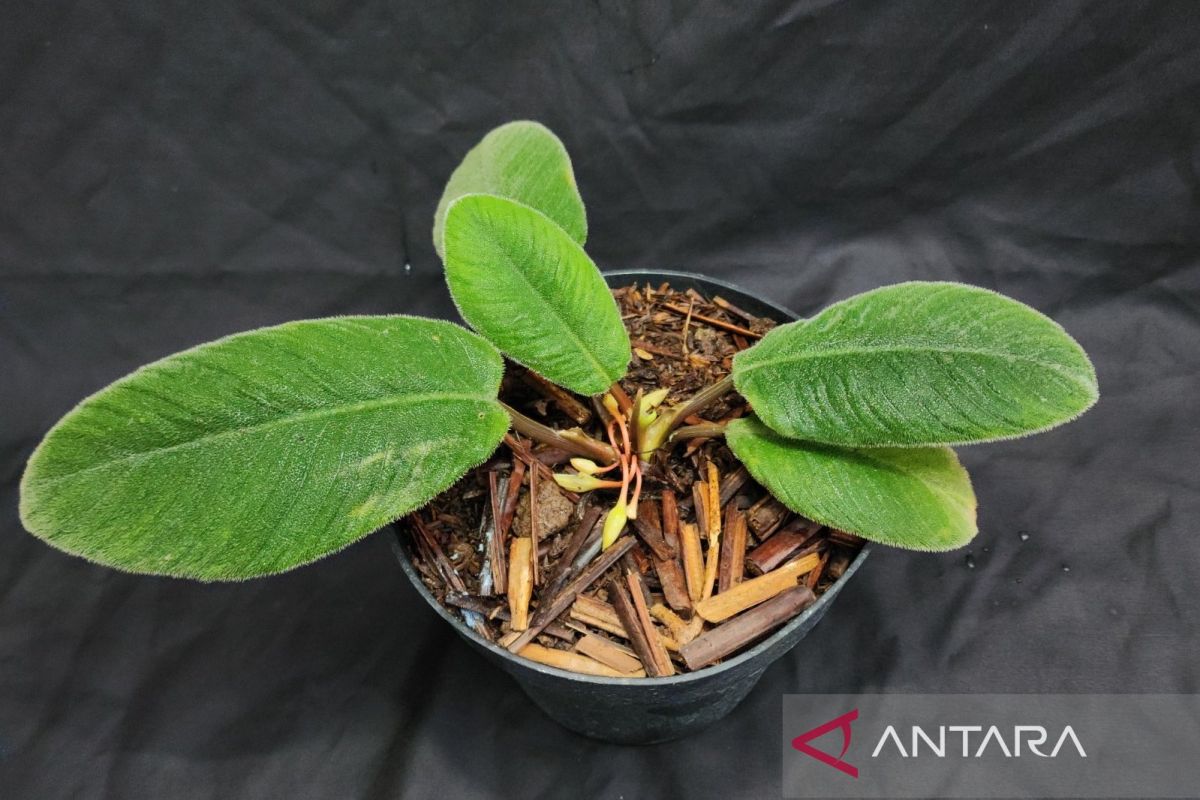
A team from the Indonesian Research and Innovation Agency (BRIN) in collaboration with the Bandung Institute of Technology (ITB), Universitas Sebelas Maret (UNS), IPB University, Universitas Lampung, Indonesian Tropical Botany, and Jungle Farm Nursery has discovered a new endemic Indonesian aroid plant species: Homalomena lingua-felis.
In their publication, the researchers reported that Homalomena lingua-felis is a species with similarities to Homalomena pexa, but demonstrates clear morphological and genetic differences. The species has a limited distribution in the Tapanuli region and is endemic to North Sumatra.
“The name lingua-felis comes from the Latin words lingua and feles meaning tongue and cat, referring to the unique texture of the leaf surface,” said Muhammad Rifqi Hariri, a researcher at BRIN’s Centre for Research in Biosystematics and Evolution, in a statement in Jakarta on Monday.
Rifqi stated that the species possesses distinctive morphological characteristics, particularly on the upper leaf surface, which is covered with dense hair with a texture resembling a cat’s tongue.
“These morphological characteristics formed the primary basis for establishing this species as new to science,” he said.
Rifqi explained that the research was conducted through field expeditions in the Batang Toru area, Tapanuli, North Sumatra in January 2024, as well as morphological assessments and molecular analysis in laboratories and herbaria.
The research, he continued, was carried out through specimen collection in natural habitats comprising rocky cliffs near waterfalls at low altitudes. The collected specimens were then examined in detail and compared with herbarium collections.
Based on an initial assessment using criteria from the International Union for Conservation of Nature (IUCN), the species has been proposed as vulnerable status. This is because the species has a very limited distribution with a narrow habitat area and faces threats from forest fires and illegal collection due to its aesthetic value as an ornamental plant.
This discovery adds to the documented data on Indonesian flora diversity, particularly within the Araceae plant group, and strengthens Indonesia’s position as one of the world’s centres of biodiversity.
The research results have been published in the international journal PhytoKeys Volume 271, pages 161–172, under the title “A new densely-haired aroid species of Homalomena (Araceae) from North Sumatra, Indonesia.”