
BRIN discovers endemic "Dayang Merindu" snail species in South Sumatera
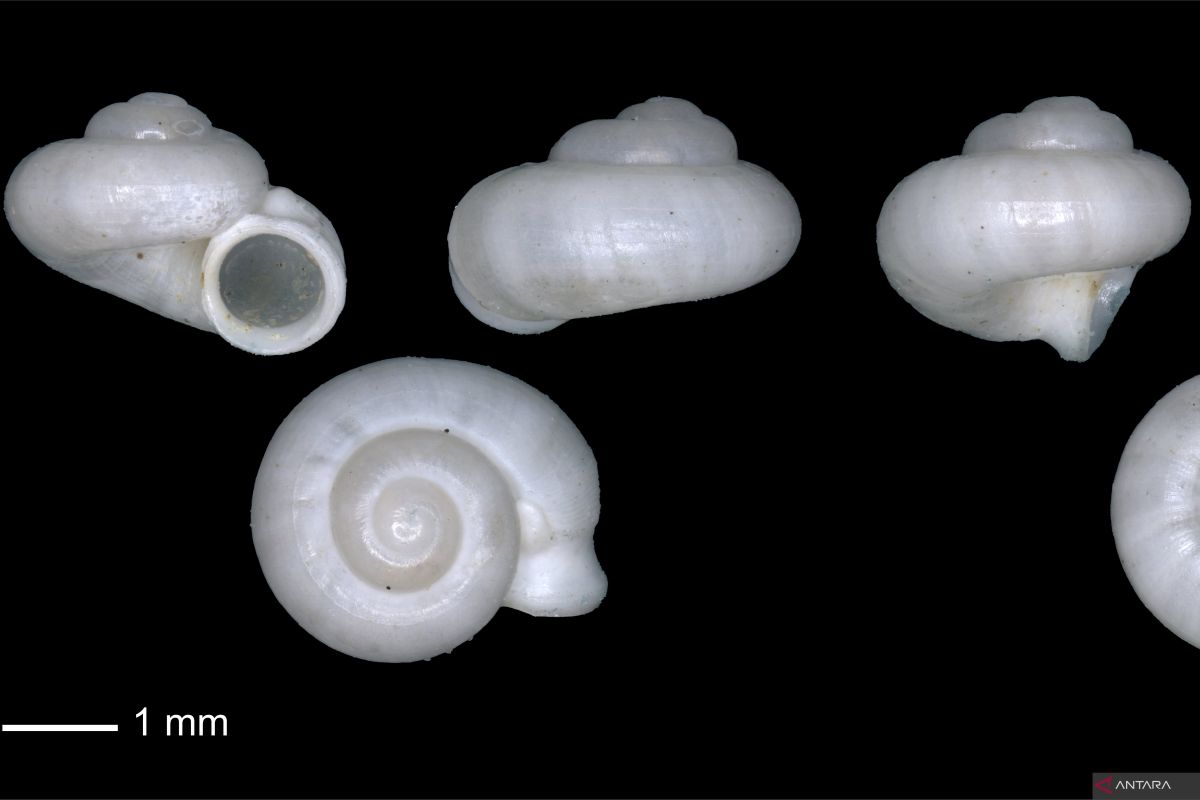
Jakarta – Researchers at the Centre for Biosystematics and Evolution Research, National Research and Innovation Agency (BRIN), have successfully described a new land snail species endemic to South Sumatera with the scientific name Chamalycaeus dayangmerindu.
Ayu Savitri Nurinsiyah, researcher at BRIN’s Centre for Biosystematics and Evolution Research, stated that the Chamalycaeus dayangmerindu species has so far only been found in the Padang Bindu karst region of South Sumatera.
“This situation makes it vulnerable to environmental changes, including land conversion and habitat degradation,” said Ayu.
Ayu regards the documentation and publication of the new species as an important initial step in conservation efforts. The process of discovering, describing and publishing a new species is not a short journey.
She explained that a species can be recognised as a new species if it has gone through various scientific stages, starting from morphological, anatomical or genetic analysis, comparison with previously known species, review by world experts (peer review) and publication in a scientific journal.
“The long journey of revealing biodiversity has become the footprint of every taxonomist. From field expeditions and explorations, literature and laboratory studies, to the process of writing and international recognition,” she said.
She noted that whilst the process is lengthy and challenging, each step in the journey is meaningful and beneficial.
The research results have been published in the high-impact globally indexed scientific journal (Q1) ZooKeys 1272: 1–31 (2026), with the title “Operculate land snails (Gastropoda, Caenogastropoda, Cyclophoroidea) from Padang Bindu Karst, South Sumatera, Indonesia with the description of a new species, Chamalycaeus dayangmerindu.”
The discovery of this new species is also the result of collaboration with several parties, namely Surabaya State University (Unesa) and Széchenyi István University in Hungary.
Through this finding, the BRIN research team hopes to continue encouraging exploration and study of biodiversity, particularly terrestrial mollusc species, as part of efforts to document and sustainably preserve Indonesia’s biological diversity.