
BRIN Develops Waste Processing Technology From Households to Urban Areas
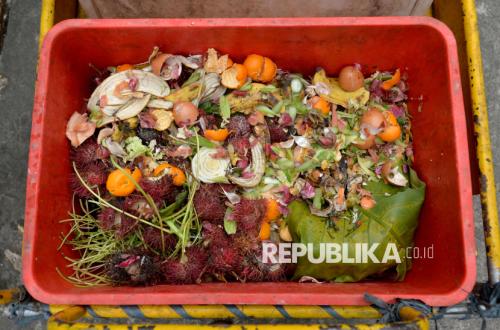
REPUBLIKA.CO.ID, JAKARTA – Coordinating Minister for the Food Sector Zulkifli Hasan said the National Research and Innovation Agency (BRIN) is preparing a range of waste processing technologies from household scale to urban areas. The technologies form part of accelerating the programme to convert waste into energy.
Zulkifli stated that the development of waste processing technology is not only focused on the end-of-life landfill (TPA), but also directed to small-scale, environmentally-based management such as RT, RW, down to sub-district (kecamatan). The Government wants waste handling to be integrated from upstream to downstream.
“From BRIN we have various technologies, ranging from households, RT, RW, sub-district, and so on,” said the figure known as Zulhas in Jakarta, last Tuesday (19/5/2026).
The government is accelerating the implementation of waste-to-energy in line with the mandate of Presidential Regulation (Perpres) No. 109 of 2025. Previously, the government focused on turning waste into electricity through incinerator technology or waste-to-energy.
Now, the government is also beginning to encourage the use of pyrolysis technology to deal with the long-standing waste stockpiles that have piled up at various large landfills. The technology is prepared to turn old waste into renewable oil-based fuels (BBM).
“Well, now we are working together again with Pak Sigit and the TNI. The technology will come from BRIN and Dikti, which there are four of,” Zulhas said.
He said there is a serious problem due to the high volume of waste in several regions. Piles of waste in some locations are reportedly as high as 16-storey buildings, including in the Bantar Gebang area.
Zulhas explained that waste management is no longer seen merely as an environmental issue, but part of the national energy independence agenda. There is collaboration with Danantara, PT Pindad, the Indonesian Army (TNI AD), and related ministries to accelerate the programme’s implementation.
“In other words, waste processing is no longer seen as a burden, but as a source of energy and part of the national energy independence vision,” said the Coordinating Minister for the Food Sector.