
BRIN develops radiopharmaceutical kit for bone metastases caused by cancer
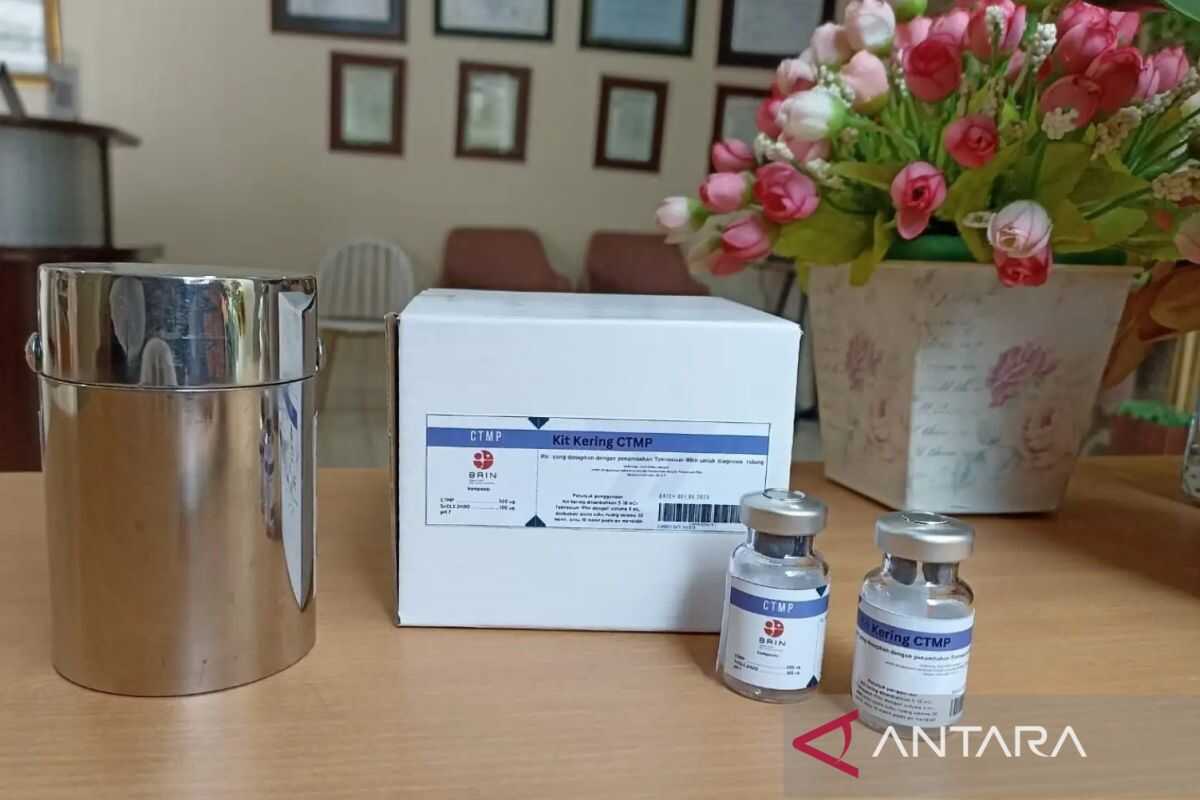
Jakarta (ANTARA) - The Centre for Research on Radioisotope Technology, Radiopharmaceuticals and Biodosimetry at the National Research and Innovation Agency (BRIN) is developing the radiopharmaceutical kit CTMP for the diagnosis and treatment needs of cancer patients experiencing bone metastases.
Isti Daruwati, a researcher at the BRIN Centre for Research on Radioisotope Technology, Radiopharmaceuticals and Biodosimetry, said that CTMP research is driven by the need for a radiopharmaceutical capable of helping doctors detect and manage bone disturbances caused by cancer.
‘Many primary cancers, such as breast or prostate cancer, eventually spread to the bone. This condition requires early detection to determine the extent of spread, as well as treatment to reduce the subsequent impact on patients,’ she said in a statement in Jakarta on Thursday.
Isti explained that CTMP is the compound 1,4,8,11-tetraaza cyclo tetradesil-1,4,8,11-tetramethylene phosphonate, formulated into a dry kit through aseptic processes and dried using lyophilisation. The dry form aims to extend shelf life and facilitate preparation in hospitals.
‘The dry kit does not depend on the relatively short radioactive half-life. In addition, this format makes it easier for pharmacists to prepare the radiopharmaceutical just before use on the day of the patient’s examination, for both diagnosis and therapy,’ she explained.
For diagnostic purposes, Isti said CTMP is labelled with the radionuclide technetium-99m to form 99mTc-CTMP. After intravenous injection, patients undergo imaging using a gamma camera at a nuclear medicine facility, which serves as the carrier to deliver the radionuclide to bone tissue.
The chemical structure of CTMP has four phosphonate groups with high affinity for hydroxyapatite in bone, and four amine groups that form complexes with technetium-99m.
In addition to diagnosis, Isti explained that the dry CTMP kit also potentially can be used for therapy. In preclinical animal testing, CTMP showed good accumulation in bone tissue and was relatively stable. ‘Although its uptake is not very high, it is strong and stable in bone for a number of hours,’ she said.
From a safety perspective, the use of the dry radiopharmaceutical CTMP kit for diagnosis does not have significant side effects. However, because it involves radioactivity, handling must meet radiation protection requirements, such as preparation in a dedicated room with personal protective equipment such as masks, gloves, and the use of Thermoluminescent Dosimeter (TLD).
Isti noted that the CTMP development research is conducted through collaboration with Hasan Sadikin Hospital (RSHS) Bandung. This cooperation involves nuclear medicine specialists to support medical aspects, including discussions of clinical needs and plans for further testing so that the development of this radiopharmaceutical aligns with health service practices in hospitals.
Going forward, she and her team hope CTMP can become an alternative radiopharmaceutical that is more stable, easier to use in hospitals, and has good accuracy in detecting bone metastases.