
BRIN develops lightweight biomass-based composite roofing tiles for earthquake-prone regions
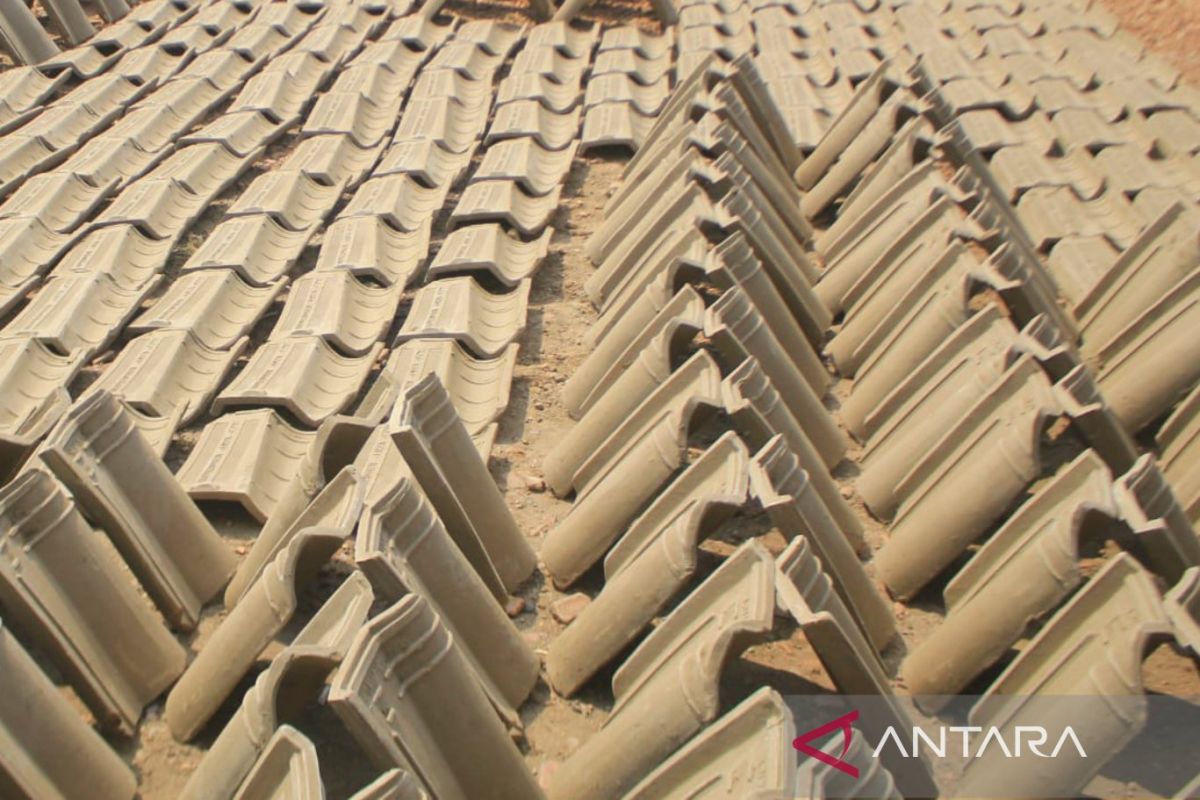
Lightweight composite roofing tiles based on biomass are being developed by researchers at BRIN’s Centre for Biomass and Bioproducts Research as a safer and more environmentally friendly alternative to conventional roofing materials.
Sukma Surya, a researcher at the centre, explained in Jakarta on Tuesday that the composite tiles are made from biomass or lignocellulose materials that are processed into small particles and then transformed into composite products. The development is motivated by Indonesia’s location in the Ring of Fire, making the country highly vulnerable to earthquakes.
“In many earthquake events, injuries occur from people being struck by heavy roofing tiles. Therefore, we have developed composite tiles that are lighter but still maintain good mechanical strength,” Sukma said.
Beyond being lightweight, biomass composite tiles offer numerous other advantages, including water resistance, fire resistance with slower burning rates, and environmental friendliness. The manufacturing process involves preparing biomass into small particles using equipment such as ring flakers, drum chippers, and hammer mills. The particles are then sorted by size, dried to a specific moisture content, mixed with an adhesive, and processed through mat forming, cold pressing, and hot press moulding stages to create the finished composite tile.
To ensure product quality, the research team conducts various tests, including physical and mechanical property tests, weather resistance tests, and fire resistance tests. The research includes periodic field testing to monitor material performance.
Field observations are conducted quarterly to assess the impact of weather changes and environmental conditions on the roofing tiles. Since roofs are exposed to external factors such as ultraviolet (UV) radiation, rainwater, and potential moss or weed growth carried by birds, the development of protective coatings has become an important part of the research. These coatings are designed to provide additional protection, such as UV resistance, water resistance, fire resistance, and inhibition of unwanted organism or plant growth on the tile surface.
“Going forward, BRIN will continue developing various alternative technologies, including potentially adhesive-free composite tiles, so this product can be more competitive and reach various market segments,” Sukma said.