
BRIN develops eco-friendly soil-retaining material for coastal areas
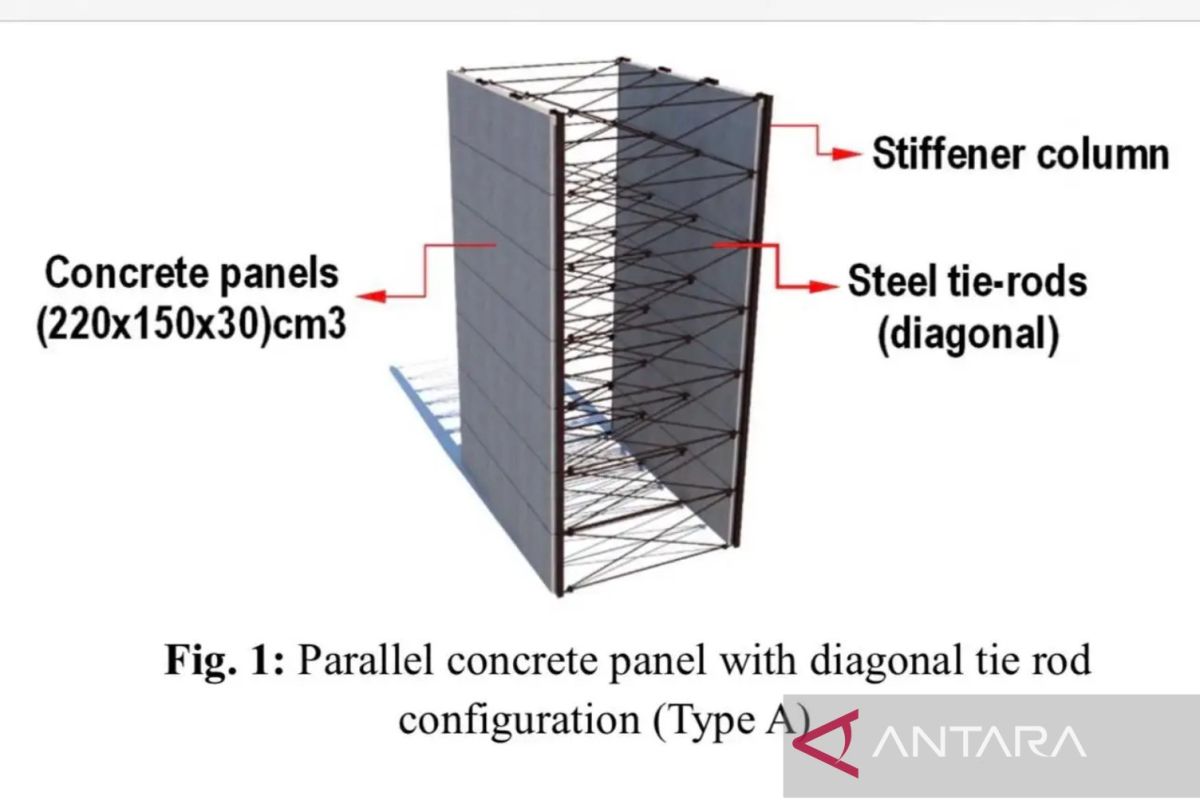
The Centre for Hydrodynamics Technology Research (PRTH) of the National Research and Innovation Agency (BRIN) is conducting a technology audit on a soil-retaining wall structure based on Parallel Concrete Panel (PCP) as a more environmentally friendly, efficient, and stable alternative for protecting coastal areas.
PRTH BRIN engineer Affandy Hamid, in a statement in Jakarta on Friday, explained that the audit was carried out using numerical modelling methods with structural mechanics software to compare the performance of two tie rod configurations: the original patented diagonal type (Type A) and BRIN’s comparative horizontal type (Type B).
“This innovation is a promising alternative for sustainable coastal infrastructure development,” he said.
This structure also enables the use of local backfill materials, thereby better supporting the concept of green infrastructure.
Furthermore, PRTH BRIN engineer Shafan Abdul Aziz assessed that PCP has great potential as a more efficient and environmentally friendly beach protection solution while maintaining good structural stability.
Shafan revealed that this research is motivated by the increasing risk of damage to coastal areas in Indonesia due to climate change, marked by phenomena such as abrasion, tidal flooding, and land subsidence. With its very long coastline, Indonesia requires infrastructure innovations that are not only strong but also sustainable.
In the future, the BRIN engineering team recommends further testing through physical experiments to validate the numerical modelling results, accompanied by a comprehensive study on the material’s long-term corrosion resistance.