
BRIN Develops AI to Support National Food Security
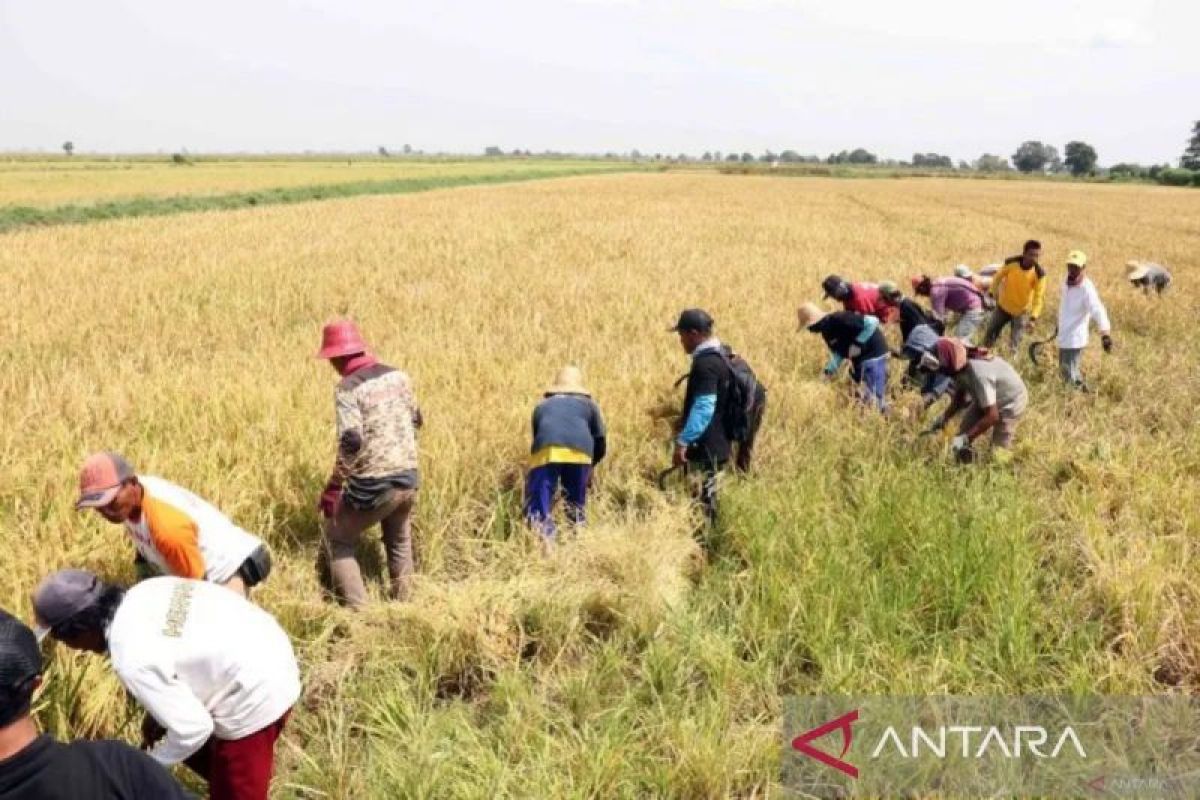
Jakarta — The Centre for Data Science and Information Research (PRSDI), part of Indonesia’s National Research and Innovation Agency (BRIN), is developing artificial intelligence technology to support precision agriculture and national food security.
Esa Prakasa, Head of PRSDI BRIN, emphasised the importance of strengthening systems for managing and monitoring rice phenology to maintain production stability amid challenges from land use changes and climate variability.
Prakasa stated that this innovation not only supports rapid and accurate decision-making but also strengthens national food security on a sustainable basis.
He explained that monitoring rice phenology—from planting stage, vegetative development, reproductive phase, to harvest—is a crucial component in agricultural planning.
According to Prakasa, conventional survey-based methods have faced limitations in spatial coverage, high costs, and inability to provide real-time information.
He outlined how developments in remote sensing technology have opened new opportunities through analysis of optical and radar satellite imagery, including vegetation indices (NDVI) and radar polarisation (VV, VH), which can be combined with multidimensional data approaches to automate crop growth stage classification.
“Integration of this technology enables more accurate spatial and temporal phenology monitoring, supporting the development of precision agriculture systems,” he stated.
Federated Learning (FL) has emerged as a distributed machine learning paradigm that allows farmers, government, and research institutions to collaboratively train AI models without centralising or sharing raw data.
With the concept of “bringing code to data”, FL enables the development of secure and decentralised AI models.
“When combined with multidimensional data, such as satellite imagery, field condition data, and algorithms developed using GeoAI tools, this approach has the potential to generate rice phenology modelling systems that are more adaptive, scalable, and participatory across Indonesia’s various agricultural regions,” Prakasa said.