
BRI President Director: Banking industry fundamentals solid, but credit acceleration requires confidence boost
Jakarta — Indonesia’s national banking industry still has solid capacity to support future credit growth, underpinned by strong and adequate liquidity and capitalisation. However, the acceleration of credit disbursement currently faces challenges, particularly on the demand side.
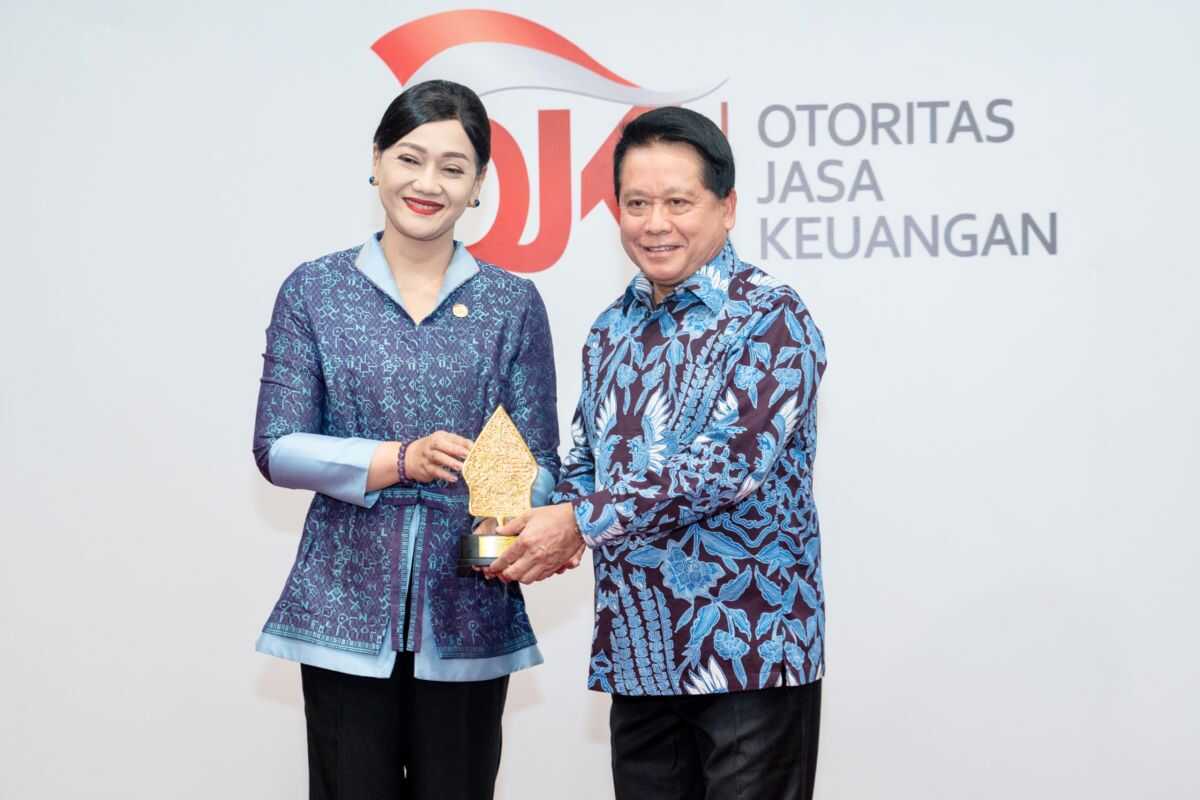
This assessment was delivered by PT Bank Rakyat Indonesia (Persero) Tbk President Director Hery Gunardi at the Economic Outlook 2026 event organised by the Financial Services Authority (OJK) on Thursday (19 February).
In his presentation, Hery explained that fundamentally, the banking industry has adequate room to support future credit growth in a prudent and sustainable manner. On the liquidity side, third-party fund (DPK) growth strengthened to 11.4 per cent year-on-year, with the Loan-to-Deposit Ratio (LDR) maintained at around 84 per cent. Industry capitalisation also remains robust, with the Capital Adequacy Ratio (CAR) at 26 per cent — well above the regulator’s minimum threshold.
“However, year-on-year credit growth through to December 2025 remains at single-digit levels. According to Bank Indonesia, one of the factors behind the current credit slowdown is demand,” Hery said.
Citing Bank Indonesia data, new credit demand has declined across most segments, particularly in consumer credit — which fell from 62.9 per cent to 13.4 per cent — and the MSME segment, which dropped from 78.4 per cent to 58.8 per cent. Meanwhile, undisbursed loans have risen to an average of 10.22 per cent.
“This means that credit facilities already approved by banks and available liquidity are in fact still adequate, but actual drawdowns are being held back. This condition reflects the wait-and-see attitude of both the business community and households as individual borrowers. The challenge is therefore not on the supply of funds, but on confidence and business prospects going forward. What is needed is not merely additional liquidity, but the strengthening of business confidence so that expansion can resume,” Hery explained.
At the same time, the non-performing loan (NPL) ratio for MSMEs has been rising since December 2024 and remains at elevated levels. This indicates that MSME cash-flow pressures have not yet fully recovered. The combination of weakening growth and rising credit risk demands a more selective, risk-mitigation-based approach.
Hery also highlighted that the weakening of credit growth is inseparable from the slowdown in three key GDP-contributing sectors: manufacturing, trade, and agriculture. These three sectors not only make significant contributions to the national economy but also absorb labour on a wide scale, meaning that any slowdown directly impacts business activity and financing needs.
Manufacturing, which contributes nearly 20 per cent of GDP, is a key determinant of working capital and investment demand. Trade, meanwhile, is highly dependent on public purchasing power — when consumption weakens, stock turnover slows and credit demand is held back accordingly.
The agriculture sector, as the largest base for labour absorption, has a direct linkage to the micro and MSME segments, so that pressures in this sector are quickly reflected in credit demand at the small business level.
“This means the current credit moderation is not solely due to liquidity factors. Even though the government has injected Rp200 trillion in additional liquidity, this condition is heavily influenced by the sectoral structure of our economy. Going forward, diversification and increased financing in high-value-added sectors will be key to reducing cyclical sensitivity,” he said.
Furthermore, Hery assessed that current fiscal and monetary policies are on a credible and pro-growth trajectory, with the majority of business operators showing optimism regarding economic prospects. Nevertheless, this optimism has not yet fully translated into accelerated real expansion at the corporate level.
A number of business operators remain cautious and have not yet reached a sufficient level of confidence to accelerate investment or expansion.
“Going forward, the focus needs to shift from narratives of optimism towards acceleration of implementation that is genuinely felt by the business community,” Hery said.
In line with this, the banking sector — particularly Himbara (the association of state-owned banks), including BRI — will continue to play an active role in supporting various national strategic programmes directed at productive activity. The Free Nutritious Meals Programme, the Three Million Houses Programme, and the Koperasi Desa/Kelurahan Merah Putih (KDKMP) village cooperative initiative are all seen as capable of driving credit growth and third-party fund collection, whilst simultaneously creating a multiplier effect on job creation and strengthening public purchasing power.
“Supported by an accommodative policy mix, with monetary and fiscal policy running in harmony, the space for economic expansion opens more broadly. This is where banking plays a role not merely in disbursing credit, but in financing a quality and sustainable growth ecosystem,” Hery concluded.