
BRI Consistently Distributes KUR, SME Credit Grows by Double Digits
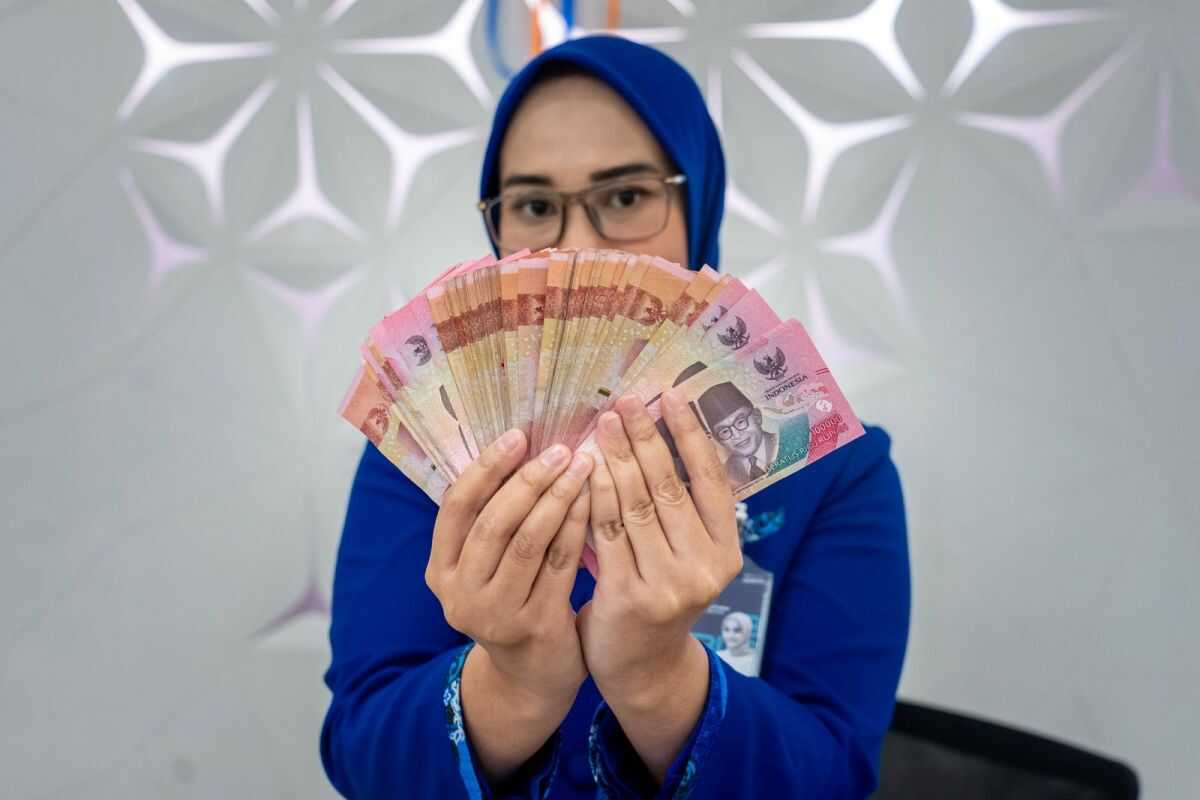
In a bid to strengthen financing for the micro, small, and medium-sized enterprise (MSME) sector, PT Bank Rakyat Indonesia (Persero) Tbk continues to demonstrate positive performance through solid credit growth. As of the end of December 2025, BRI’s credit grew by 12.3% year-on-year (yoy) to Rp1,521 trillion, with the majority of financing allocated to the MSME segment. This achievement is higher than the national banking credit growth of 9.6% yoy throughout 2025.
“BRI’s double-digit credit growth has been balanced by more prudent lending and sustainable growth,” said BRI’s President Director, Hery Gunardi, during a virtual press conference on BRI’s Q4 2025 Financial Performance Report on Thursday (February 26).
He affirmed that the company continues to maintain credit growth from the MSME segment, particularly through the distribution of People’s Business Credit (KUR), which has now been expanded to include housing KUR.
Throughout January to December 2025, BRI disbursed Rp178.08 trillion in KUR to approximately 3.8 million debtors. The agricultural sector was the primary contributor, with financing reaching Rp80.09 trillion, or 44.97% of the total KUR disbursed by BRI.
For this year, overall credit growth is projected to remain in the single-digit range, at around 7%-9%. Hery said that this target is in line with the company’s increasingly selective approach in determining financing sectors, focusing on sectors with good quality that can provide optimal returns without compromising BRI’s asset quality.
“We are very selective in choosing quality sectors that can provide good yields, but at the same time, do not pose a risk to BRI’s asset quality,” Hery explained.
In terms of asset quality, he said that the company continues to make improvements, especially in the micro segment, by strengthening the business model and optimizing the role of marketing staff. These efforts include increasing the frequency of visits by mantri (bank officers) to customers, strengthening the collection process, and encouraging micro customers to have savings at BRI with funds equivalent to one to two installments.
“In the future, the company also plans to implement an AGF (grab fund) scheme in the micro segment as part of a strategy to strengthen risk mitigation,” he said.
These measures have had an impact on improving the ratio of non-performing loans (NPL), which was maintained at 3.07% by the end of 2025. In the same period, Loan at Risk (LAR) also decreased from 10.7% at the end of 2024 to 9.6% at the end of 2025. This fundamental improvement has ultimately boosted the company’s performance, which recorded a net profit of Rp57.132 trillion.
“Therefore, we expect our growth to remain solid and be better than in 2025,” said Hery.
At the same event, BRI’s Director of Treasury and International Banking, Farida Thamrin, said that the 12.3% credit growth was still dominated by MSMEs.
“In addition, as part of supporting the government’s program, BRI consistently serves as the main distributor of people’s business credit or KUR,” she said.
She said that discipline in managing liquidity is the main foundation in maintaining cost efficiency and ensuring optimal funding structure. In terms of capital, BRI’s Capital Adequacy Ratio (CAR) is at 23.52%, well above the minimum regulatory requirements.
This position, she said, shows adequate capital capacity to support prudent business expansion, absorb potential risks, and maintain the company’s stability and resilience.
In terms of asset quality, the controlled NPL ratio of 3.07% is increasingly relevant given that BRI’s portfolio is mostly channeled to the MSME segment, which has more granular risks.
With maintained credit quality, BRI also provides adequate provisions with an NPL coverage of 178.1%. According to Farida, this strong NPL coverage not only maintains balance sheet stability but also provides confidence to investors, regulators, and all stakeholders that the company has a solid foundation in facing economic dynamics and market challenges.
“BRI places risk management as one of the enablers in supporting the achievement of the company’s vision,” she said.
Meanwhile, BRI’s Director of Micro, Akhmad Purwakajaya, said that the BRI Group’s ultramicro holding ecosystem recorded 1.4 million debtors successfully moving up a class or growing 11.82% year-on-year in 2025. This achievement proves that the ecosystem-based approach can drive deeper financial inclusion, expand investment literacy, and create measurable pathways for micro-entrepreneurs to move up.
The monthly financial report (bank only) from Bank Mandiri in January 2026 recorded the company’s credit realization growing 15.62% year-on-year to Rp1,511.4 trillion.
PT Bank Central Asia Tbk (BCA) stated that the Moody’s rating has no impact on the performance of the bank led by Hendra Lembong.
PT Bank Syariah Indonesia (Persero) Tbk (BSI) recorded solid performance throughout 2025. As of December 2025, the company disbursed financing of Rp318.84 trillion.
PT Bank Negara Indonesia (BNI) recorded solid financial performance throughout 2025. The company recorded credit growth of 15.9% year-on-year.
PT Bank Negara Indonesia (BNI) is considered to be in a better position to enter 2026 compared to other major banks.
The monthly financial report (bank only) from Bank Mandiri in January 2026 recorded the company’s credit realization growing 15.62% year-on-year.