
BRI Boss Reveals Strategy to Secure Low-Cost Funding in 2026, Transaction Ecosystem to be Key
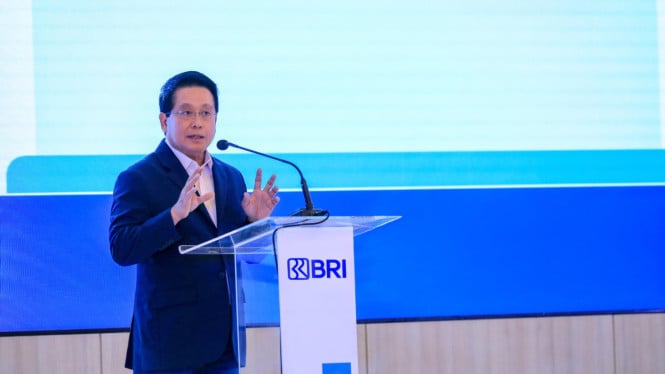
BRI Boss Reveals Strategy to Secure Low-Cost Funding in 2026, Transaction Ecosystem to be Key
- Documentation from BRI.
Jakarta, VIVA – The President Director of PT Bank Rakyat Indonesia (Persero) Tbk (BBRI), Hery Gunardi, has revealed the direction of the business strategy for 2026. He stated that the company’s main focus is to strengthen the structure of low-cost funding (current account savings account/CASA) in order to maintain healthy credit growth while also improving cost efficiency.
The improvement of the funding structure will be carried out by increasing the proportion of low-cost funds derived from savings and current accounts. This strategy has shown positive results throughout 2025, where the CASA ratio increased significantly from 66.6 percent to around 70.6 percent.
“Essentially, we want to improve our funding structure. We want the ratio of low-cost funds or CASA to be larger. We have proven that in the past year, 2025, there was a very significant increase in the CASA ratio,” he said during the online press conference for the Q4-2025 Financial Performance Report, Thursday, February 26, 2026.
To strengthen low-cost funding, BRI relies on the development of its transaction banking ecosystem. The company optimizes various digital platforms and transaction networks, such as BRImo, QRIS, EDC, Qlola, and BRILink agents.
Hery said that the higher the transaction activity of customers, the greater the opportunity for the bank to collect low-cost funds sustainably. Both transactions through the BRImo application and the use of EDC payment machines.
“The more active BRImo users there are, the better it is for the bank. Then, the more EDC machines that are actively used for transactions with BRI cards and other cards, the better it is for the bank to obtain low-cost funds,” explained Hery.
BRI is also strengthening its transaction banking services for corporate customers through the Qlola platform. This platform continues to be developed to support cash management, trade finance, and foreign exchange transactions, which ultimately contribute to increasing current account balances.
“We are continuously revamping Qlola. We are building it as optimally as possible so that it is comparable to its peers in the market. The hope is that corporate customers will carry out transactions such as cash management, trade, and FX, and ultimately obtain low-cost funds in the form of current accounts,” said Hery.
The role of corporate banking and commercial banking is also equally important as a driver of overall business growth. These two segments function as a generator of business pipelines, including supporting the growth of consumer credit based on payroll.