
BRI Adopts More Selective Credit Disbursement Approach, Targets 7%-9% Growth
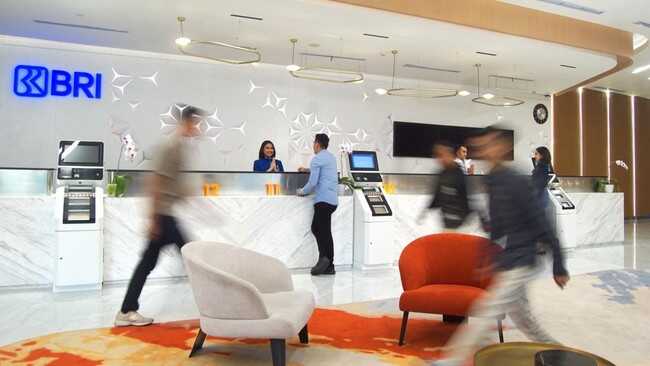
PT Bank Rakyat Indonesia (Persero) Tbk (BBRI) has set a more conservative credit growth target for 2026. The state-owned bank is targeting credit growth of between 7% and 9% for this year, notably lower than 2025’s realisation of more than 12%.
BRI President Director Hery Gunardi stated that the single-digit growth target reflects the bank’s intention to be highly selective in choosing higher-quality sectors that provide good returns whilst not compromising asset quality.
“Looking at our guidance, credit growth will likely move within single digits between 7% and 9%. We are indeed very selective in choosing quality sectors. These should naturally offer good yields but on the other hand should not bring poor asset quality to BRI,” said Hery during a press conference presenting 2025 financial performance on Thursday 26 February 2026.
Regarding credit asset quality, Hery noted that there is continual improvement in the business model for the micro segment. He mentioned that branch officers will be more diligent in debt collection and visiting their customers.
Going forward, BRI will implement an auto grab fund (AGF) system—automatic instalment debits—once or twice for micro customers who hold savings accounts at the bank. Hery noted that the AGF system has already been applied to home loans (KPR) and vehicle loans (KKB), and is expected to drastically reduce assets with stage 2 loan classification status.
In the corporate and commercial banking division, Hery tasked division leaders to take charge of branch offices or consumer divisions. According to Hery, underlying payroll growth can be driven by corporate and commercial banking’s performance.
Meanwhile, in the micro segment, BRI continues to conduct credit underwriting and acquire new customers of very high quality.
On the same occasion, BRI’s Director of Risk Management, Ety Yuniarti, noted that BRI continues to face challenges in the retail credit segment, particularly in micro and small lending. The bank has implemented several initiatives to address these challenges, including establishing a separate retail subdirectorate independent from the risk management directorate to enable greater focus and improved outcomes. Last year, BRI mapped out potential credit quality deterioration.
“Going forward, we will also strengthen our collection arm, especially in the retail segment—consumer and micro—so that both new booking and existing bad loans remain well managed,” said Ety on the same occasion.
BRI’s consolidated credit grew by 12.31% year-on-year to reach Rp 1.521 trillion at the end of 2025. Concurrently, the ratio of non-performing loans (NPL) gross rose to 3.29%, whilst net NPL increased to 0.96%.