
Breaking News! US–Israel–Iran Tensions Escalate as Oil Prices Break Through US$82.03
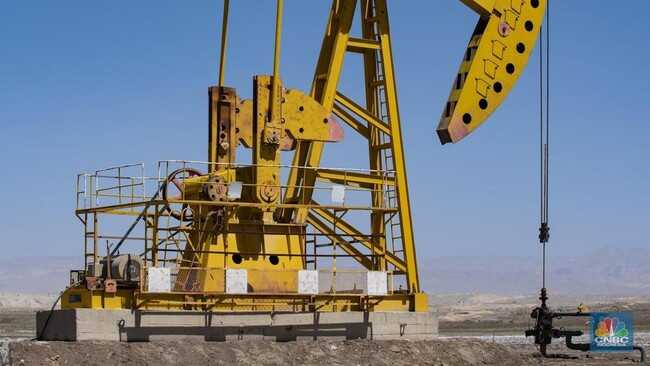
Jakarta, CNBC Indonesia – Global oil prices rose again in morning trading on Wednesday (4 March 2026), as the escalation of the conflict between the United States and Israel with Iran begins to disrupt energy production and distribution in the Middle East.
At 10:00 WIB, referring to Refinitiv, the global benchmark Brent Crude was at US$82.03 per barrel, while West Texas Intermediate (WTI) stood at US$74.95 per barrel.
Daily, Brent rose slightly from US$81.40 per barrel at the close on Tuesday (3 March 2026). On a weekly basis, the rally looks steep. On 24 February 2026, Brent was trading around US$70.77 per barrel.
In less than two weeks, prices have jumped more than US$11 per barrel. WTI shows a similar pattern, from US$65.63 on 24 February to nearly US$75 this morning.
The jump was triggered by recent military strikes targeting several sites in Iran and retaliatory disruptions to energy infrastructure in the region. The market responded quickly because the Middle East accounts for almost one-third of global oil production. Any disruption, no matter how small, is interpreted as a threat to the global supply-demand balance.
Pressure intensified after Iraq was reported to have significantly cut production due to export constraints and storage backlog. The country is the second-largest producer within the Organization of the Petroleum Exporting Countries (OPEC). If export bottlenecks persist, the risk of larger-scale well shut-ins becomes a tangible risk that market participants price in.
Meanwhile, tensions in the Strait of Hormuz again come into focus. This narrow chokepoint carries around one-fifth of global oil and LNG trade. Reports of disruptions to tanker ships have effectively obstructed shipping flows in recent days. This has forced several importing countries to seek alternative supply sources.
Nevertheless, price increases are not entirely uncontrollable. President US Donald Trump’s statements about the possible escort of tanker ships by the US Navy and guarantees of maritime trade risk somewhat tempered the deeper spike. However, shipping and insurance industry participants are still weighing whether such steps are sufficient to restore confidence.
On another fundamental note, the market is also watching a rise in US crude oil inventories for the past week, reported to be higher than forecast. In theory, stockpiles could act as a balancing factor for the rally. But for now, geopolitical factors are clearly more dominant. As long as the Middle East instability does not subside, high volatility will remain the price to pay by the global energy market.