
Breaking News! US Dollar Rises to Rp17,040 This Morning
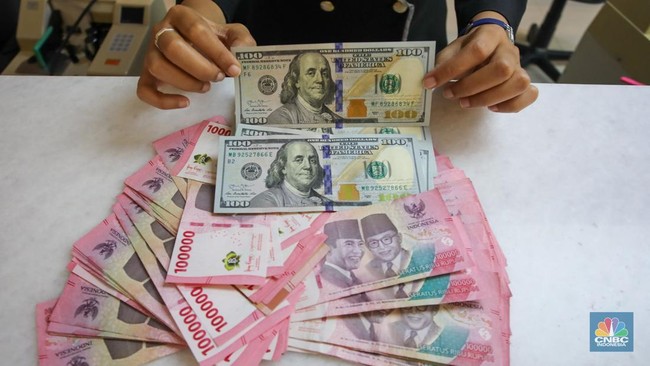
Jakarta, CNBC Indonesia - The rupiah exchange rate opened weaker against the US dollar on Tuesday morning’s trading (7/4/2026).
According to Refinitiv data, the Garuda currency opened trading in the red zone with a depreciation of 0.06% to the level of Rp17,040/US.Thisweakeningoccurredafterontheprevioustradingday, Monday(6/4/2026), therupiahclosedweakerandtouchedanall − timelowlevelatRp17, 030/US.
On the other hand, the US dollar index (DXY) at 09.00 WIB was still observed moving slightly stronger by 0.14% to the level of 100.113. This indicates that the US dollar is still holding strong amid high global uncertainty.
The rupiah’s movement in today’s trading is still overshadowed by external sentiment, particularly from developments in the Iran war and the direction of the US dollar’s movement in the global market.
The US dollar tends to remain stable as market participants monitor the escalation of the Iran conflict. Investor attention is focused on the latest deadline from US President Donald Trump regarding the reopening of the Strait of Hormuz. In a social media post on Easter Sunday, Trump threatened to target power plants and bridges in Iran on Tuesday local time if that strategic route is not immediately reopened.
Nevertheless, the market is also beginning to consider the possibility of the conflict easing after media reports emerged mentioning last-ditch efforts by negotiators to push for a ceasefire.
So far, the global market remains anxious. Since the US-Israel war against Iran broke out at the end of February, tensions in the region have shaken the world’s financial markets. The effective closure of the Strait of Hormuz, through which about one-fifth of the world’s oil and liquefied natural gas supplies pass, has also driven oil prices soaring far above US$100 per barrel.
That surge in oil prices has triggered concerns over higher inflation while also altering global interest rate expectations. At the same time, the market is also worried about economic growth slowdown, making stagflation risk an increasing concern.
This situation has made dollar-denominated assets sought after again as a safe haven. As a result, the room for strengthening of other countries’ currencies, including the rupiah, becomes more limited.