
Breaking: Government Amends Danantara Regulation, Key Details Outlined
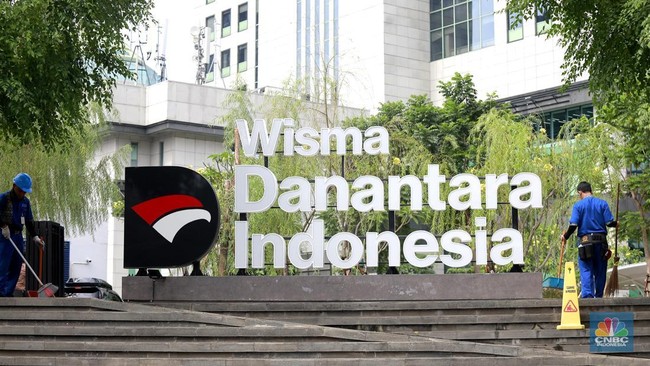
Jakarta, CNBC Indonesia – President Prabowo Subianto has issued Government Regulation (PP) No. 16 of 2026 concerning the organisation and governance of the National Energy and Resource Investment Management Agency (Danantara). The new regulation amends PP No. 10 of 2025, which was signed by President Prabowo Subianto and State Secretary Prasetyo Hadi on 8 April 2026 in Jakarta.
The revisions stem from adjustments to Danantara’s structure, authority, governance, and accountability following the enactment of Law No. 16 of 2025 (Fourth Amendment to the State-Owned Enterprises Law). The recent amendment to the SOE law introduced the State-Owned Enterprises Regulatory Body (BP BUMN) and the position of its head as a government agency overseeing SOE regulation. Previously, under PP 10/2025, SOE affairs were entirely under the Ministry of State-Owned Enterprises.
Other key revisions include dividend and capital management, guarantee functions, and strategic guideline formulation. Danantara now has full authority to appoint and dismiss directors and commissioners of Investment and Operational Holdings, as well as to propose SOE director and commissioner candidates to BP BUMN.
The new regulation also revises the structure of the supervisory board (Dewan Pengawas), replacing the Ministry of State-Owned Enterprises representative with one from BP BUMN. The board’s powers have been expanded to include approving guarantees for Investment Holdings, loans, debt write-offs, asset collateralisation, mandatory reserves, and actions by the executing body outside the annual work plan (RKT).
The regulation clarifies the status and characteristics of holdings, detailing their types and liability separation. Investment and Operational Holdings are structured as limited liability companies (PTs) with 100% ownership by Danantara. Danantara is not liable for holding losses exceeding its capital contribution. Investment Holdings are divided into two focus areas: commercial (financial returns) and national development/public service (socio-economic impact).
Regarding State Capital Injection (PMN) and fiscal instrument status, Investment Holdings focused on national development can receive PMN directly from the national budget (including fresh funds, state assets, receivables, etc.). If receiving PMN, such holdings become SOEs designated as fiscal instruments.
Key points of the new Danantara organisational and governance regulation include:
Tasks and Authorities:
Danantara is responsible for managing SOEs with the following powers:
Managing dividends from Investment and Operational Holdings and SOEs.
Approving increases or reductions in capital contributions sourced from dividend management.
Establishing Investment and Operational Holdings.
Approving asset write-offs or debt relief proposals for SOEs.
Providing or receiving loans and pledging assets with presidential approval.
Appointing and dismissing directors and commissioners of Investment and Operational Holdings.
Proposing SOE director and commissioner candidates to BP BUMN.
Approving and consulting on holding work plans and budgets with the relevant parliamentary committee.
Supervisory Board:
The board comprises a chairman, deputy chairman, representatives from the Coordinating Ministry for Economic Affairs, Ministry of Finance, Ministry of Investment, BP BUMN, and other state officials or parties. Board members are appointed by the president for five-year terms, renewable once. Responsibilities include approving annual work plans and key performance indicators, evaluations, setting remuneration, approving financial statements, and endorsing guarantees for Investment Holdings.
Annual Work Plan and Budget:
The executing body prepares the annual work plan and budget, submitting it to the supervisory board by 31 October of the current year. Budget revisions may occur once annually, submitted by 31 July. These provisions take effect for the 2028 fiscal year.
Staff Regulations:
Danantara staff are employed under contractual agreements. Employees are prohibited from having familial or affinal relationships up to the second degree with board members, the executing body, other staff, or directors/commissioners of Investment and Operational Holdings.