
Breaking: Crude Oil Price Surges, Breaches US$100 per Barrel
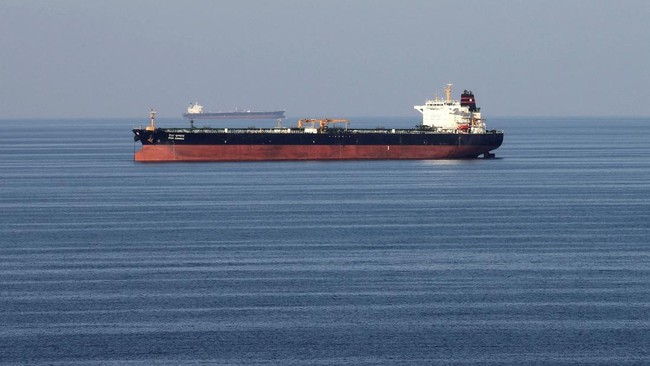
Global crude oil prices have surged sharply, breaching the US$100 per barrel level following supply disruptions from the Middle East caused by Iran-related conflict that has resulted in the closure of the Strait of Hormuz.
During trading on Monday (9 March 2026), West Texas Intermediate (WTI) crude jumped 18.98%, or US$17.25, to US$108.15 per barrel. Meanwhile, global benchmark Brent crude rose 16.19%, or US$15.01, to US$107.70 per barrel.
This surge extends the rally in crude prices following the previous week, when US crude was reported to have jumped approximately 35%, described as the largest weekly increase in the history of futures trading since 1983.
The last time crude oil prices breached US$100 per barrel was following Russia’s invasion of Ukraine in 2022.
The price increase has been driven by production cuts by major producers in the Middle East, amid the continued closure of the Strait of Hormuz—a vital global energy shipping route.
Kuwait, the fifth-largest oil producer in OPEC, announced on Saturday that it would cut oil production and refinery output as a precautionary measure following Iranian threats to the security of vessels transiting the Strait of Hormuz. However, Kuwait Petroleum Corporation did not specify the magnitude of the production reduction.
Meanwhile, oil production in Iraq has reportedly plummeted sharply. Three industry officials told Reuters that production from three major oil fields in southern Iraq has fallen approximately 70% to just 1.3 million barrels per day (bpd).
Before the conflict with Iran escalated, these fields were producing approximately 4.3 million bpd.
On the other hand, the United Arab Emirates (UAE) has also stated that it is carefully managing offshore oil production to adjust storage capacity. The national oil company Abu Dhabi National Oil Company (ADNOC) said that onshore production operations remain operating normally.
Gulf nations are indeed beginning to reduce production as storage capacity becomes increasingly constrained. The closure of the Strait of Hormuz has made many tanker ships reluctant to transit the waterway due to concerns about Iranian attacks.
Approximately 20% of global oil consumption is typically exported through this narrow strait.
Amid ongoing tensions, the United States government remains optimistic that shipping traffic through the Strait of Hormuz will resume shortly.
US Energy Secretary Chris Wright stated that tanker traffic is expected to return to normal after Iran’s capability to threaten vessels has been weakened.
“It will not be too long before we see shipping traffic start to return more to normal through the Strait of Hormuz,” Wright said in an interview with CNN.
Nevertheless, he cautioned that current conditions remain far from normal.
“Traffic right now is still far from normal conditions. That will take time. However, in the worst-case scenario, this will only take a few weeks, not months,” he said.