
Brazing craftsman in Jogja: Once flooded with orders ahead of Eid al-Fitr, now in despair
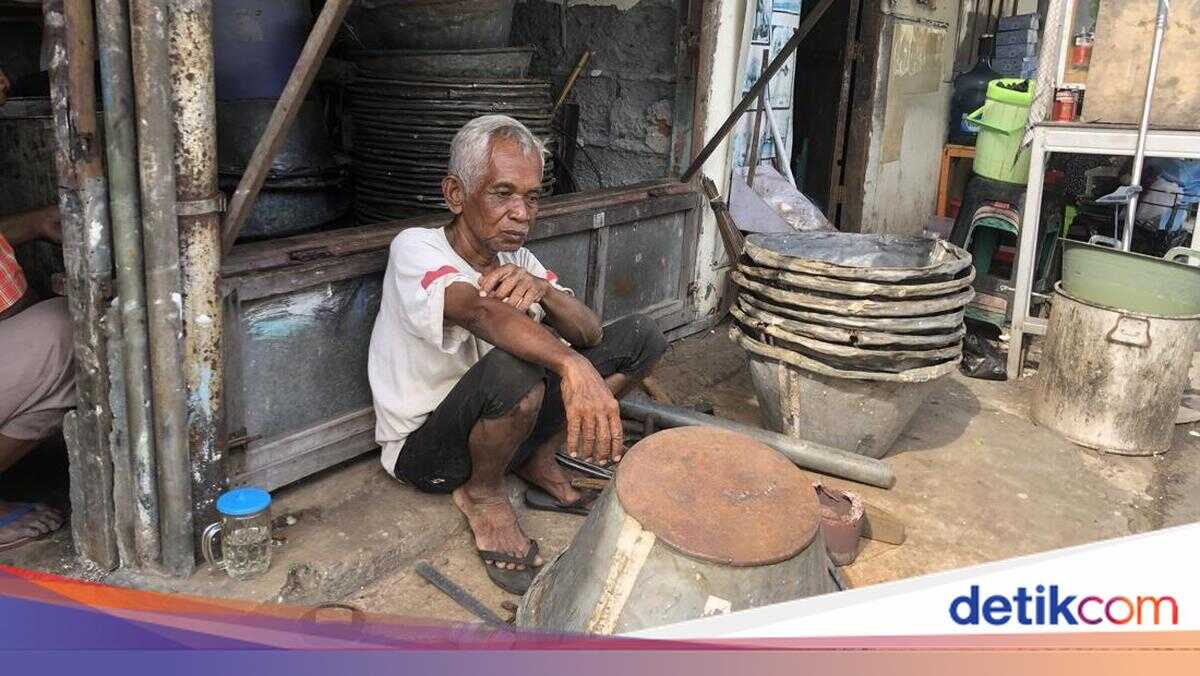
The brazing service for kitchen utensils in Jogja used to be a well‑taken service in the run‑up to Eid al‑Fitr. Customers even had to queue to repair their utensils. However, nowadays, meeting daily needs is a struggle as many people turn to online stores for cheaper gear.
The brazing stalls in Jogja can be found on the north side of Jalan Ronodigdayan, Danurejan. There are four wooden stalls offering brazing services. There are no special markers apart from a sheet of tin, a hammer, and pans placed at the stalls to indicate the brazing work.
The four brazing stalls are not adjacent to each other; in this row along Jalan Ronodigdayan, brazing stalls are interspersed with acetylene welding stalls and a small eatery.
One brazing artisan on Jalan Ronodigdayan, Danurejan, Yogyakarta, is Adi, 40. He took over the brazing business from his father in the early 2000s.
Back then, the kitchen tools he most often received were wick stoves or kerosene stoves, with almost all components brazed. He also repaired traditional ovens and made baking moulds for Eid treats.
‘In the run-up to Eid back then, oil stoves were still common, along with baking trays and ovens. People would service and make them almost a month before fasting because they would use them,’ Adi said when met at his stall on Friday (6 March 2026).
‘For kerosene stoves, it was always guaranteed that there would be work before Eid, and people would queue,’ he added.
The bustling brazing work is something he now misses, as many people shift to buying utensils from online shops that are cheaper.
‘In the past, when there was work to be had, I could save money; now I can’t. I am only able to make ends meet. When it’s busy I might earn around Rp 150,000, but when it’s quiet it’s Rp 30–60 thousand, and once I take it home it’s all gone. A single kerosene stove used to cost Rp 50,000,’ he lamented.
Similar sentiment came from another brazing craftsman, Krido, 67. The grey‑haired man said Eid this year is not as busy as before.
‘Now it’s mainly the cooking equipment of the eateries that still get orders, such as for ketupat and catering services,’ Krido, who has run his stall since 2001, said.
‘It depends on the size, between Rp 20,000 and Rp 100,000. Now it’s less than Rp 100,000; in the past producing two components for oil stoves would cost Rp 50,000 and would not last half a day,’ he added.