
BPS Warns of Pest Threat That Could Reduce Indonesia's Rice Production in 2026
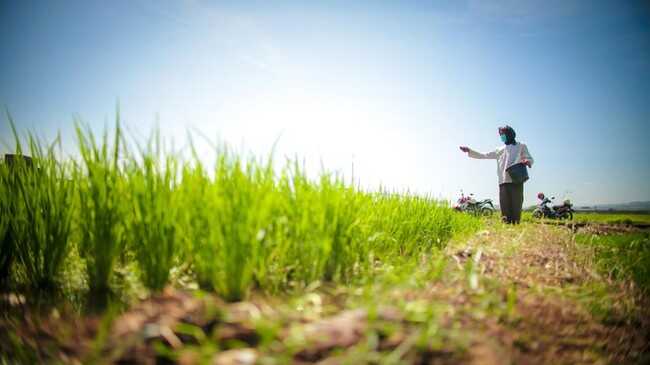
Jakarta — Indonesia’s Central Statistics Agency (BPS) has warned of the potential for pest attacks that could affect harvest timing and the quality of rice production.
Ateng Hartono, Deputy for Distribution and Services Statistics at BPS, said pest attacks could influence planting area, rice production, harvest area and rice output.
“The figures for potential planting area, production and harvest area will certainly change, depending on planting conditions from February through April 2026. Should there be pest attacks or crop-damaging organisms (OPT), changes will occur,” Ateng said during a press conference at BPS headquarters in Jakarta on Monday, 2 March 2026.
He expressed hope that pest attacks would not become an obstacle for Indonesia’s agricultural sector in 2026, particularly the food sector.
“Hopefully pest attacks will not occur, so that the potential for rice production will be normal as we forecast,” Ateng added.
Paddy production decline forecast
Ateng noted that paddy production in January 2026 reached 3.04 million tonnes of dried milled grain (GKG).
However, the forecast for paddy production during February-April 2026 shows a decline of 4.04% to 21.24 million tonnes.
“The potential production for February through April 2026 is estimated to reach 21.24 million tonnes of GKG, a decline of 0.89 million tonnes of GKG or 4.04% compared to the same period in the previous year,” he said.
For the January-April 2026 period, paddy production is forecast to decline by 0.04 million tonnes or approximately 0.18% to 23.28 million tonnes, down from 24.33 million tonnes in January-April 2025.
The decline in paddy production is certainly influenced by the potential for pest attacks, flooding, drought and other factors.
“Again, we emphasise that these potential figures can certainly change in accordance with current conditions, such as I have already mentioned when pests or crop-damaging organisms occur,” he explained.