
BPS: Sugar Production Rises, Household Consumption Falls, but Imports Still Dominate
The government faces a policy dilemma with no truly comfortable options.
The Central Statistics Agency (BPS) records that national sugar production in 2025 will increase. However, this improvement in domestic supply has yet to reduce Indonesia’s dependence on imports.
Deputy Head of BPS Sonny Harry Budiutomo Harmadi stated that total national sugar usage in 2025 will reach around 6.33 million tonnes. Of this figure, household consumption is only 1.4 million tonnes, or 23.13% of total usage.
“Most sugar usage actually comes from the processing industry, reaching nearly 3.9 million tonnes, as well as the horeka sector—hotels, restaurants, and catering—around 970,000 tonnes,” said Sonny during a working meeting and hearing with Commission VI of the House of Representatives (DPR RI) on Wednesday (8/4).
Sonny explained that household sugar consumption shows a declining trend, both in total and per capita. Currently, per capita sugar consumption is recorded at 5.15 kilograms per year.
According to him, this decline is influenced by at least two factors. First, a shift in public lifestyle towards healthier consumption patterns by reducing sugar and salt intake. Second, changes in shopping and consumption patterns to ready-made foods, so sugar is no longer purchased directly by households.
On the other hand, national sugar production in 2025 reaches 2.67 million tonnes, up from 2.47 million tonnes in 2024. This increase is driven by an expansion in sugarcane harvest area to 563,000 hectares, from 521,000 hectares the previous year.
The national sugarcane production centres remain concentrated in several regions, particularly East Java, Lampung, Central Java, South Sumatra, and West Java.
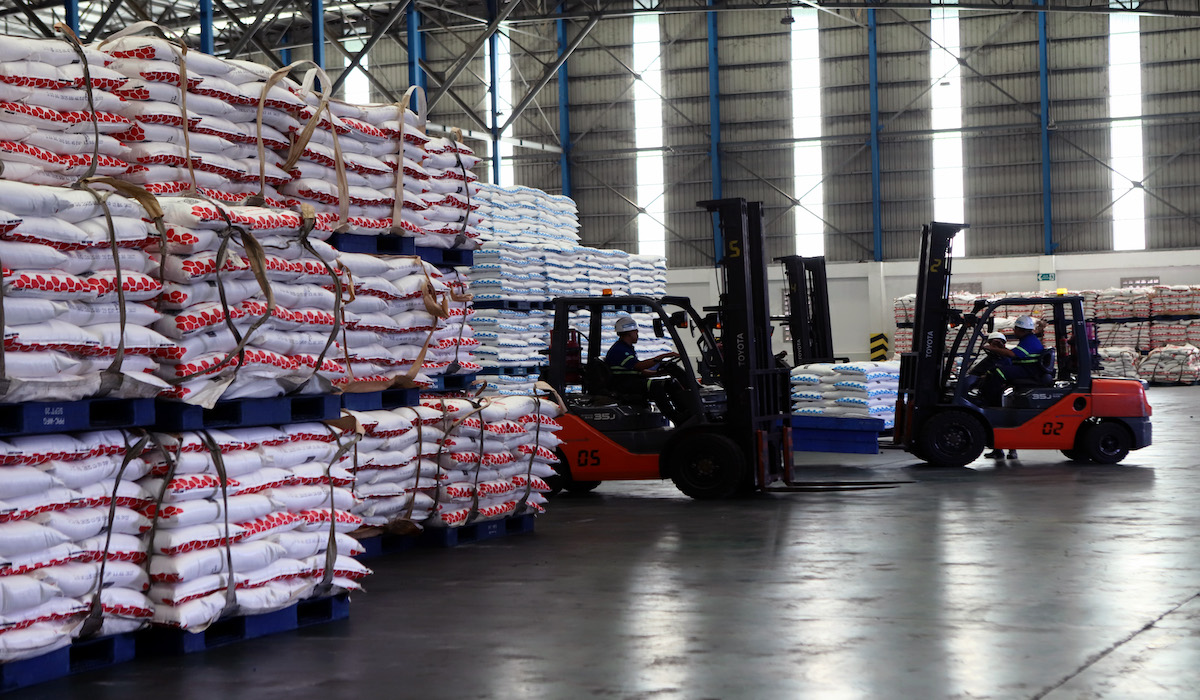
Despite improved production, Indonesia still heavily depends on imported sugar to meet domestic needs. Throughout 2025, the imported sugar volume is recorded at 3.93 million tonnes, with one of the largest supplies coming from Brazil.
“In general, domestic supply is indeed improving with increased production. However, dependence on imports remains quite high and poses a challenge that needs to be addressed going forward,” said Sonny.