
BPS Releases Conversion Table for Indonesian Standard Industrial Classification 2020-2025
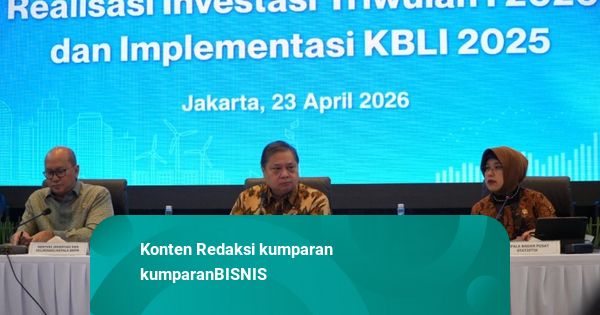
The Central Bureau of Statistics (BPS) has released the conversion table for the Indonesian Standard Industrial Classification (KBLI) 2025 as an update to KBLI 2020. This table has been compiled to maintain comparability and alignment between KBLI 2020 and KBLI 2025, thereby facilitating the transition for policymakers and business actors prior to the national implementation of KBLI 2025.
The Head of BPS Indonesia, Amalia Adininggar Widyasanti, stated that the conversion table was prepared as a follow-up to the Joint Circular Letter (SEB) on the implementation of KBLI 2025 adjustments in risk-based business licensing. The SEB was signed by the Minister of Investment and Downstreaming/Head of the Investment Coordinating Board, the Minister of Law, and the Head of BPS Indonesia.
“This conversion table is compiled to ensure sustainable comparability and serves as a guide for tracing correspondences between structures, both from KBLI 2020 to KBLI 2025 and vice versa,” said Amalia during a press conference in Jakarta on Thursday (23/4).
KBLI is the national standard used to classify all economic activities in Indonesia, referencing the International Standard Industrial Classification of All Economic Activities (ISIC) Revision 5. The adoption of ISIC Revision 5 was recommended by the United Nations Statistical Commission (UNSC) on 11 March 2024.
Previously, on 19 December 2025, BPS released the Indonesian Standard Industrial Classification (KBLI) 2025 as an update to KBLI 2020. The day before (18/12), BPS promulgated KBLI 2025 in the form of BPS Regulation Number 7 of 2025.
This update is intended to ensure that the recording of economic activities in Indonesia remains relevant to global economic dynamics, particularly regarding digital economic transformation and climate change mitigation.
“Various new economic activities or endeavours, such as artificial intelligence, content creators, and activities related to climate change like carbon capture and carbon storage, are now covered in KBLI 2025,” explained the Coordinating Minister for Economic Affairs, Airlangga Hartarto, on the same occasion.
To support the transition from this update, BPS has provided the conversion table as a bridge between KBLI 2020 and KBLI 2025. This table allows users to trace code alignments, from categories and main groups to the most detailed business groups (5 digits).
In general, there are three patterns of change in the conversion table. First, a one-to-one change where one code in KBLI 2020 maps directly to one code in KBLI 2025. Second, splitting one code in KBLI 2020 into several more specific codes in KBLI 2025 (one to many). Third, merging several codes in KBLI 2020 into one new code in KBLI 2025 (many to one).
The national implementation of KBLI 2025 is scheduled no later than 18 June 2026. During the transition period, KBLI 2020 and KBLI 2025 will be used in parallel until all adjustment processes are complete.
Amalia emphasised that permits issued before the implementation of KBLI 2025 remain valid. Business actors need not worry that their old permits will become invalid.
“Some matters to note are that permits issued before the implementation of KBLI 2025 remain valid. Business actors are required to adjust to KBLI 2025 through OSS (Online Single Submission)/AHU (General Legal Administration) if there are substantive changes, namely changes in purpose and objectives as well as the scope of business activities,” she clarified.
She added that BPS Regulation Number 7 of 2025 on KBLI and the SEB on the implementation of KBLI 2025 adjustments are intended to provide legal certainty and smooth business operations for business actors and stakeholders. All processes are integrated through the OSS system, making them more efficient and accountable.